For years, parents in parts of Mombasa’s poorest neighbourhoods believed a youth programme offered hope by rescuing vulnerable children from the shackles of poverty.
The organisation, known as Talanta ni Kazi (empowerment through talent), promised sponsorships in education and talent development, which included professional dance and acting.
These programmes promised a future beyond the dumpsites and informal settlements where many of the children had grown up and were living in abject poverty.
Some parents saw their daughters perform at events in tourist towns along the Coast, while others watched them travel for what they believed were mentorship opportunities intended to secure a dignified life.
However, after months of surveillance, the Directorate of Criminal Investigations (DCI) now believes the programme concealed something far darker beneath the surface.
Investigations reveal a sophisticated trafficking and sexual exploitation network.
Photo credit: File | Nation Media Group
Court filings by the DCI’s Anti-Human Trafficking and Child Protection Unit (AHTCPU) describe what detectives believe was a sophisticated trafficking and sexual exploitation network that allegedly preyed on vulnerable girls across Mombasa and neighbouring counties.
At the centre of the investigation is Almasi Rama Amos, also known as Almasi Rama or “Mjanja Almasi”, whom investigators identify as the founder and controller of the organisation operating under the names Talanta ni Kazi, Talent ni Kazi and Ribe Rescue Youth.
The allegations emerging from the investigation are chilling. According to the detectives, minors allegedly recruited from dumpsites and poor families were transported across towns, housed in secretive facilities, withdrawn from school, sexually abused, psychologically manipulated and, in some cases, impregnated.
“There is credible intelligence indicating that the respondent is part of a wider trafficking syndicate operating within and outside Mombasa County,” documents filed before Mombasa court show.
According to investigators, the organisation built its reputation around helping disadvantaged children to secure a dignified life.
Parents, guardians and relatives were allegedly told the programme would sponsor vulnerable children through education and talent development. The suspect allegedly presented himself as a philanthropist, mentor and youth empowerment champion.
Court filings say the organisation specifically targeted girls from vulnerable backgrounds in Kambi-Ribe, Bamburi-Ugatuzi, Kiembeni, Mwakirunge, Mitzajeni, Maboyani and Junda. Some of the girls, investigators say, were recruited directly from the Mwakirunge dumpsite.
“Many of the said victims were sourced from vulnerable families, Mwakirunge dumpsite and other informal settlements where they were lured through promises of sponsorship, education, accommodation, talent nurturing and financial support,” investigators stated.
The children reportedly joined dance and acting programmes under the belief they were building careers and accessing opportunities unavailable to them at home, capable of unlocking their future. But investigators now believe the programme was systematically used to recruit, control and exploit minors.
“Preliminary investigations have established that the respondent, accomplices and other persons still at large have for several years systematically recruited, harboured, transported, transferred, housed, concealed, groomed, sexually abused and exploited vulnerable minor girls,” the affidavit says.
As investigators dug deeper, they began mapping what they describe as a network of premises spread across multiple neighbourhoods where these minors were harboured.
The police affidavit identifies facilities in Kambi-Ribe, Bamburi-Ugatuzi, Kiembeni, Mwakirunga, Mitzajeni, Maboyani and Junda as locations where girls were allegedly housed, confined, groomed and sexually exploited. Detectives believe the operation relied on constant movement.
Children were allegedly transported between Mombasa, Kilifi, Voi, Diani, Ukunda and Malindi for performances and events before being accommodated in guest houses, lodgings and rented homes.
“The respondent organised trips and performances in several towns, including Malindi, Voi, Ukunda and Diani,” investigators told the court.
The movement, detectives say, made it difficult for families and authorities to track the children consistently.
According to the affidavit, many girls spent nights at the organisation’s facilities or at residences linked to the suspect rather than returning home after rehearsals. Others reportedly stopped attending school entirely.
“Investigations further reveal that some of the minor victims stopped attending school altogether while under the custody and control of the respondent,” the police said.
A picture of the Mombasa Law Courts| Pool
Photo credit: Pool
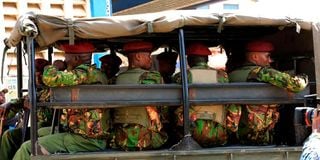
On May 7, the detectives staged a raid that exposed the operation, which they believe had been hidden under the sponsorship programme for years. Acting on intelligence reports and information obtained from victims, officers attached to the AHTCPU launched an operation in the Ngu Tatu area of Bamburi-Ugatuzi.
There, investigators rescued three minor girls allegedly found with the suspect. Detectives executed a court-issued search warrant during the operation.
Hours later, officers moved to Kambe-Ribe, where they rescued 16 more girls believed to be victims of trafficking and sexual exploitation. In total, 19 girls were rescued in the operation, with investigators believing that more victims remain trapped within the network.
“There are additional minor victims within Junda and other areas who were recruited, trafficked, abused and exploited, and who are yet to be rescued and placed under protection,” said the police document.
During searches of premises linked to the organisation, detectives recovered eight mobile phones, five smartphones, a tablet, SIM cards and other electronic devices.
To investigators, the devices suggested a highly coordinated operation involving more than one individual suspect.
The electronics are now undergoing cyber forensic examination to recover deleted messages, call records, photographs, videos, contacts, internet communication and financial transaction histories.
Investigators are also pursuing subscriber details, mobile money transactions, bank statements and account opening documents in an attempt to trace what they suspect may be proceeds of crime.
The affidavit indicates detectives are exploring possible money laundering offences alongside trafficking, child exploitation and conspiracy charges. The investigation has also widened to include foreign connections.
One foreign national identified only as “Brad” is being sought by investigators alongside other associates linked to the organisation and who are yet to be identified.
“Investigations are ongoing to establish the identities, involvement, sponsorship arrangements, financial links and possible criminal culpability of the said foreign nationals and other associated persons,” the police told the court.
Further, the detectives are now tracing individuals whose names appeared in communication records, recovered identity documents and financial transactions linked to the operation.
The affidavit portrays an environment where the girls allegedly became psychologically dependent on the organisation and its leadership in what the detectives described as grooming and control by the suspects.
Investigators say the respondent manipulated victims and exercised influence over both the children and some of their relatives.
“The respondent at his houses and facilities manipulated, groomed, and exerted dependency and influence upon the victims,” the police said.
Detectives now fear witnesses may be intimidated or influenced if investigations are disrupted and that this risk would increase should the respondent be granted freedom before the probe is concluded.
“There is also a real risk that witnesses and vulnerable child victims may be intimidated, influenced, coached, threatened or interfered with,” the police said.
Investigators say the rescued minors are victims of “grave sexual abuse, trafficking, exploitation and psychological manipulation” who need protection against external influence.
Among the most disturbing findings are allegations that some minors became pregnant after repeated sexual abuse. The affidavit lists several alleged victims by initials.
Investigators are now seeking court orders to obtain hospital records from Coast General Teaching and Referral Hospital and another private facility, where detectives say antenatal care, treatment and delivery records are held.
The records investigators want include admission registers, maternity files, nursing notes, laboratory reports, postnatal records, discharge summaries, theatre notes and birth notifications.
According to the affidavit, the records are critical to establishing timelines of abuse, proof of pregnancy, delivery histories and possible paternity links.
Detectives are also seeking DNA samples from the victim, her eight-month-old child identified as S.S.A., the respondent and related persons for forensic analysis.
“The said records are crucial and material evidence necessary for establishing the age of the victim, proof of pregnancy, proof of delivery, timelines of abuse, paternity, medical treatment history, linkage of the respondent to the offences and corroboration of the victim’s account,” said the police document.
More disturbing, investigators further disclosed that victims were routinely given pills and substances after sexual encounters.
“Investigations further reveal that the respondent regularly administered pills and substances to the victims after sexually abusing them,” said the police document.
The affidavit further states that detectives are investigating possible offences related to procurement of abortion and administration of harmful substances to minors.
Perhaps the most haunting detail in the investigation concerns what allegedly happened to some girls recruited from the dumpsites. Detectives say some victims were later returned to the same dumpsites under unclear circumstances, while others allegedly remained confined within the organisation’s facilities.
To investigators, the pattern suggests a cycle of exploitation in which vulnerable children could disappear into the network and re-emerge without explanation.
The rescued girls are now undergoing medical examinations, age assessments, counselling and psychosocial support as officers record witness statements from victims, parents, teachers, chiefs, neighbours and medical personnel.
Investigators believe the case may expose a broader trafficking operation spanning multiple towns and involving several accomplices still at large.
The police have described the investigations as highly complex, sensitive, extensive and transnational in nature. Detectives are now analysing electronic evidence, financial trails and communication records while attempting to trace additional suspects.
The next phase of the investigation will include forensic analysis, identification parades, DNA testing, financial tracking, retrieval of CCTV footage, tracing foreign nationals and locating additional victims.
Police say the suspect has already demonstrated the ability to move children across locations and conceal activities within different premises.
Investigators have also told the court they fear evidence could be destroyed or manipulated if the respondent is set free before the probe is concluded.
For now, Rama remains at Mbaraki police station for 10 days as detectives delve deeper into what was hidden behind the rehearsals, performances and promises of a better future, which turned into exploitation and sexual abuse. The case will be mentioned on May 21.