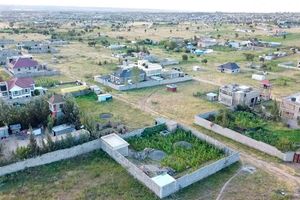
For nearly five decades, residents of Alma Farm in Cherengany, Trans Nzoia County have lived, farmed and raised their families on land they say they bought in 1981.
Some were born there; others buried their parents there. Yet many still do not have the title deeds to prove the land is legally theirs.
The families say they completed the required purchase and subdivision processes but have never received the documents that would give them certainty over their homes and farms.
Instead, they have lived with disputed ownership claims, court battles and, at times, violence.
For families who have lived on the farm for decades, the issue is not simply about paperwork. It is about whether they can be certain that the homes where their children were born and the farms that have supported generations, will remain theirs.
According to Mr Joseph Yego, a resident and community representative, the unresolved question of who legally owns the land has followed families for generations.
“We bought this land in 1981, but we have continued having problems over it. We have fought, gone to court and even witnessed houses being burnt because of the dispute,” he says.
Now, with the 2027 General Election approaching, residents fear the long-running dispute could once again become a source of tension.
They are now appealing to President William Ruto, the National Land Commission (NLC), security agencies and other government authorities to establish the status of the land and find a lasting solution.
Mr Joseph Rotich, another resident, says families have been left in limbo over land they believe they legally purchased.
“We have suffered for years, and every time elections approach, we are harassed because of this land. We want the government to give us a permanent solution,” he told Daily Nation .
Residents want the government to establish the ownership status, ensure rightful owners receive their documents and have competing claims addressed through lawful processes.
They have also called for investigations into what they allege is interference with the release of title deeds.
Ardhi House in Nairobi where the Ministry of Lands offices are located.
Photo credit: File | Nation Media Group
They mentioned some Ministry of Lands officials in connection with the dispute, although the allegations were not independently verified.
A community representative said titles that had already been processed should be released unless there was a valid court order preventing their issuance.
“Once the titles are ready and there is no court order stopping their release, they should be handed over to the rightful owners without further delay,” he said.
For Cecilia, another resident, the uncertainty has a deeply personal cost.
“Our parents died here, and we were born and raised here. This is the land we paid for, and we have nowhere else to call home,” she said.
She said women, children and elderly residents were particularly vulnerable whenever tensions over ownership escalated.
Mr Charles Toroitich, a farm clerk, recalled clashes in 2020 which he said left residents injured during confrontations linked to the dispute. He warned that tensions could rise again as the country heads towards the 2027 General Election if the ownership question remains unresolved.
What is happening at Alma Farm is not an isolated problem. It illustrates a wider problem in Trans Nzoia. For thousands of families, owning land and being able to prove ownership remain two very different things.
Across the county, historical claims, disputed ownership, squatter settlements, alleged encroachment and missing or contested land records have left families and institutions grappling with uncertainty for years.
The county is one of Kenya’s most productive agricultural regions, making land both a critical economic asset and a highly contested resource.
For families without clear documentation, land that should provide security and wealth has instead become a source of prolonged litigation and anxiety.
One of the longest-running cases involves the Kiboroa Squatters Alliance, which has more than 20,000 registered members claiming land linked to the Agricultural Development Corporation (ADC).
Many of the claimants are now elderly and have pursued their case through Parliament and the courts for years.
Parliament subsequently recommended that people said to have been evicted from Kiboroa Forest be resettled on ADC land in Trans Nzoia.
The recommendation, however, did not end the dispute. The Environment and Land Court in Kitale has since proposed that the matter be handled by the National Land Commission.
Kiboroa Squatters Alliance chairman Moses Ainea Masinde said the affected families would continue pursuing their claims through available legal and government channels.
“We will push for justice until our people get what belongs to them. This is a case that was even taken to Parliament, where a recommendation to settle the victims was pronounced by a parliamentary committee,” Mr Masinde said.
He said the government had previously indicated that Sh1.6 billion would be allocated for the resettlement programme.
Land disputes becoming a security concern
The Kenya Plant Health Inspectorate Service (Kephis) has reported losing about 200 acres of its Kitale land to alleged encroachment.
Kitale National Polytechnic has also sought to recover about 50 acres it says have been encroached on, while land belonging to the Kitale National Museum has been affected by alleged grabbing.
The scale and persistence of the disputes have increasingly made land an issue of security as well as ownership.
Interior Cabinet Secretary Kipchumba Murkomen during the Mashujaa Day Champions Edition Breakfast Launch, attended by Governors, National Assembly Legislators, and Members of County Assembly from Nandi, Elgeyo Marakwet and Uasin Gishu counties, at EKA hotel in Eldoret City, Uasin Gishu County on September 20, 2026.
Photo credit: Jared Nyataya | Nation
During a Jukwaa la Usalama forum in Trans Nzoia in July 2025, then Interior Cabinet Secretary Kipchumba Murkomen said the National Security Council was concerned about land grabbing in the county.
Mr Murkomen directed the Trans Nzoia County Security Committee to compile a comprehensive report on land-grabbing cases and submit it to the National Security Council.
He said the county’s strategic location and fertile land had contributed to the rise in land disputes, with some cases spilling into broader security concerns.
“The strategic nature of Trans Nzoia and its arable land has led to a rise in cases of land disputes, which have immensely contributed to insecurity in the county,” Mr Murkomen said.
He also alleged that land cartels had been using lists of genuine and fake internally displaced persons to facilitate land invasions and defraud squatters and landless families.
The historical injustices question
Governor George Natembeya has also called for national intervention to address historical land injustices in the county. Mr Natembeya has linked some of the problems to displacement during the ethnic conflicts of the 1990s and the lack of ownership documents among some residents.
“Many individuals in our county were forced to flee their homes as a result of the ethnic conflicts of 1992, while a number of residents still lack proper land ownership documents,” he said.
Trans Nzoia Governor George Natembeya. Women leaders have accused him of fuelling political tensions in the county.
Photo credit: Dennis Onsongo I Nation Media Group
He has also raised concerns about residents who acquired land through the Settlement Fund Trustees but later lost it through what he described as alleged collusion involving land officials and private actors.
The governor has advocated alternative dispute resolution mechanisms in land cases, particularly where vulnerable landowners risk losing their property.
For many residents, the absence of clear documentation is therefore only one part of a much bigger problem involving historical displacement, competing claims, succession, surveys, alleged irregular allocations and questions over public land.
At the Environment and Land Court in Kitale, Justice Christopher Nzili has acknowledged the historical and emotive nature of many of the cases before the court.
He said the court was working to reduce delays and clear its backlog by limiting unnecessary adjournments and handling cases according to their individual circumstances.
“We are looking at each case on a specific case-by-case basis and considering the circumstances to ensure that we dispense justice on time,” Justice Nzili said.
He noted that many of the cases were historical and emotive, making them particularly difficult to resolve.
But for families who have spent decades waiting, court processes can feel like another chapter in an already lengthy struggle.
At Alma Farm, residents say they have bought, occupied and developed their land for generations, yet the uncertainty over ownership remains.
Calls for a broader solution
Human rights groups are also calling for government intervention, particularly in cases involving squatters, historical injustices and alleged occupation of public land.
Justice and Peace Centre Kitale has petitioned the National Land Commission to address land disputes involving squatters and alleged occupation of public land.
The organisation has also called for a special committee to investigate historical land injustices and recommend measures for resolving long-standing disputes.
Boniface Wanyoike, a rights officer at the organisation, said numerous cases had been documented and submitted to the government.
“We have documented most of these cases and put them on file for the government to help resolve them. This must be done as affirmative action to address historical land injustices that have affected many families across the county,” Mr Wanyoike said.
He called for proper verification of squatters and other claimants before resettlement programmes are implemented to prevent fresh disputes.
“The government should set up a special committee to investigate and resolve these cases, with a view to resettling genuine victims and repossessing public land that may have been grabbed by individuals,” he said.
For the residents of Alma Farm, however, the wider debate over historical land injustices remains deeply personal.