Since oil was discovered in Kenya in 2012, Ms Christine Akori has dreamt of a transformed life in which her Nawi village in the South Lokichar Basin would have piped water, good roads, educated children and employed youth.
She also hoped the men in her village and neighbouring ones like Nayenae-Ereng, Dapar, Lokitoliwo, Lotimaan and Lomokomar would become reliable livestock traders as women relied on excess water from boreholes for irrigated farming as part of efforts to tackle malnutrition.
Before the oil discovery, she would walk up to 50 kilometres in search of water, especially to Kalapata village. She was later relieved after the British oil explorer Tullow established tanks in villages that were frequently filled with water for domestic and livestock use.
However, disruptions of petroleum activities, protests and the current prolonged suspension have forced residents to return to accessing water from contaminated sources.
At Nakukulas village, where former President Uhuru Kenyatta in 2018 flagged off the first crude oil export under the Early Oil Pilot Scheme, locals had envisioned an easy transformation into a developed thriving centre, with economically empowered residents benefitting from compensation for ancestral land, jobs and contracts.
As preparations begin for a new investor and commercial production of crude oil, residents now say they have a recognised Nakukulas Community Land Management Committee (CLMC).
Committee chairman Geoffrey Long’olekol said that for future compulsory acquisition of land for oil activities, residents now have a legally recognised entity to engage Gulf Energy, the new investor, on timely and prompt payment of compensation, as mandated by Article 40(3) of the Constitution and the Land Act, 2012.
He said initial plans following the oil discovery did not prioritise vulnerable groups such as the elderly and persons living with disabilities, who should now be identified and provided with specialised assistance to improve their standard of living.
“We demand the immediate and comprehensive disclosure of the Resettlement Action Plan (RAP) in a locally accessible format. The plan must specifically identify and provide additional specialised assistance to vulnerable groups within the Nakukulas community — the elderly, women-headed households and persons with disabilities — to ensure their standard of living is improved,” Mr Long’olekol said.
For smooth engagement with Gulf Energy, the committee demanded an end to attempts to bypass the CLMC by negotiating with individual community members or unauthorised groups, saying such actions undermine the governance structure established under the Community Land Act.
The committee stressed that consultations must be conducted without coercion, intimidation, manipulation or undue influence from the government, security agencies and the project proponent.
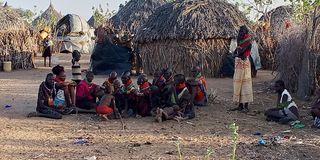
Nakukulas village residents with Energy and Petroleum Cabinet Secretary Opiyo Wandayi and local leaders engage in a jig on November 7, 2025, when he toured the South Lokichar Basin to introduce top management of Gulf Energy to the community.
Photo credit: Sammy Lutta | Nation Media Group
It also expects the investor to commit to a strict local content policy prioritising employment of qualified, semi-skilled and unskilled Nakukulas residents for a defined percentage of positions. The CLMC wants a formal role in a Local Content Monitoring Committee to oversee implementation and compliance, as well as push for strict adherence to fair and prompt payment terms for local suppliers.
Residents of Turkana East Constituency said they had hoped to usher in a new era marked by tarmacked roads, electricity, clean water, mobile phone networks, hospitals, schools and improved security.
Mr James Ekaran, a resident of Lokwamosing, said expectations were high that petroleum activities would bring direct financial benefits.
“We thought that once the crude oil was sold, Tullow Oil and the government would come back to give us a share of the proceeds. That never happened. What followed was a scaling down of petroleum activities, which had a negative socio-economic impact on livelihoods. Business owners recorded losses and many employed residents returned to their villages,” he said.
He said Turkana East Sub-county headquarters, Lokori, remained underdeveloped, with plans for a tarmac road linking it to Lokichar or connecting to Chemolingot in Baringo County through Kapedo remaining a pipe dream.
He recalled that before the Early Oil Pilot Scheme was launched, the Lokichar–Kapenguria road was rehabilitated, with the only extension being the 30-kilometre stretch from Lokichar to Amosing.
“Being a sub-county where oil was discovered, we thought it would not require a lot of lobbying or protests to get a tarmac road serving our headquarters,” he said.
The poor state of roads has contributed to underdevelopment and insecurity, as security escorts must be prioritised during major events involving leaders and development partners travelling through Lokwamosing, Lokori, Kamuge and Lomelo on the 200-kilometre stretch from Lokichar to Kapedo.
Turkana East MP Nicholas Ngikor has been pushing for tarmacking of the road, saying it is the shortest route to Nakuru through Lokori, Kapedo and Chemolingot.
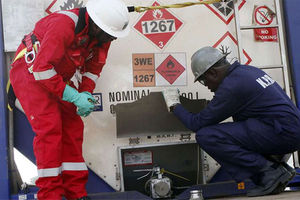
“If oil revenue can cater for transporting crude oil by road through Kitale, then plans should also be in place to construct the road through Lokori, which will be needed during production before a pipeline and railway line are constructed,” he said.
He added that better road networks would enhance connectivity, access to markets, education and health services, and uplift residents’ livelihoods.
Residents of Lopii village said insecurity has escalated. Mr Caxton Lominyi said locals, who are largely nomadic pastoralists, remain vulnerable to bandit attacks despite repeated government directives to end insecurity along the Turkana–Pokot border.
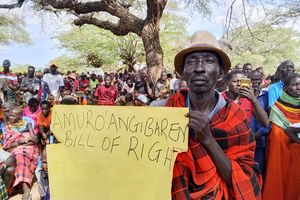
“We expect the government to tackle banditry once and for all as it shifts focus to commercial oil production. Failure to do so should be met with protests,” Mr Lominyi said.
When Petroleum Cabinet Secretary Opiyo Wandayi visited Turkana in November to introduce the new investor, he assured residents that security would be prioritised.
“The project requires improved security, and the national government is working to ensure this. I will engage my colleague, Interior Cabinet Secretary Kipchumba Murkomen, to ensure border security is boosted before activities resume,” Mr Wandayi said.
Turkana County government officials inspect Kotome bridge in Turkana North Constituency on April 11, 2021.
Photo credit: Sammy Lutta | Nation Media Group
He added that President William Ruto had made a personal commitment to ensure oil discovered in 2012 benefits Turkana residents and the country, and had directed him to marshal all necessary resources for the South Lokichar Oil Field Project.
Mr Wandayi expressed optimism that crude oil exports would resume before the end of 2026 and assured residents that the approved revenue-sharing formula would be respected, noting that Gulf Energy’s capacity and integrity would move the project forward.
President Ruto last month, during the ninth Turkana Tourism and Cultural Festival (Tobong’u Lore), said his administration was focused on unlocking Turkana’s oil resources through a new National Petroleum Policy to ensure tangible benefits for locals.
However, residents have been forced to wait longer after the Senate Standing Committee on Energy and the National Assembly Departmental Committee on Energy postponed public participation hearings on the South Lokichar Field Development Plan and Production Sharing Contracts for Blocks T6 and T7.
Locals from Turkana South and Turkana East said they had not been adequately informed of the reasons for the delays, despite their eagerness to submit views before the documents are tabled in Parliament.
“We are waiting for communication from area chiefs on new dates for public participation. Previously, residents of the newly created Aroo Sub-county did not directly benefit from opportunities linked to petroleum activities,” said Mr Peter Nakauron of Katilu Ward.
Under the Asanyanait Assembly, elders raised concerns over a cost recovery clause allowing Gulf Energy to use up to 85 per cent of revenue to recover its investment before profits are calculated.
Group secretary Julius Loyolo said the provision threatens community rights and undermines the Petroleum Act (2019).
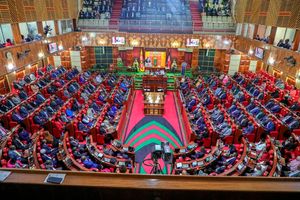
Appearing before a joint parliamentary committee on Monday, Mr Wandayi defended the approval of the Field Development Plan, saying the project is legally sound and economically viable, dismissing concerns that the cost recovery ceiling is too high.
Mr Loyolo argued that raising the cap leaves a minimal pool of profit oil, from which the community’s five per cent share is derived, effectively postponing benefits for South Lokichar residents.
Families in the basin remain hopeful that resumption of petroleum activities will lift them from poverty if well managed.
Lokichar town, which experienced rapid growth during the exploration phase when about 560 million barrels of recoverable oil were identified, has slipped back into decline, with empty rental houses, shops and accommodation facilities.