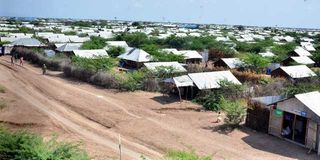
Residents living around Kakuma Refugee Camp and Kalobeyei Integrated Settlement are bearing with the effects of refugee-hosting pressures as the government rolls out the Shirika Plan, with dwindling humanitarian funding further straining already limited services.
The 12-year plan, launched by President William Ruto at State House, Nairobi, in March 2025, is a landmark initiative seeking to transition traditional refugee camps in Kakuma, Turkana County, and Dadaab, Garissa County, into integrated urban municipalities. The plan aims to shift the two camps from humanitarian aid dependency towards inclusive socio-economic development for more than 830,000 refugees and host-community members.
But for residents in Kakuma, the transition is unfolding against a backdrop of water shortages, overcrowded health and education services and heightened competition for scarce jobs. Frequent appeals to the county government have yielded limited impact, with authorities pointing to inadequate funding to meet the needs of a population that includes both refugees and host communities.
Water crisis hits both communities
Kakuma resident Mr James Ekidor said locals and refugees have increasingly been forced to turn to untreated water from scoop holes in the seasonal Tarach River, exposing them to water-borne diseases.
The pressure has been compounded by a sharp reduction in humanitarian support following USAID funding cuts, he said.
Refugees at Kakuma Refugee Camp and Kalobeyei Integrated Settlement protest over scarcity of food and water on March 3, 2025.
Photo credit: Sammy Lutta | Nation Media Gruop
Another resident, Ms Pauline Limagur, said refugees had previously benefited from development partners that prioritised water projects in the settlement, sometimes creating tensions with the host community.
“Some development partners only opted to serve refugees with clean water through water trucking, as the host community relies on unsafe and unhygienic water sources like hand-dug scoop wells at a seasonal river. At the moment, we both have Tarach River as our common water point whenever there are shortages in piped systems,” Ms Limagur said.
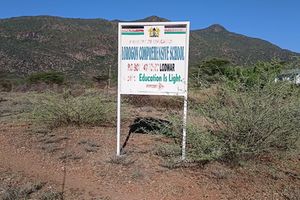
She said the situation had also exposed the wider pressure on public services, with schools suffering from extreme overcrowding and inadequate numbers of qualified teachers. Public health facilities, she added, are facing chronic shortages of medicine, medical staff and specialised care.
Resident Paddy Ejore said the authorities must also ensure that Kakuma does not become an eyesore as it takes on the appearance and functions of a municipality, particularly by allowing garbage to accumulate.
County calls for direct funding
Turkana County authorities have attributed the situation to inadequate funding to properly execute devolved functions for a population comprising refugees and residents.
Turkana Deputy Governor John Erus has proposed that refugee-hosting status should be considered a parameter in revenue allocation by the Commission on Revenue Allocation (CRA), arguing that this would help address inequalities faced by counties hosting large refugee populations.
Speaking on Tuesday when he hosted UN Women Country Representative Antonia N’gabala Sodonon during her visit to the county for talks on partnerships, Erus said Turkana and Garissa were facing serious funding challenges in providing devolved services to refugees and host communities.
He said Kakuma, now a municipality under the Shirika Plan, was facing severe resource deficits because of its massive, protracted refugee population and sharp drops in international donor funding. He called for direct funding to strengthen coordination between state and non-state actors involved in humanitarian assistance and refugee services.
A refugee from Kakuma Refugee Camp in tears outside UNHCR offices in Kakuma town during the March 3, 2025 protests against scarcity of food, water and shirika plan.
Photo credit: Sammy Lutta | Nation
“Shirika Plan in its current form and structure does not empower counties to take charge of service provision as expected of them under the constitutional order of devolved functions. With direct funding from the Commission on Revenue Allocation and support from humanitarian actors such as UN Women and other players, we will not only create an integrated model for service delivery but also ease the burdens faced by refugee-hosting counties in Kenya,” he said.
Mr Erus also lauded UN Women for contributing to the welfare of refugees and host communities in Turkana by investing in a modern garage at Kalobeyei.
Mr Sodonon said the organisation would support Turkana in empowering women in refugee and host communities to play a role in unlocking the county’s full potential.
Livelihoods and urban infrastructure
The county government has also partnered with the International Rescue Committee (IRC) to implement a 15-month programme targeting refugee and host communities. The programme seeks to promote economic self-reliance by strengthening policies, systems and platforms for local and national policy dialogue.
The programme, Refugees in East Africa: Boosting Urban Innovations for Livelihood Development - dubbed “Re” - was jointly developed with the IKEA Foundation and a network of local and global partners and was rolled out in April.
Kakuma Municipality Manager Mr Benjamin Tukei said the municipality was using public forums to ensure locals, refugees and partners were informed about ongoing and upcoming development projects under the World Bank-funded Kenya Urban Support Programme. The projects are aimed at improving roads, drainage, public spaces and other essential municipal infrastructure while fostering social cohesion and shared prosperity for refugee and host communities.
“As a special municipality, Kakuma presents a unique opportunity to promote inclusive, sustainable, and integrated urban development that benefits both the refugee and host communities. I encouraged residents to actively participate in governance processes, as public participation is the foundation of transparent, accountable, and people-centered service delivery,” he said.
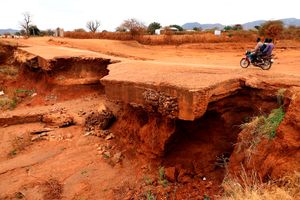
Among the planned projects are construction of a 1.8-kilometre tarmacked road from Stabex Petrol Station to Rajab Police Station; installation of street lighting across Kakuma Town, Kakuma Refugee Camp and Kalobeyei Settlement; installation of high-mast and flood lights in markets within the camp and host community; and construction of a modern fire station and procurement of a fire engine to strengthen emergency response services.
Funding cuts threaten the transition
The funding squeeze was also acknowledged in May when Kenya’s Permanent Representative to the United Nations, Mr Erastus Ekitela Lokaale, met UN agencies in Kakuma, including UNHCR, WFP, IOM and UN-Habitat. The meeting reviewed ongoing refugee and host-community programmes and sought to strengthen cooperation on humanitarian and development efforts in Turkana.
Mr Lokaale confirmed that although implementation of the Shirika Plan was on course, funding cuts were affecting the programme.
“Shirika Plan, which seeks to enhance the socioeconomic integration of refugees and host communities, is on course, but with cuts in funding, it is being affected in certain ways, like reduction in the staff number. I promised to take up the matter in New York to make sure that the UN General Assembly and other organs of the United Nations can provide adequate resources in places such as Kakuma, Dadaab and where there is need,” Mr Lokaale said.
He nevertheless said more public participation was needed around plans by the national government and UN agencies to ensure local communities better understood what the Shirika Plan was intended to achieve.
“The progress is good, but more can be done by enhancing support to the local community,” he said.