For years, Mr Shadrack Kiptanui Moimett wore the National Police Service uniform, serving in a profession that demanded discipline and commitment to duty. But away from his police work, he felt drawn to a different calling - the traditional herbal medicine he had learnt from his grandmother.
In the mid-1990s, while stationed in Embakasi, Nairobi, Mr Moimett left the police service to pursue herbal medicine full-time.
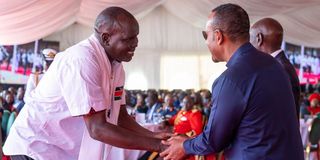
Decades later, his work earned him recognition during this year’s Mashujaa Day celebrations in Eldoret, where President William Ruto honoured him for his contribution to the preservation and promotion of indigenous cultural practices, particularly traditional herbal medicine.
For Mr Moimett, the recognition marks a significant milestone in a journey shaped by family heritage and a commitment to keeping traditional healing practices alive.
He traces his interest in herbal medicine to his upbringing and his roots in the Talai clan of the Rift Valley, where he says his grandmother passed down knowledge of medicinal plants.
Rather than continue his career in the police service, Mr Moimett chose to build on that knowledge, turning to the use of plant-based remedies and the study of traditional healing practices.
He later established Koibatek Herbal Clinic, which, according to his account, has expanded its operations to several major towns in Kenya. His work combines traditional knowledge accumulated over decades with research into diet and nutrition.
President William Ruto (left), Eldoret-based herbalist Shadrack Moimett and Ethiopian Prime Minister Abiy Ahmed at Eldoret State Lodge on October 20, 2026. Moimett was honoured for his decades-long dedication to preserving and advancing indigenous herbal medicine.
Photo credit: Titus Ominde | Nation Media Group
Speaking after receiving the honour at State Lodge Eldoret, Mr Moimett called on Parliament to establish a clear legal framework for traditional herbal medicine, arguing that regulation would help integrate the practice into Kenya’s wider healthcare system.
“This recognition is a powerful indicator that herbal medicine is real, potent, and a pillar of our heritage. It is time for Parliament to enact a law that will streamline herbal medicine into conventional medicine so that millions of Kenyans can access safe, regulated traditional treatments without stigma,” he said.
His appeal centres on the need for clear standards governing practitioners and the preparation and use of herbal remedies. Such a framework, he argued, would help establish safeguards for people seeking traditional treatments.
Mashujaa Day: 264 Kenyans feted, 46 of them posthumously
However, any integration of herbal medicine into formal healthcare would require appropriate standards for safety, quality and evidence of effectiveness, particularly where remedies are used to treat serious illnesses or alongside prescribed medication.
Mr Moimett also expressed concern about what he described as the effects of modern lifestyles, including diets high in processed foods and physical inactivity, on the prevalence of lifestyle-related diseases.
He believes traditional plant-based remedies could complement conventional healthcare if their use received appropriate institutional support.
Eldoret-based herbalist Shadrack Moimett.
Photo credit: File | Nation Media Group
The former police officer also questioned the way cancer awareness campaigns are organised, arguing that the emphasis on particular forms of the disease can leave patients with less-publicised cancers feeling overlooked.
He called for a more coordinated approach to cancer awareness, saying campaigns should address different forms of the disease and ensure patients receive attention, support and information regardless of their diagnosis.
His position raises a broader question about how public health campaigns can maintain targeted awareness efforts for specific cancers while ensuring that other forms of the disease are not neglected.