Hello

Your subscription is almost coming to an end. Don’t miss out on the great content on Nation.Africa

Ready to continue your informative journey with us?

Hello

Your premium access has ended, but the best of Nation.Africa is still within reach. Renew now to unlock exclusive stories and in-depth features.

Reclaim your full access. Click below to renew.

New Content Item (1)
Caption for the landscape image:

Scrubs and dollars: How Kenyan nurses are living American Dream

Scroll down to read the article

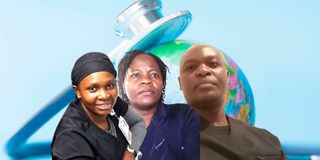
Kenyan nurses who work in the US, Ruth Naome (left), Faith Mudibo and Mike Owuor.

Photo credit: Pool

In Seattle, USA

The first thing America offers some newly arrived Kenyan-born nurses is warmth, but the warmth can turn into a rumour.

Most of them arrive in Florida, where recruitment agencies gather new hires for a few weeks of orientation under a sky reminiscent of the coastal city of Mombasa.

Then the deployment letters are sent out, and many of the new hires are sent to the middle of the country, where the year has four distinct seasons.

“The Midwest epitomises winter, tornadoes and sweltering humidity in summer,” said Mike Owuor, a registered nurse who has worked in hospitals from Arizona to Boston and now serves at the University of Washington. Compared to Kenya’s consistent climate, this transition is an education in itself.

Mike Owuor

Mike Owuor, Kenyan nurse in the United States.

Photo credit: Pool

The wave that carried most of them crested just after the pandemic, when American hospitals were short of staff and started recruiting abroad. Kenya sent nurses, but the flow has since slowed, said Owuor, partly because the industry has steadied and partly because federal immigration policy keeps changing.

The reason for their arrival is not mysterious. Kenya pays its nurses poorly, whereas America pays them well and provides them with the necessary equipment.

“Well-equipped facilities and a conducive work environment,” said Owuor, “draw people as surely as the paycheque does.”

Those who have made the move cite the same reasons in more positive terms. American nursing wages have become a gravitational force pulling Kenyan nurses across continents, especially when the baseline earnings are set at $60 (Sh7,800) per hour. At that rate, a full-time registered nurse in the United States takes home approximately $124,800 (Sh16.2 million) per year before overtime, bonuses or holiday pay.

In high-demand states such as California, New York and Massachusetts, experienced or specialised nurses routinely earn $65–$85 per hour, with annual compensation exceeding $140,000–$170,000.

Even entry-level roles in certain regions start above $55 per hour, making nursing one of America’s most financially secure professions.

For Kenyan nurses accustomed to annual earnings ranging from $4,000 (Sh520,000) to $10,000 (Sh1.3 million), the difference is significant. This wage disparity is one of the reasons why the US has become a magnet for Kenyan nursing talent.

“For many of us, nursing is an opportunity to serve others while building a better future for our families,” said Ruth Naome, a registered nurse.

The statement encapsulates both aspects of the decision: the vocation and the household it is intended to support.

Faith Mudibo, also a registered nurse, puts it more plainly: “The pay is good abroad,” she says. “Nursing is appealing because when you finish college, you are sure to find work in government or private facilities.”

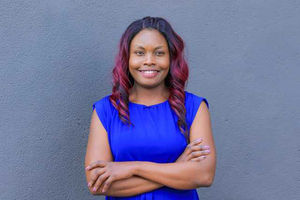
Faith Mudibo

Faith Mudibo, Kenyan nurse in the United States.

Photo credit: Pool

It is a profession chosen partly for its stability, a rare commodity for a young Kenyan graduate, and this stability is highly sought after.

Healthcare in the United States comprises a variety of professions and is one of the country’s largest employers. It is always hiring, and its career progression opportunities are well publicised. A Kenyan arriving with a nursing qualification is presented with a corridor of opportunities rather than a narrow door.

Owuor was trained entirely in the United States — he is a Kenyan standing on the American side of the glass. What he knows about the Kenyan classroom, he learned from the hundreds of people he has led. They have taught him two things. The workload in America is heavier, and the documentation is relentless. In American nursing, a note is a deed; care that goes unwritten did not happen.

Those who have arrived repeat this second lesson most often, describing it as a philosophy. “In America, patient autonomy is highly emphasised, and documentation is extremely detailed,” said Naome. “It takes time to adjust, but once you understand the system, you become a stronger and more confident nurse.”

The record is part of the care process, and the amount of documentation can be overwhelming. “Many nurses are surprised by the amount of documentation and responsibility that comes with the job,” she said.

“Every action must be recorded electronically and accurately.”

Mudibo describes the same ward from a different perspective, observing how much has been settled before the nurse arrives.

“Most of the documents are digital, so you have to record everything,” she says. “Services are offered regardless of financial status, hospitals are well equipped, and patients know their rights and can make decisions about their health.”

When dealing with patients who are aware of their rights, consent becomes a conversation, and authority is exercised through persuasion.

The newcomers have a reputation that has preceded them and has since been earned. Kenyans are hard-working, said Owuor, and arrive “ready to get off the mark”.

They are quick learners, a trait he attributes to the rigour of schooling in Kenya, where exams are a way of life. They scatter across every specialty and treat an unfamiliar ward the way they once treated a syllabus.

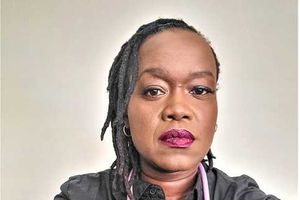
Ruth Naome

Ruth Naome, a Kenya Registered Nurse in the United States.

Photo credit: Allan Bukuku | Nation Media Group

“The first year can be overwhelming,” said Naome. “You are learning a new healthcare system while trying to build a new life and still supporting your family back home.”

Mudibo’s account of that period is more blunt. “There are a lot of challenges in the beginning,” she said. “Culture shock, patients saying they cannot understand your accent, and the pressure of working hard to pay your bills while people at home expect so much from you.”

Expectations from home are high, but do not take into account the cost of living in America.

The first challenge is the accent. For a while, even a nurse who speaks English perfectly may find themselves having to repeat statements at the drive-through and at the bank, and their sentences may reach patients a moment late.

This barrier thins with time and, for most, disappears completely. It is rarely comprehension that suffers. More often than not, it’s confidence, which is harder to quantify.

Discrimination shadows the journey. Patients ask where a Kenyan nurse went to school or if they have a degree. These questions masquerade as curiosity but feel like audits.

“A client or patient might demand to have a different person take care of them,” said Owuor, offering no reason and requiring none.

Minorities of every origin face questions about their competence. Kenyans compare notes, which has become a skill in itself — a way of contacting someone who has already been asked the same question and knows what the policy manual says.

Naome addresses the assumption behind the question directly. “Sometimes people assume that nurses trained abroad are less prepared, but Kenyan nurses receive excellent clinical training and bring adaptability, experience, and compassion to the profession,” she said.

Then there is burnout, which arrives on an unpublished schedule. Kenyan nurses, driven by ambition and by an obligation to support households on two continents, work extremely hard. “Kenyans are hard-working and believe in pushing themselves,” said Owuor.

Tolerance varies by ward and temperament: what exhausts one nurse invigorates another. Ultimately, the choice of specialty is a personal negotiation with one’s own stamina.

The remedy is time off: New York, Chicago, Las Vegas, and so on. This could be road trips through the 50 states, sports activities, spending time with family, or a weekend at home to catch their breath.

The ordinary world takes some getting used to. The break room offers snacks that taste nothing like those from home, and the vocabulary can be misleading.

Ask for chips in Ohio, and you will be given a bag of dry sliced potatoes.

Landlords tie renters to one- or two-year leases and charge handsomely for an early exit, meaning a decision made during the first jet-lagged week can govern the first two years. Most of America has to be driven, and driving on the right-hand side of the road has to be relearned, so there are borrowed rides and long bus journeys before the first car can be bought.

Bars close at 2am, which is why, in states with a large Kenyan population, the party often moves to someone’s living room. Loneliness is rarely mentioned but keenly felt. A nurse who arrives with a cousin in the same time zone is fortunate. Those who land alone must learn a new country and a new hospital at once, living in an apartment where nothing is familiar, including the silence.

To combat this, they display the flag, wearing it braided on their wrists, stuck to their licence plates or car trunks. At pot-lucks, or eat-together gatherings, they cook, and the food speaks for them.

They follow the news from Nairobi and argue about it over lunch.

“As Kenyans, community is part of who we are,” said Naome. “We stay connected through churches, associations, and gatherings that remind us of where we come from, while helping us to thrive in our new home.”

These gatherings serve two purposes: memory on one side and stability on the other.

They also build associations because the trouble is real. As secretary-general of both the USA-Kenya Healthcare Professionals Association and the Kenyan American RN Association, Owuor has overseen a surge in membership to over 450 professionals, attracting Ugandans, Tanzanians, and colleagues from the Caribbean.

“It is basically an extension of the Kenyan way of doing things,” he said.

The groups rate hospitals for one another, recommend colleges, refer difficult cases to umbrella bodies, and raise money when a member loses a parent. It is the village, reassembled by group chat and annual dues.

Some of the issues they deal with are domestic and rarely spoken about.

Immigration makes one spouse the sponsor and the other the sponsored, and this can lead to power imbalances. The association has received pleas from spouses whose petitions have been cancelled, with the threat moving in both directions depending on who filed the paperwork.

Most families never see it coming. Some do, and it starts as a normal power struggle that nobody stopped in time. Some of it is contractual. Recruitment agencies advance the pay and expect it back over a number of years; a nurse who leaves early buys out the balance. Many serve their full term, then move to direct employment, where no one takes a cut of their pay.

The structure is better, however. A nursing licence used to belong to the state rather than the nation, and meant having to make a fresh application at every border. Forty-three states now share a compact and honour one another’s credentials, leaving seven states outside it. For new arrivals, the agency handles the licensing process in the deployment state, which is one reason why so many count the months until the end of their contract. The compact transforms a career that was once confined to a state line into one that can follow a spouse, a fellowship, or a milder winter.

The ladder is open, which may be the most persuasive thing about the country. Admission to nursing programmes here is determined by college prerequisites rather than high school grades, and American colleges have broad admissions criteria, testing applicants upon enrolment and accommodating those who have been formally or home-schooled.

The filter comes later. Prerequisites such as anatomy, physiology, microbiology, organic chemistry and statistics thin the field, and those who fall short either wait and retake the courses or pursue another specialty entirely.

Nobody’s future is settled at 18, and nobody’s is guaranteed at 20. Beyond that point, there is no limit.

“Registered nurses, physician assistants, doctor of nursing practice graduates and medical doctors are all attainable and achievable levels for Kenyans,” said Owuor.

Kenyans hold doctorates in nursing practice, run dialysis departments, and manage nursing units at leading hospitals in Rochester and Boston. They also lecture and conduct research in their current roles.

Some arrive with doctorates in the social sciences and retrain as nurses because the pay is better — a statement that speaks volumes about both Kenya’s and America’s labour markets. “Kenyans are not just prominent in one area of speciality,” he said. “They are everywhere.”

What flows home is money and knowledge. Hospitals and Kenyan groups organise short clinical trips back home, and YouTube does the rest. Many return to lecture at Kenyan universities. If Kenya wants this expertise, Owuor said, it should pay for it by offering attractive packages to diaspora faculty and establishing large-scale exchange programmes. He declines to forecast.

The American labour market answers to no one, and immigration policy keeps changing, though those already in the pipeline will likely benefit from their efforts.

For young people at home, he has one piece of advice: find a genuine agency, pass the licensure examination known as the NCLEX, and take the next step. “A journey of a thousand miles begins with a single step.”

Naome offers the same advice in the form of a set of terms.

“Nursing in America is both rewarding and demanding,” she said. “Success requires dedication, continuous learning, and the ability to withstand the emotional weight of the work.”

Florida, then, was not a deception. It was a prologue, and the rest of the sentence is written in snow.

Follow our WhatsApp channel for breaking news updates and more stories like this.