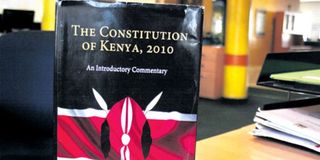
When Kenyans queued at polling stations fifteen years ago to vote on the 2010 Constitution, they were not merely endorsing a legal text but rewriting the nation’s story. The ambition was not just a new Constitution, but a new covenant — the foundation for a freer, fairer, more accountable Republic.
The clamour for reform stemmed from the truth that the independence-era Constitution, repeatedly disfigured by amendments, no longer represented our aspirations.
Born of decades of struggle against centralised power and fragile institutions, the 2010 Constitution became an act of faith and the clearest expression of the people’s will.
Fifteen years on, how far have we travelled towards that promise? The most visible achievement has been devolution. Forty-seven county governments have reshaped politics, bringing services closer to citizens.
Clinics, roads, and markets now depend on local leaders rather than distant ministries.
Yet alongside this progress came corruption in county colours, endless impeachment sagas, and rival chambers presided over by competing speakers. Still, devolution has rewired Kenya’s political DNA irreversibly.
Equally significant is the Bill of Rights, which has leapt from the Constitution’s pages into courtrooms and public consciousness. Landmark rulings on housing, labour, gender, and association have demonstrated courts’ power to define freedom, producing a uniquely Kenyan “jurisprudence” grounded in social justice.
The judiciary, once timid, now speaks boldly, striking down unconstitutional laws and reminding elites they are subject to the law. Independent commissions, though uneven, have carved out oversight roles.
Citizens, too, have embraced public participation: petitions, town halls, and forums may be messy, but they ensure government at least listens.
Yet the dissonance between constitutional ideals and political practice is stark. Leaders often treat obligations as optional, selecting what suits them and discarding the rest. Devolution, while a proud creation, has too often localised corruption. Patronage politics, weak oversight, and limited civic engagement prevent it from achieving its full potential.
Economically, the promise of equity is only partly fulfilled. Marginalised regions still suffer poor infrastructure, failing schools, and understaffed hospitals. A revenue formula in Nairobi cannot erase decades of neglect without sustained investment and political will.
Political parties remain the weakest link. Envisioned as policy-driven vehicles of democracy, they remain personality-based and ethnically mobilised.
The Constitution can create institutions, but it cannot legislate political maturity.
Citizens are restless. Youth have repeatedly taken to the streets, even Parliament, to voice frustration, with some openly discussing withdrawing delegated authority under Article 1.
The 2010 Constitution remains our most ambitious project, but text alone cannot transform culture. Many of our challenges are political, not constitutional. Amendments may be tempting, but real progress demands behaviour change.
Ultimately, the Constitution’s test is in lived experience: greater freedoms, accountability, and equity. We must guard it with respect and vigilance.
It is not a trophy but a tool. Whether we build a just and prosperous society within it is a responsibility for which history will judge us.
*Prof Githu Muigai was a member of the Constitution of Kenya Review Commission (2000–2005) and is the author of Power, Politics and Law: The Dynamics of Constitutional Change in Kenya.