When buying a home, most people have a familiar checklist: location, price, number of bedrooms, parking space, security and proximity to schools, shops and roads.
But as Kenya faces increasingly unpredictable weather, another question could soon become just as important: Can the house withstand the climate?
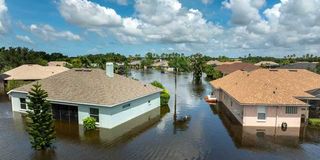
A beautiful home in a flood-prone neighbourhood can quickly lose its appeal when heavy rains turn the compound into a pool of water. Likewise, a house with large glass windows may look modern and stylish but become unbearably hot when temperatures rise.
With the National Disaster and Operation Centre (NDOC) recently flagging 18 counties, including Nairobi, Mombasa and Kisumu, as high-risk for El Niño expected in October, climate-resilient housing is becoming increasingly difficult for property buyers, developers and homeowners to ignore. For property owners, however, climate resilience is about more than preparing for the next storm. It could increasingly influence the value of a property, its appeal to tenants and buyers and, importantly, how much an owner spends maintaining it over its lifetime.
Architect Wycliffe Waburiri, immediate former president of the East African Institute of Architects, says developers can no longer design buildings without considering the weather conditions they will face.
“We have to design with elements in mind,” he says, referring to the full range of weather conditions, from heavy rainfall and intense sunlight to wind and temperature changes.
One of the simplest places to begin climate-proofing a home is the roof. During heavy rainfall, the ability of a roof to move water away from the building can determine whether the rain remains outside or eventually finds its way into the house.
Waburiri says homeowners and developers need to pay attention to the roof pitch, gutters and downpipes. An appropriate roof pitch allows rainwater to flow away rather than remain on the surface. Gutters must also be kept clear of leaves and debris, while downpipes need to allow sufficient water to flow away from the building.
“Downpipes connecting those gutters also need to be opened up to ensure that there is sufficient flow of water,” he says.
Blocked gutters can cause water to overflow onto walls and foundations and persistent moisture can then damage finishes and contribute to dampness and mould. Climate-proofing, therefore, does not necessarily mean spending millions on sophisticated technology. Sometimes it starts with ensuring that the basic elements of a home are designed and maintained properly. He notes that one should always think beyond the interior of the house since what happens outside the house is equally important.
For instance, many homeowners prefer covering their compounds with concrete or cabro because such surfaces are easier to clean and eliminate mud, however, Waburiri warns that covering too much land with hard surfaces prevents rainwater from naturally soaking into the ground.
“As much as possible, you want to have some softscape that allows water to seep into the ground,” he says.
The problem is particularly evident in cities such as Nairobi, where large areas have been covered by buildings, concrete and paved surfaces. When heavy rain falls, instead of gradually being absorbed into the ground, large volumes of water run off quickly into drainage channels and rivers.
“If you do cabro all over, you start experiencing what Nairobi has been facing,” Mr Waburiri says.
For homeowners, this does not mean abandoning paved compounds altogether, rather, it means striking a balance between functional paved areas and landscaped sections that allow water to infiltrate the soil.
For someone buying a home in a new estate, climate resilience goes beyond the individual house. The drainage of the entire development and the natural characteristics of the land should be considered before construction begins. Civil engineer, Dr Damaris Oyaro, a lecturer and council member at the Institution of Engineers of Kenya, says stormwater management should be part of estate planning from the earliest stages.
“Stormwater drainage systems are essential infrastructure in any residential development,” she says.
Engineers should examine the natural slope of the land, soil composition and expected rainfall before designing drainage channels, culverts and underground pipes. One of the biggest mistakes developers can make, she says, is ignoring the natural topography.
“When developers alter natural water pathways without proper drainage planning, flooding becomes almost inevitable,” she says.
There is need to strike a balance between functional paved areas and landscaped.
Photo credit: Shutterstock
This is also something prospective buyers should consider before signing a sale agreement. A house may look perfect on a sunny afternoon, but buyers should ask what happens when a storm hits. Check whether the compound is lower than the road, whether the property is close to a river or natural drainage path, and whether the estate has functioning stormwater channels. Also worth determining is where the water from neighbouring properties flows to. Such questions could save buyers from expensive surprises.
Can resilience add value?
For years, climate resilience has largely been treated as an environmental concern, but Waburiri believes it could also become a property-market advantage. A home where residents know that rainwater will drain properly, the building is protected from flooding and the interior remains comfortable during extreme heat can be more attractive than one without such features.
“I think the psychological safety that comes with a building is more attractive,” he says.
This could eventually change how properties are marketed. Instead of developers focusing only on bedrooms, fitted kitchens, swimming pools and parking spaces, climate resilience could become another selling point. Features such as proper drainage, raised foundations, mature trees, natural ventilation, appropriate building materials and rainwater harvesting could increasingly feature in property descriptions.
For properties in areas vulnerable to flooding, one of the most straightforward interventions is raising the building above ground level.
Waburiri recommends an adequately raised plinth, which creates a buffer between the house and floodwater and reduces the possibility of water entering the building during temporary flooding. The site should also be designed so that water can move naturally towards appropriate stormwater channels instead of collecting around the house.
That distinction is important because flooding is not only about how much rain falls, it is also about where the water goes once it hits the ground.
Eng Julius Mugun, chief executive officer of the National Water Harvesting and Storage Authority, says recent flooding has exposed weaknesses in urban stormwater infrastructure.
Pedestrians walk on a newly refurbished cabro paving along Moi Avenue in Nairobi on December 11, 2025.
Photo credit: Evans Habil | Nation Media Group
“The flooding we witnessed is not just about heavy rainfall, it reflects long-standing structural weaknesses in our cities such as Nairobi’s stormwater management infrastructure,” he says.
Rapid urban expansion has increased the amount of concrete, asphalt and buildings, while drainage networks have struggled to keep pace. As more land is covered by hard surfaces, rainwater that would once have soaked naturally into the ground now runs off quickly.
Mugun also points to blocked drainage channels, waste, sediment and structures built along drainage corridors as contributors to flooding. Flooding is not the only climate threat property owners should consider. Extreme heat is another growing concern, particularly in rapidly developing urban areas.
Waburiri says trees and vegetation can help create a cooler microclimate around homes. He gives the example of Juja, where increased tree cover around Jomo Kenyatta University of Agriculture and Technology has helped create a cooler environment.
For homeowners in hot areas such as Juja, Kajiado, Syokimau and parts of Kambini, planting trees can therefore be a relatively simple way of improving the immediate environment.
Mr Waburiri says that a house can be protected from rain and still be uncomfortable if it has poor indoor air circulation. He recommends cross ventilation to help regulate indoor temperatures and improve air quality. Cross ventilation refers to a natural cooling process where, for instance, wind enters an opening on one side of a building and exits through an opening on the opposite side. Good lighting and ventilation can also help reduce problems associated with dampness and mould.
He points to what is commonly referred to as “sick building syndrome”, where poor indoor environmental conditions can affect occupants' comfort and wellbeing.
For buyers, this means a property viewing should involve more than checking the size of the rooms and quality of the finishes.
“Open the windows. Check how air moves through the house. Look for damp patches and mould. Consider how much direct sunlight different rooms receive,” Waburiri says.
These details may seem minor during a viewing, but they can have a major effect on everyday living. For a homeowner with a limited construction budget, climate-proofing does not mean installing every possible green technology. Waburiri says the first consideration should be made before construction begins.
“Site selection. A good site will reduce the amount of interventions that you have to put in,” he says.
The second consideration is building materials. In hot climates, materials with high thermal mass can help regulate indoor temperatures by absorbing heat during the day and releasing it later.
The third is the roof. An appropriate and functional roof pitch is critical, particularly in tropical environments that experience both high rainfall and high temperatures. Waburiri cautions homeowners against choosing architectural designs simply because they look fashionable.
“Sometimes people are fascinated by designs and they adopt those designs without fully understanding their performance in different environments,” he says.
This warning is particularly relevant to the popularity of large glass facades. Glass can give a building a sleek, modern appearance, but if it is not properly designed for the local climate, it can contribute to uncomfortable indoor temperatures.