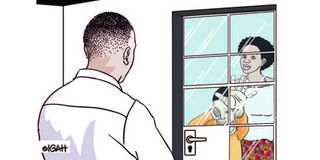
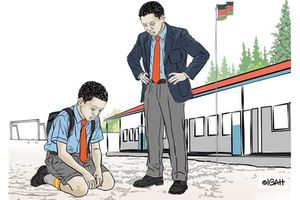
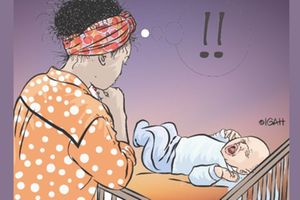
Can a father who rejected his child at birth and disappeared for years suddenly return to claim custody—especially when the child has thrived under my sole care and family support? I hear he hasn’t been able to have more children in his current marriage.
Justice for children is never confined to statutes alone; it is at once legal, emotional, social, and profoundly human. In Kenya, matters concerning children—whether decided in courts or addressed outside them—are anchored in the Constitution, the Children Act, international conventions, and regional legal instruments. The unifying thread across these frameworks is the principle of the best interests of the child, expressly enshrined in Article 53(2) of the Constitution and reiterated in Section 8 of the Children Act, 2022.
Judicial precedent has consistently reinforced this principle, affirming that custody disputes are not contests of parental rights but determinations of the child’s welfare, stability, and holistic development.
Parental responsibility, as established by society and enshrined in Article 53(1)(e) of the Constitution, attaches to both parents irrespective of marital status or personal circumstances.
A father who rejected a child at birth does not shed this responsibility; he remains legally bound to contribute to the child’s maintenance, education, and healthcare. Yet parental responsibility is distinct from custody. Custody entails the day‑to‑day care and control of the child, and courts will only grant it to the parent who demonstrably safeguards the child’s welfare.
Where a parent deliberately refuses to be part of the child’s life, the way forward must be addressed either in court or through structured dialogue.
In FOC v ES & 3 others [2026] KEHC 8163 (KLR), the High Court upheld custody with the mother, recognising her role as sole caregiver and warning that uprooting the child would disrupt her emotional and social development. The father, though acknowledged as bearing parental responsibility, was limited to visitation during school holidays.
Similarly, in AMN v JWM [2026] KEHC 10736 (KLR), the court affirmed the father’s duty of maintenance but awarded custody to the mother, who had demonstrated consistent care. These decisions underscore the judiciary’s reluctance to transfer custody to a parent who abandoned the child, particularly where the child has bonded with the custodial parent and extended family. In JKN v HWN, the court observed that the best interests principle encompasses emotional, psychological, social, and developmental needs of a child, not merely economic considerations. This demonstrates that income stability alone cannot outweigh the broader dimensions of a child’s welfare.
In your circumstances, the father’s sudden reappearance after years of absence does not entitle him to reclaim custody or disrupt the relationship you have built with the child. His right to biological recognition has been addressed in jurisprudence. In L.N.W v Attorney General, Registrar of Births and Deaths and 2 Others (Petition No. 484 of 2014), Justice Mumbi Ngugi affirmed that a father’s identity may be reflected in the birth certificate, underscoring the importance of transparency in parentage.
Similarly, Lady Justice Hale in Re R (a Child) emphasised that children benefit from acknowledgement of both social and biological parents, even where links have weakened over time. Such recognition, however, does not translate into custody rights; it simply affirms identity.
Therefore, if the matter comes before court, the child’s age, emotional attachment, and the environment you have provided will be central considerations. The presence of your brothers as positive male role models strengthens the case that the child has not lacked paternal guidance. The father’s inability to have children in his current marriage is not a legal ground to disturb the child’s settled life. Courts will not elevate his personal circumstances above the child’s welfare.
The law does permit him to seek visitation rights, which may be supervised or limited depending on the child’s best interests. He may also be compelled to contribute financially to the child’s upkeep. Section 94 of the Children Act empowers the court to order maintenance, ensuring that both parents share the financial burden. You may therefore apply to the Children’s Court for a custody and maintenance order, which would formalise your position as custodial parent while obliging him to provide support.
Risks in such proceedings include emotional distress for both you and the child, particularly if the father adopts an aggressive stance in pursuit of his rights. To mitigate this, you may request that visitation be gradual, supervised, or accompanied by counselling, so that the child’s emotional stability is not compromised.
Courts have recognised that sudden reintroduction of an absent parent can be traumatic, and they often order structured visitation to ease the transition.
In conclusion, Kenyan law and precedent are unequivocal: the child’s best interests—not the father’s regrets or personal circumstances, nor the mother’s pride or grandstanding—determine custody outcomes. Your role as primary caregiver is legally and morally recognised, and the courts will safeguard the stability you have built. Remember, in every child’s case, certain truths remain constant: the law must listen to the silent language of their emotions; every statute on children is a promise to protect their laughter and their tears.