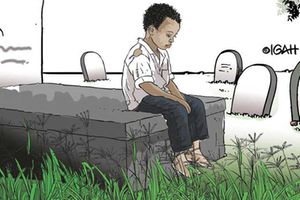
Our brother has been missing for eight years, and we now have to address matters relating to his estate on the assumption that he may be dead. We are concerned that taking any legal steps could have serious and unforeseen consequences. We have also been informed that the Registrar of Death might require physical proof of death, such as viewing the body. What legal options are available to us in this situation?
Having a missing person legally declared dead is both traumatising and unsettling, even though the law provides mechanisms to support healing and closure. This process, known as presumption of death, is a court‑sanctioned procedure that requires fulfilment of specific legal conditions. It is not an absolute declaration; the law allows for reversal if the missing person reappears, which can create complications where an estate has already been administered.
Kenyan courts are empowered to declare a missing person dead through a Presumption of Death Order, grounded in Section 118A of the Evidence Act. This allows the court to presume death where an individual has not been heard from for at least seven years by people who would ordinarily have received communication from them.
Unlike habeas corpus matters—where a body or person must be produced if state misconduct is suspected—this process does not require physical proof of death. Instead, the court relies on comprehensive, credible evidence of prolonged disappearance and reasonable efforts to trace the individual. Once the court issues the order, the Registrar of Deaths may register the death and issue a death certificate, as expressly permitted under the Births and Deaths Registration Act, which recognises court declarations as valid proof of death.
The seven‑year communication gap is rooted in a long‑standing common‑law principle adopted into Kenya’s legal system and affirmed through multiple judicial decisions. In Re Presumption of Death of James Kariuki Gitahi (2026) the High Court held that prolonged disappearance combined with diligent search efforts justified presuming death and commencing succession proceedings. Similarly, in Re Estate of Re Estate of John Njoroge Mutua (Deceased) (2021) the court retains discretion to determine the presumed date of death based on the circumstances of each case.
Courts are often moved by families seeking closure after years of uncertainty. To obtain a Presumption of Death Order, petitioners must file an application in the High Court (Family Division). The petition must include sworn affidavits from close relatives detailing when the missing person was last seen, the circumstances of the disappearance, and the efforts made to locate them. Supporting documents strengthen the petition: police reports or OB numbers, missing‑person notices, letters from chiefs or local administrators, and any evidence of community or institutional search efforts. The court does not require perfect evidence; it requires credible, consistent proof that the person has not been heard from for the statutory period.
Once satisfied, the court issues the Presumption of Death Order, which is then presented to the Registrar of Deaths for registration and issuance of a death certificate. Families sometimes fear that the Registrar may demand physical proof of death, but once a court order exists, the Registrar is legally bound to act on it. The court order substitutes for physical evidence and is sufficient for registration.
It is important to note that this process may be challenged. A friend, family member, or any interested party may oppose the declaration if they believe it is premature. In Clement Gitahi Wanjohi & Nicholas Mburu Wanjohi (2016), the court emphasised that the presumption of death is fully rebuttable and that an application will be dismissed if credible evidence suggests the person may still be alive.
Once a death certificate is issued, the family may begin succession proceedings under the Law of Succession Act. If the missing person left no will, the family applies for Letters of Administration; if a will exists, they apply for Probate. The estate is then managed and distributed according to the Act. Kenyan law protects the estate during this period. Section 45 of the Law of Succession Act criminalises intermeddling, meaning no one may use, sell, or dispose of the missing person’s property before a grant is issued. Families may also seek temporary conservatory orders to prevent misuse of land, bank accounts, or other assets.
Many families fear serious repercussions if the missing person later reappears. Kenyan law anticipates this possibility. If the person returns, the presumption of death order can be set aside, and the estate restored as far as possible. No criminal liability attaches to families who followed lawful procedures. Courts consistently emphasise that presumption of death is not a declaration of certainty but a practical mechanism to protect the estate and dependents when a person has been missing for an extended period.
Kenyan jurisprudence reflects sensitivity to the emotional and social realities surrounding missing persons. In Bernard Kinyua Kiguru (Presumed Deceased) (Miscellaneous Civil Application 28 of 2023), the court accepted community and administrative evidence where formal records were limited.
In Re E N K [2017] KEHC 3753, the court stressed that the purpose of the presumption of death is to allow families to manage estates responsibly, not to punish them for circumstances beyond their control.