When Judy Wangari enrolled her son, Collins Baraka, in pre-primary school last year at the age of four, she thought he was ready. But within a month, his class teacher raised concerns.
His classmates were already writing their names, while he was still joining dots and colouring. Those were the only activities he seemed comfortable with. “After a discussion with the teacher, it became clear that he was behind,” says the 32-year-old mother of two.
In January this year, Judy enrolled her now five-year-old son in a playgroup class instead. “The change has been encouraging. He is actually catching up,” she says.
One of the biggest improvements has been his speech. “At the beginning, his words were unclear. At some point, I was worried that he might have special needs.”
A paediatrician had advised her to give Collins time. When progress remained slow, she opted for formal schooling earlier than planned. But it was the playgroup that made the difference.
Today, Collins is able to read aloud and identify colours. She believes the foundation matters. “Before school, my son used to stay at home with the nanny, watching cartoons all day. His language was more like the cartoons on television.”
Now, Collins talks enthusiastically about the creative arts, including colouring, modelling, and hands-on activities that have helped him express himself.
Judy pays Sh48,000 per term for playgroup, excluding uniforms and books. Learning materials are provided by the school and included in the fees. Her son takes the school bus, which picks him up at 8am and drops him back home at around 3pm from Monday to Friday.
For her, the cost is manageable. Compared to other schools in my neighbourhood, and being a private school, I find it affordable. He wakes up at 7am and takes a nap in the afternoon hours before retiring to bed at 8pm,” she says.
Her choice of school was guided by proximity, about 30 minutes from home, so she can reach him quickly if any need arises.
Communication with teachers has also been a key part of the experience. “Every day, he comes home with a diary detailing what they learned, homework given and areas that need improvement,” she adds.
Judy admits the adjustment was not easy. Initially, her son would attend school only two or three days a week, but he settled into the routine after about a month.
For Lucy Musah, the decision to enrol her youngest child came later. Her daughter, Ellah Kanini, turned three in October 2025, but she chose to keep her at home for a while since she is a full-time housewife.
By the time she started playgroup this year, the child could already sing numbers from one to 10 and recite the alphabet, although not always in order.
Lucy chose a nearby school, about 20 minutes away from her house, even though her older children attend schools farther from home.
The fees are higher. She pays Sh61,000 per term, excluding meals and transport. She personally takes her daughter to school, arriving by 8am and picking her up at 2pm.
“I do not have a nanny. I usually wake up by 6am to prepare the meals for the day,” she says. “I wake my daughter up at around 7am and prepare her before leaving at a quarter to 8am. At night, she sleeps by 7pm.”
Lucy sees the cost as an investment. “I just want the best for my children. I don’t mind the cost as long as it helps her,” she says.
For Lucy, the biggest change since joining the playgroup has been independence. Before school, her daughter struggled to go to the toilet on her own. Now, she manages on her own and even handles other small tasks independently.
“At home, she talks most about singing and colouring,” she adds.
Just like Judy, Lucy receives daily updates through a school diary and occasionally visits the school to follow up on her child’s progress. She is satisfied with the learning approach and notes that CBC focuses more on skills, making it easier for children to grow compared to earlier systems. But is a playgroup really necessary?
According to Kenya’s Pre-Primary Education Policy (2017) by the Ministry of Education, PP1 is for four-year-olds, PP2 for five-year-olds, and transition to Grade One at six years.
Playgroup, however, is not formally structured at the national level like PP1 and PP2. It is considered a preparatory or early stimulation stage for children aged three, but it is not compulsory.
“Basic Education becomes compulsory from primary school onward. However, the Ministry strongly encourages early childhood exposure because it improves school readiness,” says the ECDE Director at the Ministry.
As more parents weigh the rising cost of early learning against its value, early childhood experts say the real question is not whether playgroup is academic enough but whether it gives children the developmental foundation they need before formal schooling begins.
Isabellah Bochere is an early childhood education consultant and specialises in children with special needs.
Photo credit: Pool
Isabellah Bochere, an early childhood education consultant who specialises in children with special needs, says playgroup is less about reading and writing and more about preparing the whole child for learning and life.
Under Kenya’s Competency-Based Curriculum, playgroup is part of Early Childhood Development Education (ECDE) at the pre-primary level. The playgroup serves as the entry point before formal pre-primary learning.
Playgroup typically caters for children aged two to three years, although readiness matters more than age. “It introduces structured interaction outside the home in a safe, nurturing environment,” Ms Isabellah explains.
At this stage, the goal is not academic performance but holistic development supporting social, emotional, physical, language and cognitive growth of the child.
Contrary to common belief, a playgroup is not meant to focus on worksheets or memorisation.
In addition, the children should begin developing social skills such as sharing or turn-taking with other children, expressing their emotions well, holding crayons or pencils and developing self-help skills such as going to the toilet, feeding and tidying up by themselves.
At what age does muscle development start? “Between ages three and five,” she says. “Both large and small muscles. Large muscles are developed during play, such as swimming, while small muscles are developed during activities such as colouring, painting and water play.
She notes that a child may be ready for playgroup if they can separate from a parent without extreme distress, show curiosity about other children and communicate basic needs, such as when they need food or want to go to the toilet.
However, she cautions that enrolling the child before two years may lead to emotional distress, affect confidence and self-esteem and adjustment difficulties. “Children who start much later, around four years or older, without prior exposure, may struggle with social adjustment and independence. Readiness matters more than age alone,” Ms Isabellah emphasises.
Pre-primary programmes run between three and five hours daily, guided by ECDE standards. The emphasis is on balanced, child-centred, play-based learning, not long academic hours.
For children aged two to three, two to three hours a day is considered ideal. Long hours, especially beyond 3pm, can be overwhelming.
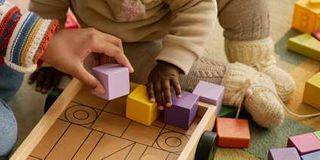
Typical playgroup activities include free play, singing, storytelling, outdoor play, art and craft, sensory play with sand or water, simple puzzles, block building and group interaction.
“Play is critical because it stimulates brain development, builds problem-solving skills, enhances creativity, supports language growth and strengthens emotional resilience,” she says. “Young children learn best through experience, not lectures.”
The approach aligns with CBC, which focuses on developing competencies such as communication, collaboration, critical thinking and self-confidence through guided play and group activities.
Fees vary widely. Public ECDE centres charge tuition fees of about Sh1,000 to Sh5,000 per term, while private low-cost centres charge between Sh5,000 and Sh15,000 per term, while premium or international centres charge Sh20,000 to Sh60,000 or more per term.
Costs differ based on location, facilities, learning materials, teacher qualifications, class size and extra services such as meals and transport. The ministry does not set fixed fees for private institutions, although all centres must meet registration and quality standards.
Ms Isabellah recommends a teacher-to-child ratio of about 1:10 to 1:15 for ages two to three.
“Children who start from a playgroup tend to develop stronger language and social skills, greater confidence, independence, and early problem-solving abilities,” she notes. For unsure parents, Ms Isabellah advises starting gradually. “Playgroup is not about early academics. It is about socialisation, independence, and foundational skills.”
She advises that if a child is emotionally ready and interested in others, a playgroup can be highly beneficial. Parents who remain uncertain can begin with part-time attendance, visit several centres or observe how their child responds before making a decision.