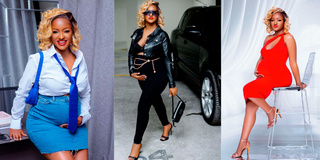
Mary Muthoni Maina, says how one dresses affects their mood. For her, the principle of look good, feel good, applies even in pregnancy.

“It’s giving mother.” This is how the young people would describe today’s expectant mother’s choice of wardrobe.
Maybe it was the doing of Rihanna, or that of fashionable social media personalities with their body positivity campaigns, but I think we can all agree that maternity wear is not what it used to be.
Where expectant women would disappear beneath loose, shapeless garments with little to no character, we are now seeing more chic, more daring looks that emphasize the bump rather than conceal it.
Muthoni Mwangi, who owns Paulz House (a clothing store in Nairobi), recalls her pregnancy wardrobe with nostalgia.
“The transition was relatively easy for me because my pregnancy was planned. I switched up my style beforehand into one that can accommodate all the cycles of a woman’s body. If I needed something and I googled it, I would find it.
"There were thrift stores that had clothes made specifically for maternity, but for the new clothes, it was a bit hard to find a store that specialised solely in maternity things.
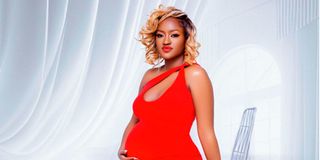
Mary Muthoni Maina says the principle of look good, feel good, applies even in pregnancy. PHOTO CREDIT: POOL
"I feel like most made-in-Kenya products nowadays can easily be worn while pregnant, so I don’t think the name ‘maternity wear’ should be used per se because it keeps you in a box.”
Though her pregnancy was rough for the first three months, Muthoni says she took any chance she could get to dress up.
“Whenever I got a moment of relief, I would put on some make-up, dress nicely, and wear my heels because I knew a time would come when I wouldn't be able to wear them.”
Of course, she had to overcome challenges like swinging moods, changing skin tones, and a transforming body to do that, but she insists that every time her fits came out as intended, it would give her an instant confidence boost and make her feel better.
Stylish comfort
“Then in the last couple of months, from around month seven, I went into stylish comfort.”
Stylish comfort looked like a strict no heels policy, less of the bandage dresses, and more of the maternity tights, sports shoes, breathable oversized shirts, and free maxi dresses.
For inspiration, she loved how Rihanna looked while carrying her pregnancies.
“And you see with her, you can’t really say it was maternity wear as such. That’s why I say being a stylish pregnant mama is just about working with what you have.”
And in the spirit of looking good this holiday season, Muthoni’s advice to mums-to-be is to make the effort.
“Yes, you might not be in the mood for it, but push yourself and try to look good at least two or three times during the festive season because it will boost your mood and your experience as a whole,” she encourages.
“Find outfits that you like and are comfortable in. Do bright colours, the seasonal colours, and make sure you have a nice red dress if you like red. Also, don’t shop for maternity wear per se, just look for outfits that fit the bump well.”
Comfortable shoes
For the shoes, it’s very subjective, but her overall remark is to prioritise comfort.
“If you’re able to do heels, then go ahead, but for me, though I love heels, they were not practical, especially in the final months. This is because your legs swell, so the shoes don’t fit as well, but also you’re heavy,” she explains. “You can actually look very chic in flats as long as they look nice and you’re comfortable.”
Mary Muthoni Maina, says how one dresses affects their mood. For her, the principle of look good, feel good, applies even in pregnancy.
She also gives a green light for the make-up; she only emphasizes the need to ensure your skin tone matches because the hyperpigmentation can be excessive due to pregnancy hormones.
Nduta Mwangi runs a shop, Everything Maternity, that sells all sorts of maternity wear and accessories, including underwear, pads, gift offerings and 100 percent natural skincare products made specifically for pregnant women.
“Our main focus is on the mum and not the baby, because we realised that everyone else just cares for the baby but forgets the mum.”
The shop was inspired by her frustrations in getting stylish outfits while she was pregnant.
“The older styles of maternity wear didn’t quite blend with one’s personal taste, but now, a lot has changed. Women are more confident. Our customers look for official wear for Monday to Friday, and something to go out in, on Saturday night, or for brunch, or to church.”
With pregnancy being a difficult journey, Nduta believes embracing fashion is worth the effort, if only to cheer you up. “You have very little control over what happens to you during this time, but you can still choose how you look,” she says.
'Re-adjustment'
Again, Nduta points out that the body doesn’t snap back immediately after the baby is born. Women find themselves in a wardrobe crisis where their pre-pregnancy clothes are too small and their maternity clothes too big.
“We sell stuff that you can wear even after the pregnancy, that’s why a lot of our things are not very maternity-like.
Another maternity entrepreneur is Vinta Muita, of Vintlyne Fashion. Her journey in the industry began in 2020.
“My sister was pregnant at the time and I saw her struggling to get good clothes. The only available ones were tights, t-shirts, second-hand clothes, and free, floaty clothes which were so limited that you’d find you have only one dress for many occasions," she remembers.
With a stitching hobby and a sewing machine at home, Vinta thought she could do better, and so she did. “I researched and saw that there was stretchy fabric in the market. With that, I thought I could make her something more presentable, something she could even go to work in, and I started doing it.”
Realising the potential in her small act of love, she took a leap of faith and launched Vintlyne Fashion. Today, they offer everyday wear, office wear, and gowns for special occasions such as photo shoots, baby showers, gender reveals, and push parties. Their biggest clientele, however, is those who buy or rent outfits for events.
A profitable shift
“Back in the day, our mothers would even hide their pregnancies. You would look at someone and wonder, 'Is she pregnant or just plump?' But now, people are owning the whole experience of motherhood. They want to share, celebrate, and be seen, and in that process, they also want to dress well.”
That shift has seen her sales doing well, particularly between 2020 and 2023. “2024 was a slow year for the textile industry as a whole, but my sales have started to pick up this year, and I expect better days ahead.”
And while more and more people have embraced form-fitting maternity wear, the style that is most popular among her buyers is the shift dress. “They no longer want the super tight clothes, and are now after the loose but classy clothes. There’s a lot of demand for that.”
Demand, in her opinion, is also being driven by celebrities and social media trends. On numerous occasions, Vinta has received requests with screenshots of what someone in the spotlight wore.
“Can I get one like this?” they ask her.
To make clothes that can transcend the pregnancy season, Vintlyne Fashion, which offers new, made-in-Kenya clothes, made from stretchy fabrics and tricks like V-necks with zippers.
Her prices range from Sh2500 up to even Sh20,000 depending on the outfit. To expectant mums, particularly during the festivities, her message is clear: “Find several great outfits that you can wear indoors and outdoors. If you feel good in them, wear them as often as you wish.
A beautiful red dress will be a great addition,” she hints.
“Stay away from heels; there are many fabulous options when it comes to flat shoes. Your body is changing, but it's only for a while, and you will soon get to wear your heels and boot cut jeans again. Take care of your skin, stay hydrated, moisturise using gentle products and don't forget your favourite lip balm.”