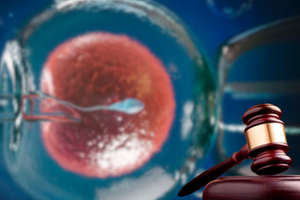
IVF is not about creating a human in a lab; it’s just helping the egg and sperm to meet successfully.
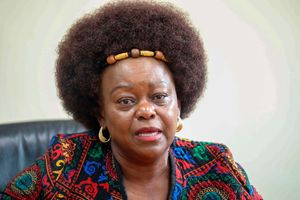
When Pamela Mactolo appeared on NTV’s Fixing the Nation on Feb 19, 2026, she didn’t expect the conversation to follow her home.
Later, seated with her two children, she tried to explain what many adults still struggle to understand about in vitro fertilisation (IVF).
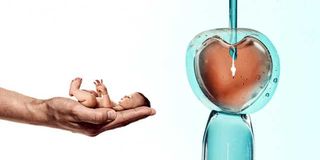
“Sometimes that method can fail and the babies don’t form in the womb,” Pamela began gently. “So a doctor can help the eggs and sperm to meet outside the womb. Once they form into embryos, they are placed back in the womb to grow.”
“Oh wow, that sounds interesting," her eldest daughter said.
“Yes, it is. And it is done by someone who really wants to have babies, and is struggling.”
“Mum, so you really wanted us?” asked her youngest daughter. “I did. I wanted you so badly. You were planned for.”
“So you paid a lot of money to the doctors?” they asked. “Yes, dad and I did,” Pamela replied.
“So dad also wanted us?” they continued. “Yes, he did,” she answered.
“Oh mum, we really love you,” the eldest added.
“I love you guys to the moon and back,” she told them.
After trying unsuccessfully to have a child for six years, Pamela Mactolo had two children through IVF.
Pamela got married at 28. In many African societies, marriage is quickly followed by children. But that was not her story.
“I went through the infertility journey for six years,” she says. “Luckily, at the time, I had someone who walked with me through it.”
Before IVF came countless hospital visits. She had suffered from fibroids in her younger years, a condition that led to the loss of one fallopian tube.
“I was left with one tube. It could have been a reason for my infertility, but no doctor gave a clear diagnosis.”
She tried different fertility medications prescribed by various specialists. She underwent dye tests to check whether her remaining tube was open. The results showed no problem.
By the time she turned 34, she and her partner had decided to try IVF.
But even that decision did not come lightly. Pamela researched widely and spoke to different doctors, including those not directly involved in fertility treatment, just to hear their views.
Eventually, she settled on Mediheal Hospital, where doctors from India would come and work with groups of women to make the procedure more affordable across different countries.
She had gone to inquire about the facility. Instead, she found herself registering for the procedure.
“We were about 30 women who began the journey together, although some dropped off along the way,” she says. “Remember, not everybody succeeds in the first cycle. And not everyone succeeds at all.”
Pamela succeeded on her first attempt. But even then, she encountered challenges.
Patients face intense physical challenges, such as vanishing twin syndrome (VTS) and painful fibroids, as well as societal stigma from religious leaders who equate the process with moral failure.
Doctors informed her that she had what is known as a blighted ovum and Vanishing Twin Syndrome (VTS), a condition where one twin in a multiple pregnancy dies in utero, typically during the first trimester, and is absorbed by the mother's body or the surviving fetus, usually without any risk to the mother.
“I had conceived multiple pregnancies, but I was lucky to carry one to term,” she says.
For Pamela, IVF was not only a medical decision but also a spiritual and emotional one.
“I am a Christian, and IVF is not acceptable by everyone,” she says. At one point, a religious leader told her the process was equal to abortion.
During IVF, eggs and sperm are harvested. Some form embryos, others do not. For some critics, discarded embryos raise moral questions.
Pamela spoke to her mother about it. “I was looking for a solution to my challenge. It’s not that I couldn’t have children. The process would just be different.”
Then there was the financial burden.
“The cost ranges from Sh400,000 to Sh700,000, but that figure can rise depending on medication, supplements and medical support needed before egg and sperm harvesting.”
In total, she spent about Sh600,000.
After the embryo transfer, she waited two weeks before coming back for the tests.
“I later received a call and was told I had conceived multiples, but only one survived,” she says.
If the process had failed, she would have had to start afresh and pay a similar amount. At the time, many insurance policies did not cover IVF. She was fortunate that her insurance covered her Caesarean section during delivery, a cost many overlook.
For the first three months, she visited the fertility clinic before transitioning to normal antenatal clinics.
She carried the pregnancy normally until the last three months, when she was put on bed rest. “I did not want to make any mistake,” she says. “I decided to go for an elective CS just to ensure my baby was safe, healthy and secure.”
Read: Behind the joy of triplets and quintuplets lies a dangerous silence about maternal and newborn risk
Her fibroids complicated matters. As she took supplements to sustain the pregnancy, the fibroids also grew. The pain was intense. Toward the end, she could not sleep and would sit up the whole night. When the baby was delivered at 36 weeks, the fibroids were removed too.
Two years later, she returned for a second IVF cycle. This time, the journey felt heavier. She did not have the same level of support at home or at work. Once again, she experienced Vanishing Twin Syndrome. Only one child survived.
“I did not enjoy it,” she admits. “I was a bit stressed. It was a struggle.”
The fibroids returned, too. The baby was delivered at 37 weeks.
“After my first cycle, eight embryos had formed successfully. Four were transferred, and the rest were frozen. Out of the four, I conceived two pregnancies, but only one survived,” she says.
Today, her children are aged 11 and seven. Some people still ask whether IVF children face health challenges.
“They go to the clinic just like any other children. They are healthy, they swim in school and even play football. There is nothing unnatural about them.”
She also pushes back against another common myth that IVF means creating a human being in a lab. “The only difference is that the egg and sperm are assisted to meet successfully,” she explains.
Throughout the process, Pamela kept her struggles largely private from extended family and friends. Instead, she found support online, through a Facebook page and a WhatsApp group she created for women undergoing similar experiences.
“It was much easier to share with them,” she adds.
At work, she approached her HR manager and explained her plans, and they were supportive. She and her partner at the time agreed to pursue IVF, and he often accompanied her to clinic visits. Although they later divorced, she acknowledges that during the process, he wanted the children, too.
“Most men do not share such issues,” she says. “But for us, we would talk and share.”
She believes therapy and mental health support are essential for anyone going through such procedures. The emotional toll can be as heavy as the financial one.
Asked whether one day, she will tell her children the full story, she says, “I will tell them they were conceived through IVF and they were wanted. It was deliberate. They were planned for and intentional. I wanted you even before you existed.”
For women considering IVF, she offers one final piece of advice.
“Do your research. Check a clinic’s regulation and track record. Look for genuine facilities with real success stories before starting the journey.”
Follow our WhatsApp channel for breaking news updates and more stories like this.