Breast cancer is often associated with older women, but what happens when a girl notices a lump in her breast as her body begins to change during puberty? Is it a normal part of growing up, or something to worry about?
As girls enter puberty, their breasts change in size, shape and texture. Understanding what is normal during this stage can help them recognise unusual changes and know when to seek medical attention.
Dr Justus Wambugu, a consultant gynaecologist at Aga Khan University Hospital, Nairobi, explains that breast development is influenced by several hormones, primarily oestrogen and progesterone.
“One of the earliest noticeable signs is a change in size. It starts with a small bud beneath the nipple that progressively develops to eventually attain adult size, which varies greatly depending on genetics, hormones and body composition,” he says.
Dr Justus Wambugu is a consultant gynaecologist at Aga Khan University Hospital.
Photo credit: Pool
As development continues, the breasts gradually become rounder as fat and glandular tissue accumulate. The nipples become more prominent, while the areola, the area surrounding the nipple, increases in size and darkens in colour. Some girls may also experience increased nipple sensitivity during this period.
“It is important to note that sometimes both breasts may not exactly be equal in size. Some small degree of breast asymmetry may occur and is usually normal,” he says.
In most young girls, small, sometimes firm, lumpy areas are normal, especially during the early stages of breast development. These are attributed to developing glandular tissue, among other changes. Hormonal fluctuations during the menstrual cycle can also cause generalised breast firmness or fullness.
However, not every lump should be dismissed as part of normal development.
“A firm, irregular, fixed (immobile) lump that is noticeably growing in size should raise suspicion and should be examined by a doctor. A lump presenting with persistent pain, nipple discharge, skin changes (such as dimpling or skin ulcer), or persistent warmth sensation on the skin overlying the lump should be evaluated by a qualified care provider,” he explains.
Dr Wambugu says breast lumps in girls going through puberty differ from those in adult women because, more often than not, lumps in younger girls are either part of normal breast development or have a benign (harmless) cause.
In older women, there is a higher possibility that a breast lump could be cancerous.
“Some of the common benign causes of lumps in young girls are non-cancerous growths known as fibroadenomas. Breast cysts can also present as lumps in young girls,” he says.
“Mostly, these will present as painless, mobile lumps with no associated skin changes or nipple discharge. Evaluation by a qualified care provider is, however, very essential in establishing or ascertaining the accurate cause of a breast lump.”
Worldwide, very few cases of breast cancer have been documented in girls and women below the age of 20. Among women aged 20 to 30, breast cancer remains uncommon, but it can occur.
“The youngest case of breast cancer I have seen is 24 years of age. Breast cancer is more commonly diagnosed in women above 30 to 40 years of age,” he says, adding that the types of breast cancer commonly diagnosed in younger women include ductal carcinoma in situ (DCIS) and invasive breast carcinoma of no special type, traditionally termed invasive ductal carcinoma.
Generally, most breast lesions arise in the upper outer quadrant of the breast, the part closest to the armpit.
“This area of the breast is thought to have more glandular breast tissue. It’s important to note that breast cancer can begin from any part of the breast, including the area behind the nipple,” he says.
The APA Femina Plus offers support and protection in the form of a cash benefit in the event of a positive diagnosis of breast cancer.
Photo credit: Photo | Pool
Some of the symptoms girls and young women should watch out for include a new or distinct lump, persistent breast pain, changes in the skin overlying a lump, such as redness or ulceration, and nipple discharge, particularly if it is blood-stained. A new lump near or on the armpit or collarbone, or one that is noticeably increasing in size, should also prompt a medical evaluation.
Dr Wambugu notes that breast assessment differs between adolescents and older women, primarily because some breast changes are a normal part of development during adolescence and breast cancer is very rare in this age group.
“A detailed clinical history and examination can at times be sufficient to distinguish between normal breast developmental changes and abnormal lumps in adolescents. In older women, additional evaluation, for instance using imaging, is more often than not needed,” he says.
Is a mammogram recommended for younger women?
“When it comes to imaging, ultrasound scans are more appropriate in assessing lumps noted in adolescents and younger women, while mammography is more useful in older women. This is mainly due to differences in breast tissue density,” he explains.
Other investigations, such as core needle biopsies of breast lumps, are rarely used in adolescents and are reserved for selected cases. They may be recommended when clinical examination and imaging raise a high suspicion of an abnormal lump, helping doctors obtain a precise diagnosis.
The need for awareness extends beyond adolescence. Dr Miriam Mutebi, a consultant breast surgical oncologist, says women in Africa tend to be diagnosed with breast cancer 10 to 15 years earlier than their counterparts in the West.
Dr Miriam Mutebi is an Assistant Professor, Department of Surgery, Aga Khan University Medical College, East Africa and a Consultant Breast Surgical Oncologist at Aga Khan University Hospital, Nairobi.
Photo credit: Pool
“In many parts of Africa, including locally, the average age of diagnosis is between 40 and 50. About 30 per cent of our patients are under 40, with some in their 20s and 30s,” she says.
According to the Global Cancer Observatory (GLOBOCAN) 2024 report, breast cancer remains the most commonly diagnosed cancer in Kenya, accounting for 5,822 new cases, or 16.2 per cent of all cases. It is also the leading cause of cancer mortality, claiming 2,882 lives annually.
However, finding a lump does not necessarily mean one has cancer.
“Nine out of 10 breast lumps are not cancerous, but it is important to have every new lump examined to establish what it is,” Dr Mutebi says.
She notes that risk factors include a family history of breast cancer or a strong family history of cancer. However, more studies are needed to investigate the risk factors among African women.
Other risk factors that cannot be changed include starting puberty at an early age and reaching menopause later in life. Lifestyle factors such as obesity, smoking and alcohol use can also increase the risk.
Additionally, long-term use of hormones, including hormone-based contraceptives, may also contribute.
“Having a risk doesn't mean that you will get cancer, and not having a risk doesn't mean that you won't get it either,” she cautions.
Dr Mutebi adds that more studies are needed to understand breast cancer risk factors among African women better. Younger women, especially those with a family history of breast cancer, should consider discussing their risk with a health professional.
“Whether someone needs genetic testing or should begin screening earlier depends on the individual case,” she says.
Treatment generally draws on the same main approaches: surgery, chemotherapy, radiotherapy and, where appropriate, hormonal treatment.
Dr Mutebi says one of the challenges with breast cancer is that signs may only become apparent when the disease is more advanced.
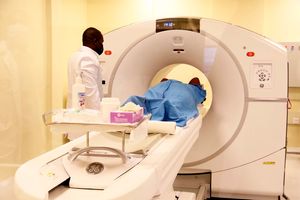
“This is why women should not wait for symptoms before considering screening. Regular screening for women aged 40 and above, including mammograms, which are special X-rays of the breast,” she says.
“A mammogram can sometimes detect changes two to three years before a lump can be felt. This makes screening an important part of breast health, even when a woman has not noticed anything unusual, regardless of her age,” she adds.