He understands that if he ever so much as entertains a sip of alcohol, he will find himself back to the dark pits he was in as he battled alcoholism.
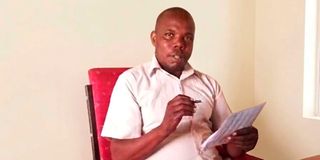
Chief Peter Sawe, 53, is marking 13 years of going alcohol-free this year. He still calls himself “recovering”. It is because he knows it doesn’t take much to return to that point where he lost his house, his wife and children, and every shred of dignity he had. When he spoke with Nation Lifestyle ahead of the June 26 International Day Against Drug Abuse and Illicit Trafficking, he discussed the temptations that follow a person who has kicked the habit.
He painted a picture of the battle that begins outside the rehabilitation centre's gates. The bottle has been put down, but the old drinking circles remain. The jokes, the dares, the suspicion and the lonely hours return. Mr Sawe remembers the temptations that followed his discharge, the people who doubted him, and those who tried to pull him back to the places he had resolved to leave behind.
“There are a lot of temptations,” he says. “The first two years were not easy. They would call me to a club and say, ‘I have an engagement for you.’” At the club, the conversation would change.
“When you reach there, they say, ‘I thought you went to a rehab and you are strong? Why don’t you just taste it, because now you have been trained on how to control it?” He says. “There are experts in bringing people down.”
The aftercare guidance by the National Authority for the Campaign against Alcohol and Drug Abuse (Nacada) says there is a need for environments, family and social support, healthy leisure activities and peer-based support as part of sustained recovery.
But who is Mr Sawe? He started off as an ordinary village boy. His life after secondary school saw him become a shoe shiner, a matatu tout, and then an employee in his brother’s law firm. Then politicians found him. He was first recruited into campaigns as an “extra”, meaning one of the people paid to do tasks that range from heckling to protesting and anything in between. He describes it more aptly as “goon”, chuckling while at it.
He was enlisted in 2002 in the campaign team of the late Lorna Laboso, who was then making a debut into parliamentary politics. His brilliance soon promoted him from the extras to the rank of a strategist. Ms Laboso did not clinch the Sotik parliamentary seat in 2002, but did so at her second attempt in 2007. Being in an MP’s inner circle exposed him to “easy” money, as he puts it, and this laid the ground for his addiction.
When Lorna died in a 2008 plane crash, her sister Joyce took over the seat through a by-election. Again, he was in the inner sanctums of Joyce’s administration, and life was good. By 2013, he had sunk so deep into alcoholism that he had fallen further and further outside the politician’s inner circle. He might well have been fired. He reasons that he wasn’t offloaded due to what he brought to the team.
“Because of my contribution, they never wanted to drop me,” he says.
He traces the journey of his alcohol addiction back to 1987 when he had his first taste of busaa (traditional brew made using fermented maize flour) as a Standard Seven boy. After secondary school, he left home for Sotik town, where he started off as a shoeshine. By the time he became a matatu tout, he was more than a habitual drinker. Then, as the money came in, he went hard on the bottle.
Those who have struggled with alcoholism have memories of moments they remember as their rock bottom. For Mr Sawe, those moments include a day he bought rat poison, planning to take it and sleep eternally. However, his nephew, who was serving him food, caught the odour of poison in his dish and that foiled the plan. He had planned to commit suicide after Sh17,000 he was given to take to his brother in Bomet was stolen in a bar.
There was also a time he was knocked down by a motorist and broke his collarbone. His drinking buddies, rather than take him to hospital, took him to his house.
“Inside that house, there was nobody,” he recalls.
Fortunately, his elder daughter came to visit him by chance and found him in bad shape.
“Before my sister came, I was thinking, ‘Why didn’t she leave me to die? What am I for? I am now very useless.’”
Then there was another time when a new vehicle was bought by the Sotik Constituency Development Fund (CDF) office and assigned to a driver. Whenever he saw it, his conscience bit him because he knew if it weren’t for his alcoholism, he would have been the one driving it. He also remembers a day he slept without eating and woke up so feeble he could hardly move. He summoned all his energy and reached for a raw quarter cabbage on the table, which he desperately ate to revive the waning energy levels in his body.
At the height of his addiction, his wife left him, along with their two children. The children, who are now adults, later returned “after I became responsible”, but not the wife. He is now in his second marriage, making him a father of seven.
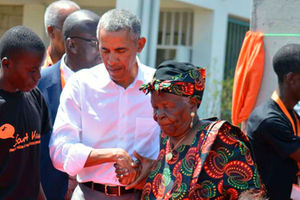
How did he break free from addiction? He says it came from the political circles he was in. He particularly thanks Mr Edwin Abonyo, the husband of the late Joyce Laboso and currently the chairman of the National Museums of Kenya, for spearheading the journey towards recovery. This he did together with the Sotik constituency CDF team.
He admits that he was not too willing to be taken to the Asumbi Treatment Centre, a church-run rehabilitation facility in Homa Bay County. But he went anyway, and his eyes were opened. He was there from May to August 2013. He remembers the orientation session that sought to impress on him that he was not the only one in the mess. He also remembers going through the 12 steps of Alcoholics Anonymous.
“When I came out, I was a changed man. I had taken a resolution never to touch alcohol again. I had also made up my mind to live a very positive life. I don’t want to touch it again,” he says, adding that addiction is like a dry seed in someone that only needs a little water to sprout.
“Touching alcohol will make that seed sprout and engulf me again,” he says. “Being sober has a lot of benefits. I have been able to educate my children without bothering anybody or without making them a burden to other people.”
Towards the end of 2017, he applied for the position of assistant chief and was recruited.
“I parted ways with politics, and I became an administrator, so I changed my ways from being the hunted to the hunter now. Whatever was hunting me, now I was the person who was supposed to hunt it.”
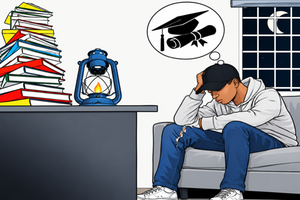
In August 2019, he was promoted to become chief after the officer holder retired. He has also enrolled for a diploma in psychological counselling at a Nakuru-based institution.
“I really enjoy counselling and bringing people back to their senses, mostly alcoholics. I even take time in my office to talk to them,” says Mr Sawe.
As a recovering alcoholic, he finds himself treating differently the lawbreakers who are associated with alcohol.
“Because I’m a patient, I know how they suffer, unlike other people who see them as problematic or as people making mistakes,” he says.
To those still struggling with the habit, he says, change starts from within.
“What I tell my recovering brothers and sisters is that there’s hope. They must resolve and make the decision to stay clean. Recovery is not easy. It’s a journey which needs resilience,” he says.