Before she visited Suswa in 2022, Wanjiku Njoroge had never considered the town as a potential travel destination.
“I’d been to Narok before, and though we would always pass through Suswa, I ignored it,” she says. “It wasn’t until I started seeing the hype online, people talking about the train ride, the beautiful views, and things you could do in Suswa, that I started paying attention.”
So when a friend invited her to join a maiden tour group of about 15 people travelling to Suswa, she didn’t think twice.
“I had just discovered my love for travelling and was trying to find my bearing within that space,” says the 27-year-old. “I was open to trying out anything at the time, and the online reviews made Suswa seem like a worthwhile adventure.”
Wanjiku Njoroge, popularly known as Shiquo Philips, especially recommends Suswa for those who are beginning their travel journey.
Photo credit: Pool
It was everything she had heard it would be, and then some.
“I find beauty in everything, so that might have clouded my judgment a bit, but Suswa was completely worth it,” she says.
“The train ride was an especially full experience because we experienced it as a group. As the train went through the tunnels, most people moved to the back of the carriage to capture the moment. And when we passed through the Nairobi National Park, whenever someone spotted an animal, we would all rush over to see it. The sunset views on the ride back were also simply divine.”
But it was not just the journey that impressed her, the destination held its own too. Wanjiku and her group enjoyed some tasty nyama choma and even squeezed in a short hike, which she says was one of the highlights of the trip.
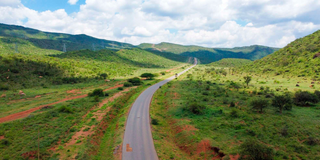
“There were huge rocks on which you could stand and see all the way to Mai Mahiu on one side and Mt Suswa on the other,” she recalls. “It was breathtaking. I was just starting to explore Kenya at the time, and I can’t say I had seen anything more beautiful.”
Beyond the scenery, Wanjiku says she enjoyed the break from the chaos of Nairobi and the opportunity to meet new people and get to know them.
And while she felt the trip was too short to fully explore the area, she believes that may have made the experience even sweeter.
“For a day trip, you must keep track of time to avoid missing the train, so you only get a taste of Suswa,” she says. “But this means you also don’t have time to get bored. Just when you’re starting to enjoy it, it’s over.”
Having spent a total of about Sh1,500, the public relations consultant and content creator, popularly known as Shiquo Philips, describes Suswa as cheap and accessible, the perfect destination for first-time explorers.
“If you are well-travelled, you might not appreciate Suswa’s beauty as much because you will likely have seen bigger and better things, but for someone who is starting out, it is a must-go,” she says. “It is like the first building block on your travel journey.”
Far from unique, Wanjiku’s experience reflects a growing trend among Kenyans who are increasingly turning to Suswa for quick, affordable escapes from the city.
Among them is Elaine Randiki, 35, who, for her son’s twelfth birthday earlier this year, swapped their usual celebrations for a spontaneous trip to Suswa.
“I was looking for budget-friendly options, and I’d been seeing videos on TikTok about the Suswa trip,” she says. “I didn’t really know what to expect, but I decided to take my son and go on an adventure.”
The two boarded the morning train from Nairobi, alongside other passengers headed the same way.
“Our carriage was full of school children on a trip, so it was a little noisy, but the ride itself was quite smooth,” she says. “My son and I played some games and ended up enjoying the ride.”
In Suswa, the pair made their way to a popular resort whose reviews she had seen online, where they settled into a simple day away from routine.
Good destination for local tourists
“My son wanted to swim, which he did, but my highlight was the food,” she says. “The portions were filling, super tasty, and the customer service was a 10 out of 10.”
The trip cost them about Sh7,000. Asked whether she would do it again, Elaine’s answer is quick and certain.
“Absolutely! The transport from the train station to the resort was a bit pricey, I should have done more research and bargained more, but I’d rate the overall trip a nine out of 10,” she says. “I think a road trip to Suswa would also be really nice, especially because the scenery is quite beautiful.”
As more travellers continue making the trip to Suswa, tour operators have also begun taking notice.
Linus Karaimu, founder of Hello Safaris, has been organising tours to the town for about a year now, a period during which he says has seen growing interest in the destination.
“Suswa is a very good destination for local tourists, especially those who are just starting to travel,” he says.
Linus notes that the journey is a key part of the appeal, highlighting the views and the three tunnels along the route: Kimuka, Nachu, and Ngong, the last of which is known as the longest railway tunnel in East Africa, spanning 4.5 kilometers.
Linus Karaimu, the founder of Hello Safaris, says his monthly tours to Suswa attract at least 20 -50 travellers.
Photo credit: Pool
“Children, in particular, enjoy these tunnels,” he says. “The train goes in, it becomes dark, and then all of a sudden you exit and there’s light once again.”
Food, he adds, is another major attraction, particularly the meat.
“You can get meat anywhere, but there is something distinct about the taste of meat in Suswa,” he says. “Animals that graze freely produce meat that tastes and even looks different.”
The reliability of the SGR, he says, is another reason why Suswa is becoming a favoured destination, especially for families.
“The trains are prompt, making this one of the few trips where you are sure to be back in Nairobi while there is still light outside. This is unlike a destination like Naivasha, where if you leave at six o’clock in the evening, you reach Nairobi at around nine o’clock, and you still have to make your way home from there,” he says.
Linus says his company organises trips to Suswa almost every month, and every time, the turnout is strong.
“The numbers fluctuate seasonally, but we rarely lack visitors,” he says.
Among the packages offered are ‘mom-and-child’ trips and general group tours that are open to everyone.
“The mom-and-child trips are very popular,” he says. “We plan them mostly during school holidays to give mothers time to bond with their children outside of their usual environment.”
The itinerary for these trips includes a mascot to entertain the children, swimming and photography, and typically attracts a minimum of 30-50 participants, driven partly by affordability.
“We charge about Sh3,000 for adults, and Sh1,500 for children, and this covers everything, including food and transport,” he says. “In most cases, we see moms bringing not just their children, but also their nieces and nephews.”
General tours often include group activities such as team building and dance sessions, while overnight packages may involve camping around Mount Suswa.
For these, Linus typically receives a minimum of 20 travellers, and they’re mostly couples, chamas, or groups of friends, in particular, female friend groups.
“Generally, around 90 percent of people who travel are female,” he notes. “Ladies have really grown to understand how to appreciate themselves.”
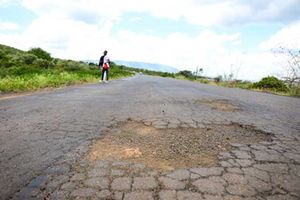
A section of the Ngong–Suswa Highway undergoing repair on April 8, 2026.
Photo credit: Bonface Bogita | Nation Media Group
But while he has seen repeat travellers, Linus mentions that more investment in activities could strengthen the town’s appeal.
“If we had more engaging experiences, especially for the children, we would have more to offer people beyond meat and swimming.”
On a business level, Linus says Suswa has played a generous role in building trust with clients.
“Many travellers first try us out with Suswa,” he says. “If they enjoy the experience, then they trust us to take them to other destinations.”
According to Kenya Railways, the interest in Suswa is also reflected in the numbers. The Suswa Leisure Train, which was launched in October 2019, registers a near-full passenger capacity on most trips.
“We started with two coaches per trip, and now we are doing five coaches per trip,” says Philip J. Mainga, EBS, Managing Director of Kenya Railways.
Operating every Friday, Saturday, and Sunday, the train makes six trips weekly between Nairobi Terminus and Suswa station in Narok County, with stopovers at Rongai, Ngong, and Mai Mahiu. Each trip carries about 590 passengers, most of whom return to Nairobi the same day.
“The train often departs from the Nairobi terminus at 8.50am to arrive at Suswa at 10.55am,” says Mr Mainga. “It makes a return trip at 4.05 pm to arrive at Nairobi Terminus at 6.10 pm.”
Peak travel periods, he adds, are usually during weekends, public holidays, school holidays, and festive seasons, with the train attracting a wide mix of travellers including families, tour groups, students, couples, solo travellers, and corporate teams.
For adults, a one-way ticket from Nairobi to Suswa costs Sh250, while children aged 3-11 pay half the fare. Passengers boarding at stopovers pay Sh130.
As the trip’s popularity continues to surge, experiences remain varied. Mimo Karanja, 30, visited Suswa with a friend in April last year.
“We rode bikes while waiting for our meat to be ready, and that was probably my highlight of the trip,” she says.
But while she didn’t dislike the experience, she rates it a 5.5 out of 10.
“I felt there wasn’t much to do,” she says. “Suswa is heavily dependent on the kind of crowd you go with. If you want an upbeat, fun experience, you need to go with people who bring that energy.”
Mimo Karanja, a content creator on Finding Mimo, warns that Suswa may not appeal to everyone.
Photo credit: Pool
She also notes that the train seating arrangements offered little privacy, though this unexpectedly became part of the experience.
“Both on the way there and back, we found ourselves sharing cabins with large groups, including work colleagues and an adventure group,” she says.
“In both cases, they were lively and upbeat, and that energy spread through the entire cabin. I actually really enjoyed making new friends.”
Mimo is not particularly keen on going back, but if that were to happen, she would do a few things differently.
“Suswa tickets are high in demand,” she says. “I didn’t expect it to be so popular, but it took us about two months to get them. Every time we tried, they were sold out, so I would definitely book them in advance.”
Mimo recommends Suswa for team building activities, nature enthusiasts, and those seeking a break from the city. But, she adds, it may not appeal to everyone.
“If you are looking for luxury or aesthetics, you might want to consider somewhere else.”