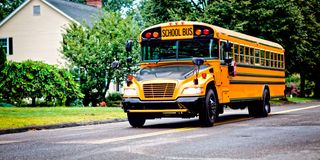
Parents are increasingly voicing frustration over how schools plan and price children’s trips. They accuse institutions of scheduling outings too frequently, charging exorbitant and opaque fees, and making refunds nearly impossible when a child cannot attend.
Through interviews with Nation and social media discussions we initiated, parents demanded greater transparency and more thoughtful choices of destinations.
Two weeks ago, the second term drew to a close, offering relief to parents on many fronts. For many, the close of second term brought relief not only from academic pressures but also from the financial burden of constant excursions. With trips banned in third term, some parents welcomed the pause.
Yet the issue is far from simple. While trips are optional, parents say the emotional toll on children leaves them little choice. One father recalled skipping a trip only to face his daughter’s silent protest. “She sulked. She wasn’t even eating,” he said. Now, with a Rwanda trip on the horizon, she reminds him nightly.
Some parents say that some destinations are not appropriate for the learners.
Photo credit: Shutterstock
But not all parents object, as some see value in the experiences. For many, the complaints fall into five clear categories: Schools that organise trips almost every weekend, those that charge more than regular fees, those that demand hefty sums for nearby destinations, institutions that resist refunds, and trips deemed inappropriate for younger learners.
In the best interest of their children, we made all parents anonymous.
1. Schools that organise trips virtually every weekend
We spoke with a parent who was fed up with the many trips her children’s school has been organising.
“It is no longer about learning. Every few weeks there’s another trip and another payment deadline,” said the parent who has two children at a private school in Nairobi. “If you don’t pay, your child stays behind and feels punished.”
Another parent whose daughter attends a private school in Thika raised similar concerns. “It used to be once or twice a year,” he said. “Now it’s almost every month. If you add them all up, you’re spending tens of thousands in a year in just trips.”
In an online platform, another parent lamented that they have twins in a school “where each week there is a trip” to places like Naivasha, costing anything from Sh5,000.
2. Schools that charge more for trips than regular school fees
A parent in Nairobi complained about a trip to New York organised by a renowned school. The parent had to withdraw Sh450,000 from a money market fund to make the trip a possibility.
“Of course, it is out of love. We work so hard just so our children can have the best lives, sometimes better than what we had in our childhood,” the parent said.
Online, a parent reported a school charging Sh650,000 per pupil for a four-day trip to Florida, USA. The parent added that they have been given August 14 as the deadline.
Parents say that some schools charge exorbitantly for destinations next door.
Photo credit: Shutterstock
3. Schools that charge a bomb for destinations next door
Forming a considerable chunk of parents’ grievances are instances where they felt the distance between the school and the destination was too near to warrant what was charged.
An example is a private primary school in Nairobi that drew the ire of some parents recently after charging Sh3,500 per learner for a one-day trip to a wildlife conservancy.
“I was pained to learn that they were handed soda and bread for lunch,” said a parent at the school.
“They told us it covers transport, meals, entry fees and ‘coordination costs,’” another parent said. “But no breakdown is ever given. It [almost] feels like business.”
In the online chat, one mother said: “My child’s school charged Sh3,500 per learner to Safari Park. This is a place I can spend Sh1,000 and keep change.”
Some parents, indeed, confessed to having taken the children to the named destinations themselves.
4. Refunds not forthcoming
Some parents complained that payment for trips is often a one-way affair. If they opt out after paying, they either lose out or face a labyrinthine path in pursuit of a refund.
Said one parent: “My child fell sick the day of the trip and they said the money is not refundable.”
In a related development, a parent shared about a trip that was suddenly cancelled.
“We paid for a trip just before the school unrest began. The trip never happened. Towards the end of the term, the children were told they would go. They woke up, prepared, and waited till 10am only to be told the bus had a problem! We do feel robbed,” she said.
5. Age-inappropriate destinations
There were also concerns that some destinations were not fit for the learners. In one instance, we received a query about an international school taking nine-year-olds on a trip to Dubai.
To get the schools’ side of the story, we reached out to the Kenya Association of International Schools with questions regarding the pricing of trips and what informs the choice of destinations. They had not sent a response by the time of going to press.
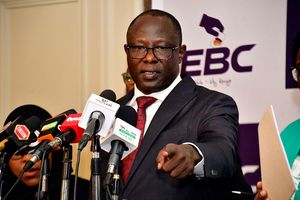
National Parents Association Chairman David Obuhatsa Silas (centre) and other members of the association.
Photo credit: File | Nation Media Group
We made a similar request to the Kenya Private Schools Association, though it was not immediately replied to.
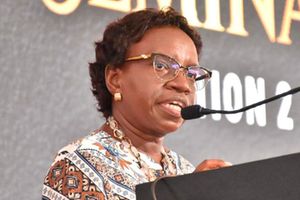
The chairman of the National Parents Association, Mr Silas Obuhatsa, said the pricing of trips in private schools is a matter his lobby has no say over.
“Even the government knows that a parent who takes their child to a private school can afford it,” he said. “So, you go and bargain for yourself as a parent.”
“For public schools, there is a level of control because if a trip is to be made, parents are supposed to be called to discuss and agree. So, public schools don’t just charge. They charge what the parents have agreed upon. And we have no control over that one because it’s parents who have agreed. Once they have agreed, then they have to make payments,” added Mr Obuhatsa.