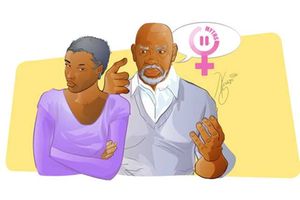
"What are the different methods I can try to conceive?" Diana asked when she came to the clinic. She said that she had tried everything with no success. Childlessness had ended her first marriage. She was in a new relationship and determined to make it work this time.
"I've had sex while on my period, standing up, every position you can imagine," she explained, avoiding eye contact, a sign of embarrassment.
Her first marriage lasted 10 years, but they had no children. Her husband and his relatives turned against her, using every opportunity to show her how inferior she was as a woman.
"It's a waste of family resources to feed you every day," they told her. "You have nothing to show for it. It's like throwing food to the dogs. In fact, the dogs are better; they get puppies!"
Her mother-in-law was especially harsh and sarcastic. She would frequently visit them in the city and use the opportunity to remind her that she was a disgrace.
"If a cow isn't calving, why keep it?" she would ask her son. "Isn't it better to sell it to the butcher and buy a better one?"
What disturbed Diana the most were the religious aspects of the insults. Her mother-in-law told her, "These are curses from the sins of your family. We warn people not to practice witchcraft, but they never listen. It catches up with you at some point."
Diana spent most of her days crying and praying. Problems at home began to affect her performance at work.
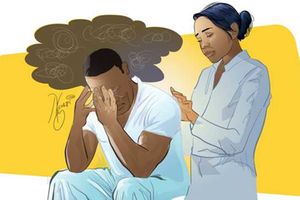
She got a warning letter for poor performance. She became withdrawn and developed splitting headaches. She used loads of painkillers each day, but they provided no relief. She thought of committing suicide several times, and each time, she felt a sense of despair and hopelessness that she couldn't shake.
Doctors finally diagnosed her with depression. She was given antidepressants and started counselling. After several sessions, she decided to end the marriage.
She had recently begun a relationship with a new man, three years after her divorce. Despite his knowledge of her past, he reassured her with his love. So far, he had been kind, understanding, and caring and the relationship had become sexual.
“However, I fear that history might repeat itself. He might get fed up with me soon, and his relatives might start fighting me,” she said.
This was the reason she came to see me. She had been told by her friends that the reason she failed to conceive could be due to the sex style she was using.
Diana’s story mirrors what millions of women experience each year. There are women cannot get pregnant because they are unable to conceive.
They have what is medically classified as primary infertility. A much larger number of women are unable to have as many children as they desire after having one or two children. They have secondary infertility.
Overall, it is estimated that 15 per cent of women of reproductive age have infertility problems, whether primary or secondary.
In a world where reducing the population for economic reasons is a priority, women who are unable to have children appear to have been forgotten. Governments are not investing in infertility treatments, so affected couples must cover the exorbitant costs of treatment themselves.
Even more depressing is the fact that communities view infertility as a woman's problem. If she cannot conceive, it is seen as her mistake. Infertile women are stigmatised, humiliated, and punished. This is despite the fact that in as many as 50 percent of cases of infertility, men are the reason.
Money problems during her first marriage prevented Diana from undergoing medical examinations to find out the cause of her infertility. We agreed to have her undergo a series of tests and to my surprise, all of the test results were normal.
"Well, he said he had fathered children with other women, and he was convinced that I was the problem," Diana explained.
Many men give this explanation when asked to undergo an infertility examination. However, there is never any proof that the children they claim belong to them.
I advised Diana to give her new relationship time. We could only take further action if, after a year, she had not conceived despite having two to three sexual encounters per week.
I explained the science of conception to her. She did not need to engage in unusual sexual practices to conceive.
Three months later, Diana called me.
"It's positive! It's positive! Oh my God! Someone hold me before I collapse!" She screamed into the phone.
"What is it, Diana? Please calm down," I interjected.
She had missed her period for two weeks and decided to take a pregnancy test. It turned out positive.
"And you know what, Doctor?" she said, "The woman Andrew married three years ago, after our divorce, is still childless."
"Well, now you know what it means to be a woman in Africa," I replied.