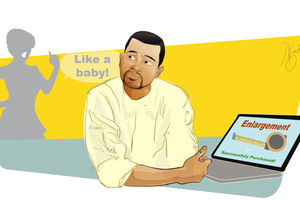
For many men, sexual health comes down to one question: can I get an erection?
However, doctors say it is far more complicated. Fertility, ejaculation, libido, urinary health, hormones and mental wellbeing all play a part, as do conditions such as diabetes and hypertension.
Dr Vic Albert, a specialist urologist at Lodwar County Referral Hospital in Turkana County, says men need to stop judging their sexual health by performance alone.
"Sexual health is not simply about whether a man can achieve an erection," he says.
The distinction matters most for couples struggling to conceive. Dr Albert often meets the belief that infertility is mainly a woman's problem.
"Infertility is a couple's condition," he says, adding that male factors can cause it on their own or alongside female ones. These include low sperm production, poor sperm movement or shape, blockages, hormonal problems, past infections, varicocele, testicular injuries and some medications.
"A man can have excellent erections and still have very poor sperm quality. Same goes for ejaculation, the semen can have very few sperms or none," Dr Albert says.
Dr Albert is also worried by the growing popularity of testosterone boosters and male enhancement products.
Testosterone matters for sexual function, muscle mass and bone health. But for a man trying to father a child, taking these supplements can backfire.
"External testosterone suppresses the hormonal signals from the brain that stimulate the testes," Dr Albert says.
Consequently, sperm production can fall sharply, and sometimes stops altogether. Men trying for a baby should not start testosterone injections, gels or supplements on their own.
"If a man believes he has low testosterone, the answer is not to buy a supplement from a gym or the internet. He should be properly evaluated by a doctor," he says.
He gives the same warning about anabolic steroids, bodybuilding products and unregulated performance supplements, which may contain medicines or hormones not listed on the label.
The habits that harm the heart can also harm sexual health. Dr Albert sees men affected by inactivity, obesity, poor diet, smoking, heavy drinking, recreational drugs, stress and too little sleep.
Obesity is linked to hormonal changes and poorer sperm quality. Smoking damages blood vessels and can harm sperm DNA. Heavy drinking can interfere with testosterone and sperm production.
"Some of the most powerful treatments I can prescribe may actually be weight loss, exercise, smoking cessation, better sleep and control of blood pressure and diabetes," he says.
Men do not go through a clearly defined menopause, but male reproductive ageing is real, Dr Albert says.
He advises men to think about their reproductive health in their 20s and 30s rather than waiting for problems to appear.
Some men write off sexual problems as a normal part of getting older, or something to deal with in private. Dr Albert says that is a mistake.
"Erectile dysfunction is not something men should simply accept as part of getting older," he says. "In some cases, it may be the first warning sign of an underlying medical condition."
Men with undescended testes, testicular surgery, chemotherapy, significant varicocele or fertility problems should seek advice early, as should anyone with testicular lumps, pain or swelling, persistent pelvic pain, urinary leakage or ejaculation problems.