For men who struggle to maintain an erection, treatment usually starts with medication. But when the pills fail, doctors have other options, including a device that works by keeping blood inside the penis for longer.
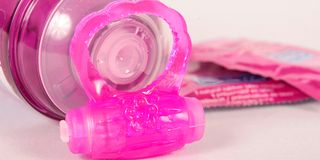
The device, commonly known as a penis ring or constriction ring, is placed around the base of the penis after an erection has been achieved. It is particularly useful for men whose erections do not last because blood leaves the penis too quickly.
Prof Peter Mungai Ngugi, a consultant surgeon and urologist, says the device is intended for men with erectile dysfunction who have not responded adequately to other treatments.
“Erection occurs when blood is pumped into the penis, making it rigid,” Prof Ngugi explains. “So, the ring prevents the blood from flowing back quickly, so the erection is maintained for a longer time.”
The ring does not create an erection on its own. Rather, it helps maintain one that has already been achieved.
In some cases, it is used alongside a vacuum erection device. The vacuum pump draws blood into the erectile tissue of the penis, after which the ring is placed at its base to slow the blood from flowing back.
Despite their availability, constriction rings are not usually the first-line treatment for erectile dysfunction.
According to Prof Ngugi, doctors typically begin with oral medicines known as PDE5 inhibitors, a class that includes commonly prescribed erectile dysfunction drugs. If these do not work, other options, including injectable treatments, may be considered before moving to a constriction ring or vacuum device.
“It’s your doctor who will tell you whether that is what you need,” he says. “There’s a small population in the country that would need that because they have failed other treatment options.”
In Nairobi, he estimates its use at perhaps about 500 cases a year, although this is his clinical estimate rather than a national figure.
Dr Winstar Ombuki, a consultant urologist at Aga Khan Hospital, similarly says constriction rings are not commonly prescribed as standalone treatment.
“They are used alongside vacuum erection devices,” he says, noting that there is evidence that the devices work “in select patients”.
Some products sold as penis rings are marketed as sexual aids, while constriction rings are used specifically in the management of erectile dysfunction.
Constriction rings come in different sizes, and the fit is important.
“You must buy the penis ring from a pharmacy, and it needs to be prescribed by your doctor,” Prof Ngugi says. “There are sizes, there are various sizes, so your doctor will measure the penis and how the ring will fit.”
A ring that is too loose will fail to do its job, while one that is too tight can cause pain and damage to the skin.
In rare cases, swelling can make removal difficult. Prof Ngugi says a stuck ring can be cut off, although he says this rarely happens.
Prof Ngugi says an ill-fitting ring can injure the skin and, in unusual cases, erode through it and create wounds.
“The quality of the device also matters. Products from reputable manufacturers should not ordinarily cause problems.”
Men with certain blood disorders also need particular caution. Prof Ngugi specifically mentions sickle cell disease and thalassaemia, a blood disorder, among conditions where the devices may not be appropriate. Diabetes, he says, is not necessarily a contraindication.
For men wondering whether circumcision changes how a constriction ring works, the answer is no. “Circumcision will not change anything,” Prof Ngugi says. The ring is fitted around the base of the penis, so whether or not a man has a foreskin does not alter its basic mechanism.