Growing up, Naomy Omuka had always been around alcohol. Her parents were social drinkers who occasionally enjoyed a drink or two at home.
However, she had her first drink in March 2003, when she was 18 years old. It was offered to her by her boyfriend during a lunch date in Webuye town. Naomy was living with her sister in Bungoma at that time while studying a computer course.
“My sister was strict, so during the date, I ordered a soda. My boyfriend nudged me to try the malt. I was curious about it, and now that I was done with high school, I thought, why not?"
But the first sip wasn't what she expected, which was disappointing. “It tasted so bitter! He told me I'd get used to it. In fact, he encouraged me to add Sprite or Coke to it, which made it taste a little better."
Naomy slept the entire way back to her sister's place. When she arrived, her sister didn't notice anything unusual but still scolded her for being out late.
From then on, Naomy started going out two or three times a week. She would meet friends in restaurants or clubs, or spend time with her boyfriend on dates.
“When we went to the club, I would just take water. I wasn't eager to try alcohol again, but I craved freedom.”
Six months later, Naomy completed the course. She was fed up with living with her sister, so when her mum asked her to return home, she packed her things and travelled upcountry. However, on arrival, she dropped her stuff and decided to go to their other home in Mombasa. “I had heard about beach parties growing up and was curious to see what went on there. My boyfriend gave me money to buy a phone so we could stay in touch.”
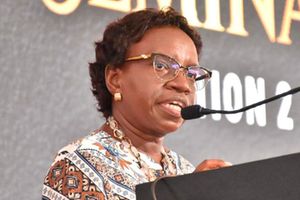
Naomy Omuka is a digital marketer who lives in Thika town.
Photo credit: Pool
The day after she arrived, she went to her first beach party, got drunk, and woke up with a terrible hangover. "I didn't have a lot of money, so I bought myself one malt, then sipped the different drinks my friends were having."
After that, Naomy went clubbing with friends every weekend.
She'd have a malt, this time without soda, and enjoy it. She was living with her brothers in their Mombasa home, and they started reporting her to their mum, especially when she came home late or stayed the night out.
In January 2004, Naomy was enrolled at Mombasa Polytechnic to pursue a certificate in journalism, and her alcohol consumption escalated significantly. The bars were close to the school, so alcohol was always within reach.
"We drank any day of the week, not just on weekends," she recalls. "We were a clique of three girls, and our goal was to make sure we had money for the first drink. After that, men would buy us the rest. I would take about three bottles of malt and still try the whiskeys my friends were having."
After completing her certificate, she did a paid internship but chose not to proceed to the diploma. Her employer would call her for video shoots and editing work, and pay her per day. She also worked for a community-based organisation in Likoni, teaching English and history, and made about Sh12,000 per month.
Her drinking increased since she could now afford the drinks. “I could take up to 10 bottles of malt and not remember anything that happened the next day.”
Alcohol was expensive in clubs, so Naomy and her friends would buy a crate of malt from a nearby police mess before heading out for the evening.
In 2006, Naomy moved in with her cousin because her brothers were questioning her wild lifestyle of clubbing and being dropped off home by different cars.
"I lived with my cousin for two years and during that time I started drinking spirits and whisky. Malt just didn't do it for me anymore. I was introduced to vodka by my friend’s mum. I had tried it before and didn't like it, but my friend suggested adding Coke, and it turned out to be a really nice drink."
One night, Naomy drank so much that she could barely stand. As her cousin's home was too far away, she was dropped off at her own home instead. “My brother was so angry. 'He kept asking why I was drinking.' The next morning, I went back to my cousin's place, and on the way, I bought some vodka. That's when I started going out every day of the week.”
She says that vodka brought out a version of her she barely recognised: more aggressive, louder, impulsive. She would climb tables, dance on the pole, pick fights and draw attention.
One night at a club, an older man noticed the stark difference between her sober self and the person vodka turned her into. He suggested she switch to whisky.
Naomy Omuka.
Photo credit: Pool
“He introduced me to expensive whiskies: Black Label, Gold Label, Blue Label, Jameson. He told me that if I took a double, I should drink water alongside it or take it with ice.”
On days when they didn't go to the club, Naomy and her friends would meet in each other's houses and turn the living room into a drinking den.
Eventually, the rowdy nights out and late-night drinking got to her cousin. Naomy decided to move out and found a house in Bamburi. News of her drinking reached her mother back in the village, but whenever she asked, Naomy vehemently denied it and claimed that she only drank wine.
In 2008, her mother and cousin pooled their money and sent her to Dubai, in the hope that the distance would pull her away from partying and alcohol.
“Dubai was worse. Clubs close early, but there were illegal dens — Mama Pima spots — where I met Kenyans and continued drinking.”
She was arrested in an illegal drinking den, briefly detained and then released when the authorities confirmed her documents were valid.
After working as a cashier in a shopping centre for a year, Naomy returned to Kenya for a one-month holiday and spent Sh700,000 of her savings on partying.
“It's one of my biggest regrets to date,' she says. 'I spent everything on partying and living it up. When I went back, I had to ask a friend to pay for my taxi from the airport. I was broke."
Two months later, she quit her job and returned to Kenya. She says that part of the reason for her decision was realising that she was on a slippery path to prostitution.
“I was earning about Sh30,000, but one man once gave me Sh300,000 for a taxi. Another Nigerian man gave me a similar amount. In Dubai, men would buy me alcohol just to see me get high. There was no intimacy involved, but I realised that if I stayed there, I would sooner or later become a prostitute.”
She returned home at 26, frustrated, broke and without a plan. She continued drinking, often financed by friends and men.
“Getting pregnant was not in the plan, so the news broke me. I drank the most during the first six months of my pregnancy. I switched from whisky to Guinness because people were judging me.”
Naomy was caught up in a vicious cycle. She drank to drown her problems, got depressed because of the drinking and then drank some more.
Then, one night while out partying, she met a man who offered her a job as an administrator at a multi-level marketing company.
With a steady income again, the drinking continued.
“When I didn't feel the baby kicking, I would pray, drink milk and stay away from alcohol. Once the kicks resumed, I would go back to drinking, assured that the baby was alright. I remember being in a bar once, wearing six-inch heels, when a woman stopped me and said, 'I don't know what you're going through, but for the sake of your baby, stop drinking and wearing heels.”
Friends sometimes tried to intervene by asking the waiters not to serve her alcohol, but she simply moved to another club and drank alone.
"I was drinking every single day throughout my pregnancy, and I ended up giving birth prematurely."
Three months after delivery, she started drinking wine, up to three or four glasses at a time. Around the same time, she lost her job, but another cousin helped her find employment at a multinational consumer goods company. The salary was good, and her social circle shifted, but it remained full of drinkers.
“We competed over how many bottles one could buy. I validated myself through the people I was hanging out with.”
She kept alcohol in her house, and on the nights she didn't go out, she could finish an entire crate of malt on her own.
"I was so good at masking my drinking. After a wild night out, I would get home, freshen up, drink some water and take a painkiller, then show up to work looking very composed. I had no scars or dry skin; I looked and smelled good, and I did my job excellently. I always ate well; in fact, I was overweight. I have always had a live-in nanny, and I tipped her generously, especially for looking after my son while I was out. In my mind, everything was working perfectly.”
Naomy says that this delusion, and the fact that she was neither sleeping in a trench nor unable to pay her bills, is part of what enabled the alcoholism.
Four years later, her position was declared redundant, leaving her with no income except for her side hustle, which was an online boutique. In an effort to boost her sales and make a living, she opened a physical shop. The drinking didn't stop because there was always someone ready to buy her a bottle or two.
Within a year, however, the business collapsed. So, in 2015, she ended up being unemployed for a whole year. Loans mounted, friends distanced themselves, and, for the first time, she found herself stranded financially.
The following year, 2016, her belongings were auctioned, and she became homeless with her child. Thankfully, a few days after the auction, a childhood friend took her in, so she didn't have to sleep in the streets. Some friends continued to call her for drinks and would drop her off late at night.
One night, after a night out, she stared at herself in the mirror and broke down. “I cried and spoke to God. I felt like I was looking at a shell of myself; someone completely different.”
The next morning, a friend took her to see a witch doctor. "The witch doctor asked me to bring back some very strange things, and I was shocked at just how low I had gotten. So I left, called my mum and told her I was coming back to the village."
In November 2016, the same year that Naomy returned home, one of her closest friends died. On the way to the funeral, she stopped in Kisii town with her friends for some drinks, and that night she began to question their lifestyle. “I counted the bottles and the money we were spending, and I asked, What if we saved this money? Wouldn't it help if one of us lost a job? Wouldn't it support our children if something happened to us? We focus on partying and drinking, but we have nothing to show for it.”
After the funeral, she stayed with a friend who urged her to fast and pray for three days. On the third day, the father of her child, whom she had not spoken to in five years, called her.
"I saw it as a spiritual attack, but my friend insisted that God was answering my prayers. He asked me to return to Mombasa and even sent me the fare. He promised to help me get back on my feet by paying my rent and school fees for eight months.”
In January 2017, aged 33, Naomy returned to Mombasa, determined to stop drinking. She informed her friends on WhatsApp. They laughed her off, but this did not shake her resolve. Naomy immersed herself in church activities.
“I attended a recovery class at church. It helped me understand why I was drinking, what I was masking and what I needed to heal from.”
That was nine years ago, and she hasn’t touched alcohol ever since. She had been a heavy drinker for 15 years.
“Quitting that lifestyle was not easy. It took me three years before I could sit next to someone drinking without feeling the urge to have a drink myself. My whole community revolved around drinking. I felt that business was done at the bar. I lost many friendships.”
But in the early weeks of sobriety, hope came from her son. “One weekend, he asked me, "Mum, huendi kunywa malt bididi?" (Mum, you are not going to drink a cold malt?) It broke my heart to realise that my baby knew I drank so much.”
A year later, Naomy got a job as a personal assistant to a hotel managing director, which she held until 2018. “I lost that job and started a career in digital marketing, where I met my husband.”
They got married, moved to Thika and later had twins who are now five years old. Three months after giving birth, Naomy started a rent-a-shelf business and a supplements business, both of which have sustained her.
“I am proud that, for once in my life, I chose to do something good for myself and stuck with it. I have remained in Christ all these years, even when people thought my sobriety would be short-lived.”