At the height of her struggle with alcohol, Ann Wachagwi could not begin her day without a drink. Before taking a bath, she would reach for a bottle to steady herself. At night, she kept alcohol close by, fearful of what would happen when its effects wore off.
It was a far cry from the life she once knew. From 2004, Ann had built a successful career as a gospel artiste, recording music and performing on stage. She had also invested in several businesses that were doing well, including an electronics shop. Her earnings also enabled her to support her siblings financially, a responsibility that gradually created tension in her marriage.
In 2013, her husband walked away. The same year, she lost her father. Struggling to cope with the two losses, Ann turned to alcohol for comfort. Her drinking spiralled into addiction, straining family relationships until relatives eventually cut ties with her. She was left largely on her own, caring for her seven-year-old son, Levis.
Initially, drinking dens offered her a sense of belonging and acceptance.
“I found acceptance and camaraderie in the drinking dens. Because I could still afford to buy a round or two, I was nicknamed Annita Gal, the Queen, which made me feel like a real queen with a kingdom under my feet,” she says.
But the comfort was short-lived. By 2015, she had begun using other substances, including cigarettes, muguka and snuff, before progressing to injectable drugs.
Her businesses suffered as her addiction deepened. She exhausted her capital and closed her electronics shop. Attempts to earn a living as a waitress in hotels and bars also failed because her drinking made it difficult to keep a job or save money. She increasingly relied on friends for financial support.
Ann says she could consume about a litre of assorted hard liquor in an evening before carrying another 250ml bottle home. When withdrawal symptoms woke her in the early hours, she would drink to calm the trembling and anxiety.
“That was when I realised alcohol was no longer something I chose for pleasure, but a master I had to serve to make it through another day,” she recalls.
At home, Levis watched his mother's health and circumstances deteriorate. Ann says her memories of some of those difficult years are hazy, but she remembers her son cooking, cleaning and going to school while managing much of his daily life without the care a child should expect.
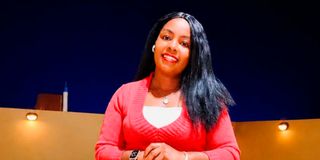
Ann Wachagwi, a recovering addict and founder of Remnants Royal Family (RRF), a CBO that supports people experiencing addiction, depression, family rejection, neglect, and poverty.
“He grew up in difficult circumstances, witnessing the devastating impact of poverty and the sting of societal rejection. His childhood was affected by my painful struggle with alcohol and drug addiction,” she says.
Physically, Ann’s dependence took its toll, dropping her weight to 47 kilogrammes. She barely ate and became so weak she could hardly stand.
Despite the tough circumstances, Levis began thinking of a better life. In 2020, at the age of 14, he conceived an idea for a community bringing together people facing addiction, depression, family rejection, neglect and poverty. He called it the Remnants Royal Family (RRF).
He envisioned a place where people discarded by society could find belonging, dignity and support. He shared the idea with his mother, promising that one day it would become a reality.
“My son was growing, and he wanted to help me get out of my addiction. He secretly registered my name with a job placement agency recruiting women for sponsored employment opportunities in Saudi Arabia. I was reluctant to leave.”
Then, in March 2023, Levis was murdered at the age of 17. His death devastated Ann, who says she subsequently reached a point where she no longer wanted to live.
“Allow me not to talk about my son’s death. It is a very painful matter; I would rather not talk about it…” Later that year, she contacted the agency her late son had listed her on. The opportunity was still open, and she decided to travel to Saudi Arabia.
Ann Wachagwi in a hospital in Saudi Arabia, where she was treated for withdrawal symptoms after stopping substance use.
Photo credit: Pool
Her departure was chaotic. She was so intoxicated that a drinking companion had to remind her about the flight and help pack her luggage.
“I went to Saudi Arabia without even informing my family. My plan was to get there and die. I just wanted to vanish from the face of the earth,” she says.
Once there, she was forced to stop drinking because she couldn’t access alcohol. However, Ann suffered severe withdrawal symptoms that left her body swollen. She could barely eat and had severe body chills. Her employer took her to hospital, where she was admitted for almost three weeks.
During her recovery, her employer offered her a choice to either return to Kenya or go to rehab, with the possibility of resuming work later. He was also willing to finance her treatment and rehabilitation.
Ann Wachagwi.
Photo credit: Pool
“That was the moment I decided to take responsibility for my life. I knew the journey to recovery would not be easy, but I was determined to fight for my life and give myself another chance,” she says.
She underwent rehabilitation in Saudi Arabia, and after recovery, her employer took her back in.
Counselling, meditation, spiritual nourishment and learning to speak openly about her experiences became central to her recovery.
Ann is keen to note that despite the progress she was making, some of the trauma and pain she endured during her addiction years remain etched in her heart. One of the things that saddens her was the blurred memories of her son’s last moments.
“Even now, I have only a vague recollection of the burial of my son. I cannot quite remember the exact location of his grave,” she says.
In late 2024, months after her recovery, Ann founded a community organisation to turn her son’s vision into a reality. She named it the Remnants Royal Family (RRF), whose main goal is to support people affected by substance addiction, depression, poverty and social exclusion. It is based in Nairobi, although Ann runs it remotely from Saudi Arabia. She has a team on the ground, which she meets with every time she comes back to Kenya.
RRF works with various like-minded organisations to facilitate mental health and clinical assessments, counselling and treatment. Through its Orthopaedic Aid Programme, the organisation also provides crutches, wheelchairs, walkers and walking sticks to people with mobility challenges.
For Ann, the work is deeply personal. She understands how addiction can make waking up feel like a battle and how shame can prevent people from seeking help. She urges those trying to quit to identify and confront the underlying causes of their addiction.
“Recovery does not happen overnight. You must first identify the root of the addiction, understand what is behind the drinking and begin dealing with the real cause. My greatest fulfilment would be knowing that my own experience has helped others reclaim their futures and discover possibilities they once thought were beyond their reach,” she says.