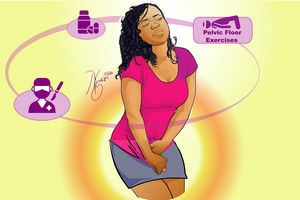
You have been sexually active, but then things start to falter. Your desire diminishes, and if you are a man, you begin to experience difficulties maintaining erections. A woman may experience vaginal dryness and even pain during sex. You then begin to wonder whether people your age should be going through such challenges.
This was Luke’s situation when he visited the Sexology Clinic.
Luke was a 50-year-old businessman, married to Jacinta, a 47-year-old teacher. Their sex life had been satisfying, and they were happy together until Luke turned 49. He gradually lost interest in sex, and his erections began to fail. By the time they came to the clinic, they had not had sex for 11 months.
“Jacinta thinks I no longer love her,” he quipped. “She suspects I could be having an affair, yet I do not really understand what I am going through. I spend sleepless nights worrying about it.”
They had three children and had been married for 22 years. Both were committed to making their marriage work.
“Please do not misinterpret my concern,” Jacinta said. “I care about him, and I want our marriage to be happy, but it is very difficult to remain connected when sex is no longer happening.”
“We have a neighbour who is 70 years old and is dating a 27-year-old woman,” she explained. “They recently had a baby, and the young woman told me that the man is hot in bed. I therefore do not believe Luke should be having these problems at his age.”
Well, there are three major reasons why people develop sexual problems. The acronym biopsychosocial summarises these three categories.
The first is the biological or physical component. In this case, an illness, organ failure or physical malfunction affects sexual function. This may involve problems with hormones, nerves, muscles, the heart or other body organs. In many cases, the underlying disease is hidden, and sexual dysfunction is simply one of its symptoms.
The second component is psychological. Mental health challenges can interfere with sexual functioning. These may include anxiety, depression, psychosis or other forms of psychological distress. The sexual system is highly sensitive to one's psychological state. Indeed, a satisfying sex life can be an indicator of emotional and psychological well-being.
The third component is social. This includes relationship difficulties, since emotional connection with one's partner is important for a fulfilling sex life.
Lifestyle factors also fall into this category. Lack of sleep, alcohol and drug use, work-related stress, financial difficulties and family pressures can all cause exhaustion and make sexual intimacy difficult.
“We do not have any psychosocial problems, Doctor,” Jacinta interjected. “Perhaps you need to test Luke for biological conditions that cause sexual dysfunction.”
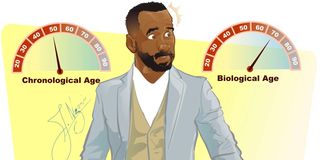
Now, age is an important consideration when assessing the biological causes of sexual dysfunction. There is chronological age, which refers to the number of years a person has lived, and biological age, which refers to the state of ageing of the body.
Let me use an example to explain this. Imagine two cars bought on the same day. Five years later, they may look very different in terms of their condition. This depends on how well each car has been serviced, the types of roads it has travelled on, the experience and discipline of its driver, the materials used in its construction, and other factors.
Although the two cars have the same chronological age, their physical condition and engine performance may be completely different. Similarly, our biological age reflects the condition of our bodies and internal organs, just as the external condition and engine performance reflect the state of the two cars.
“So, what you mean is that my 70-year-old neighbour could be biologically younger than me?” Luke asked.
I nodded, with the caveat that we would need to assess their respective biological ages before drawing such a conclusion.
“Your sexual function may deteriorate in line with your biological ageing. This makes it important to take good care of your body and adopt habits that help slow down the ageing process,” I emphasised.
“But how do you do that?” Jacinta asked, frowning.
It starts with what you eat and how physically active you are. Maintaining a healthy body weight and body mass index (BMI) is important. Getting adequate sleep, ideally seven hours or more each night, is equally essential. You also need to look after your mental health because chronic stress can accelerate the ageing process.
Before embarking on a lifestyle improvement programme, however, it is important to establish your health baseline through appropriate assessments.
These can help identify areas that need attention and guide the development of a plan for improvement. Many people pay little attention to the factors that influence how their bodies age.
I assessed Luke. His eating habits were poor, and he drank too much alcohol. He was obese and rarely slept for more than four hours a night because of his demanding business schedule. His assessment results suggested that his biological age was approximately 73 years.
“Sexual dysfunction could be an early warning sign that your organs are struggling under the strain to which you have subjected them,” I explained as I developed a plan to address the factors contributing to Luke's accelerated ageing.
The couple left the clinic looking rather disturbed. Jacinta could hardly believe that she was married to a man whose biological age was older than that of their 70-year-old neighbour!