Too often in this country, a retired public servant reemerges as a politician. Kenyans are just about to witness tens of former teachers, doctors, engineers, CEOs, etc., who have worked for the government joining politics.
They will soon be promising Kenyans abundant progress. There will be no irony in their public declarations of taking Kenya to the next stage of human development, assisted by technology, especially artificial intelligence. It will all be artificial talk by men — they are mostly men — who were celebrated for their intelligence, which is why they were in public or civil service.
Yet, there are hundreds of women who serve the public for tens of years and retire silently. They simply fade away from the public, going back ‘home’, to the (un)familiarity of the house and family that they had left every morning, for five or more days a week, for months and years, to start a new stage of their lives.
Such women are expected to transit smoothly from former roles as officers of the state or corporations to spouses, mothers, aunts or grandmothers; from caring for the state to looking after the family and the community.
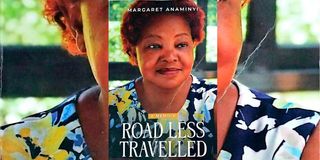
Margaret Anaminyi is no different from the hundreds of women in Kenya who have given their sweat and blood to serve the country, the continent and the world, and thereafter retired silently. Anaminyi’s curriculum vitae is one long story from the stony Ebusiekwe village, to Nairobi, to the rest of the world, back to Nairobi, in retirement.
It is one of those truly humble tales of a girl child determined to ‘see’ and experience the world, far away from the familiar village of birth. It is also a story of the changes that European modernity introduced in Africa. This is the story that she tells in Road Less Travelled (Fantastic Publishing Hub 2026).
Margaret was born in a family whose head was already initiated in the ways of the European colonisers. His father was among the first trained Anglican Church clergy in Kenya. The Reverend Canon Joash Anaminyi and Rachel Nemali Anaminyi had five daughters and a son. The daughters and sons count among Kenyans who studied in the elite schools in this country. Margaret and her older sister studied at Limuru Girls High School, while their brother schooled at Alliance High School. The other three sisters went to Alliance Girls High School.
There is something that Margaret does in telling her story that is quite impressive, and she is bold enough to state it in the introduction to the memoir. She writes, “This is the story of an unmarried African woman. In a culture where womanhood is often defined by marriage and children, my journey took a different path — the road less travelled.
Remaining unmarried and childless was not always understood, but it became my chosen road — a road filled with purpose, service, and a different kind of womanhood to countless children I supported along the way. My friend Nancy Kidula simply referred to me as ‘Auntie to all the children.” Not many women would declare that they deliberately opted to work, to serve others, but not ‘build a home,’ as women tend to be expected to do in Africa.
Bilingual secretarial course
Yet, Margaret built and shaped the lives of many individuals, offices, homes and even countries. It began after graduation with a Bachelor of Arts degree from the University of Nairobi in 1978. She had studied French, Literature and Sociology. She would travel to France barely a year after graduating and serving as a District Officer II in Limuru, to further her studies in French, with the objective “…to equip them to return and introduce a bilingual secretarial course in Kenya.” When she returned to Kenya, Margaret worked at the Government Secretarial College, but would soon leave to go study for a postgraduate diploma in education at Kenyatta University. From college, Margaret went to teach in Mombasa but would resign in 1985 after getting “tired of ‘chalk and talk.’”
The next destination for Margaret would be the non-governmental organization (NGO) sector. This was a risky venture at the time, but Margaret was determined to change the course of her professional life. She would not regret her action at all because she would end up working for the African Academy of Sciences, whose president was Prof Thomas Odhiambo, the then founder of the International Centre for Insect Physiology and Ecology.
At the AAS, Margaret worked as Bilingual Secretary with the likes of Peter Anyang’ Nyong’o, Rahab Runo, Samson Gombe, GBA Okelo and John Kokwaro. These were men and women who practically built an institution to serve the continent from scratch, in the process creating a network of African scientists, establishing an in-house publication, organising conferences etc.
Margaret resigned from AAS after ten years while the organization was downsizing its staff due to ‘donor fatigue.” She would thereafter move to African Housing Fund, an organisation that took in the homeless. At AHF Margaret worked as Senior Information and Editing Officer for 18 months before the organization “folded due to lack of funds.”
As she writes, she “tarmacked” for two months before finding a job at the Institute of Policy Analysis and Research (IPAR) as a Publications Editor; then on to the Center for African Family Studies (CAFS) as a Public Information Officer; then to the Council for the Development of Social Science Research in Africa (CODESRIA), in Dakar, Senegal, in 2004. Margaret had done her home stint and moved on to the continent.
International civil service career
At CODESRIA, Margaret seems to have most enjoyed her work and time. For her, Dakar and the office were not just work. She shares with the reader all the glory and downsides of the Senegalese, from what she describes as a hilarious dancing style, tea making as a “whole ceremony,” the negative attitude towards foreigners by the Senegalese, power cuts, a generally safe but expensive city etc.
Margaret would move on from CODESRIA to work for the United Nations Volunteer program in the Democratic Republic of Congo, Kinshasa. She would work in Bandundu and Goma before getting a job as the Regional Coordinator in the Electoral Division with the United Nations Operations in Ivory Coast; thereafter, she would work in Conakry, Guinea for UNDP; before detouring to Bangui in the Central African Republic for a United Nations assignment.
Eventually Margaret would return home, after a stint back in the DRC where her international civil service career began. Margaret retired in 2019 when she “laid down the tools of mission life,” after “…a winding path carved through valleys and mountains, laughter and tears”, in a “…life of a daughter, sister, an auntie, a teacher, an administrator. An editor, an election official and above all, a woman of faith.
Road Less Travelled is the story of women and men who make many sectors of the country, continent and the world work, committed to their duties without proclaiming their services. Not many Kenyans on the streets would recognise Margaret today. But there are thousands of men and women out there whom Margaret served in various places who celebrate her silently.