Scalp eczema that can be aggravated by tight braids, synthetic hair, heat and poor scalp care.

Wearing your hair natural can be a source of pride, but keeping it healthy while managing scalp eczema is often a challenge. You leave the salon with fresh braids, only for the itching to begin a few days later.
Soon, white flakes appear along your scalp lines, your scalp feels tender, and every scratch seems to make it worse. This can easily be dismissed as ordinary dandruff or a bad hair product, but it can be a sign of seborrhoeic dermatitis, a common form of scalp eczema that can be aggravated by tight braids, synthetic hair, heat and poor scalp care.
“Our skin naturally carries yeasts and other microorganisms that normally live there without causing problems,” says Dr Pauline Gacheri, a consultant dermatologist at Meru Teaching and Referral Hospital. “But one of these yeasts is associated with seborrhoeic dermatitis.”
The problem, she says, is not necessarily the presence of these organisms, but what happens when irritation is added to the mix.
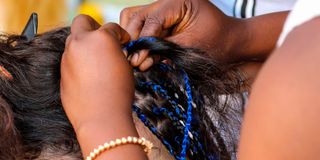
“Number one is the traction, the pulling and tension placed on the hair. When braids are installed too tightly, the constant pulling can damage the hair follicles. Over time, this can contribute to hair loss, particularly around the sides of the head.”
But the effects can begin much sooner. “Too much traction causes inflammation. It starts with braiding or within 48 to 72 hours,” she says.
That may explain why someone can leave the salon feeling fine, only to find themselves scratching their scalp a few days later. Excess heat can add to the irritation, particularly when natural hair is subjected to blow-drying or other hot treatments.
Synthetic hair can also be part of the problem. “It can irritate the scalp, and some people may develop an allergic reaction to something in the material,” says Dr Gacheri. The same applies to salon products. A cleanser, moisturiser, treatment or finishing spray that works for one person may trigger irritation in someone who is sensitive to a particular ingredient.
This can explain why someone may have a reaction after visiting one salon but not another.
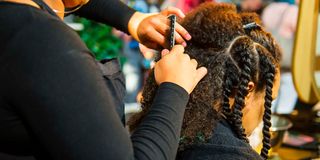
Wearing your hair natural can be a source of pride, but keeping it healthy while managing scalp eczema is often a challenge.
“The end product is the same. You scratch, you get irritated.”
For someone who already has seborrhoeic dermatitis, such irritation can make the condition worse. For women with atopic dermatitis, synthetic braids can also trigger eczema, particularly when the hair touches the neck. The longer the hairstyle stays in, the more important scalp care becomes.
“It is not unusual for people to keep braids for two or even three months without shampooing or conditioning the scalp or hair. But over time, sweat, dirt, scalp products and dead skin cells can build up. That creates an environment in which the yeast associated with seborrhoeic dermatitis can multiply, potentially making the eczema worse.” The same concern applies to wigs and weaves, which are sometimes placed over too tight cornrows.
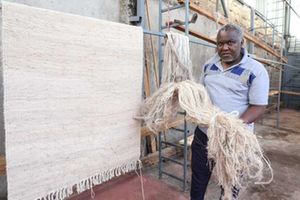
Also Read: From farm to fashion - Climate-smart venture turns banana plant into hair extensions, paper
“Adding something heavy on top can increase that tension. Some styles can also make the scalp hot, leading to more sweating and further buildup. It is a very conducive environment for the yeast to multiply.”
There is no one ingredient responsible for such reactions. Preservatives and other ingredients in hair products may cause sensitivity, either individually or in combination. Leaving the scalp dry can also create a problem, as can excessive product buildup. It can be tempting to assume that every itchy or flaky scalp is simply dandruff.
Fungal infections
Seborrhoeic dermatitis can be confused with atopic dermatitis, another type of eczema. Psoriasis can also affect the scalp and may be difficult to distinguish from severe seborrhoeic dermatitis, particularly when it reaches the hairline.
Scalp eczema that can be aggravated by tight braids, synthetic hair, heat and poor scalp care.
“There are also fungal infections that can appear as white scales across the scalp rather than the more familiar ring-shaped patches associated with some fungal infections,” she says.
Another possibility is pityriasis amiantacea, a skin condition which causes excessive scaling around the base of the hair and can appear silvery or yellowish.
“This is why persistent itching, scaling, redness or wounds should not simply be treated as dandruff,” she warns.
Seborrhoeic dermatitis tends to recur. “Even when it starts mildly, persistent itchiness, redness or the appearance of small wounds extending to the forehead, eyebrows, hairline behind the ears or neck should prompt a visit to a specialist.
“If you have to braid, get to someone who really understands what traction is and how to avoid it,” she cautions.
The choice of braids also matters. Lightweight braids may reduce the strain, although length can add weight and therefore create continuous traction. Long locks or excessive styling can also place traction on the scalp.
Scalp washing is another important part of managing the condition. Dr Gacheri recommends lukewarm to cool water rather than hot water, and using an anti-dandruff or anti-seborrhoeic dermatitis shampoo.
“Ideally, the scalp should be shampooed twice a week or at least once a week, then moisturised immediately.”
For those with severe seborrhoeic dermatitis, even manipulating the hair may trigger a flare-up. In such cases, simpler hairstyles such as twist-outs may be easier to manage. Those with very severe scalp problems may eventually need to cut their hair.
Dr Gacheri also advises against cramming every hair routine into one day. “The day you undo your hairstyle doesn’t have to be the same day you wash, blow-dry and braid your hair again,” she says. “Giving your scalp a break between styles can help reduce irritation.”
Is it true eczema mostly affects black women more? “
Does eczema affect Black women more? Black women are the ones who like braiding, so problems with the scalp are likely to be more common among that community.” Also, redness is easier to see on lighter skin.
Diet can also worsen inflammation. “Foods high in sugar and high-glycaemic-index foods, including white chapatti, white sugar and other highly processed foods, can make inflammatory conditions such as eczema and psoriasis worse. Increasing colourful fruits and vegetables, including greens and foods in yellow, red and purple shades, while reducing sugar, can help support an anti-inflammatory approach,” Dr Gacheri adds.
Follow ourWhatsApp channel for breaking news updates and more stories like this.