The reality is dawning on the more than 470 Kenyans who accepted a government repatriation offer from South Africa: they are banned from returning for the next five years.
The Sunday Nation has established that the whole lot, regardless of their immigration status at the point of repatriation, received five-year re-entry bans, meaning they must adapt to life in Kenya and forget about visiting their families – if they left any behind – until mid-2031.
Two months later, the reality is biting hard, especially for individuals who had families. Among them is Mr Joseph Gichini, 49, who had lived in South Africa for 20 years, and 43-year-old Josephus Irungu Gakinya, who had been there for six years.
“We’ve got kids there. So, the government should reconsider a push for the people (who have families there),” said Mr Gichini.
Mr Irungu, who has two daughters aged five and three, said: “These are very young kids separated from their parents.”
“They are wondering where the dad is and everything. We normally talk over the phone, but that is not the best thing. They should have parental love the way we were also raised,” he added. “When we were coming, they had to put some bans in our passports for five years.”
Mr Gichini said the five-year-ban was imposed on everyone, regardless of their immigration status. “They didn’t care whether you had papers or not,” he said.
Mr Irungu said: “Everyone who was repatriated (was banned), whether you had the right papers or not.”
Kenyan government officials did not mention the prospects of a ban in their communications to Kenyans who took up the repatriation offer.
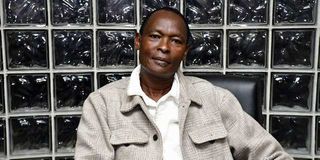
Joseph Gichini (left), Anthony Waweru and Nelly Onyango who were repatriated from South Africa following escalating anti-migrant protests at JKIA after landing on July 2,2026.
Photo credit: Evans Habil | Nation Media Group
By July 9, when the government ended its marathon flights from South Africa, 472 Kenyans had taken up the offer, being flown on the government’s bill to Nairobi on Kenya Airways and receiving brief counselling sessions at the Jomo Kenyatta International Airport before picked up their Kenyan story from where they had left it.
We contacted Diaspora Affairs PS Roseline Njogu over the matter. Ms Njogu had been involved in the repatriation negotiations and gave regular updates on the South African returnees. We asked her via WhatsApp to confirm the five-year ban per returnee, and her reply was a simple “no, that’s not true”. She did not respond to our query on what Kenya and South Africa agreed upon regarding the returnees. Foreign and Diaspora Affairs CS Musalia Mudavadi did not immediately respond to a text query on the matter.
On Thursday, the Nation interviewed Mr Irungu and two other returnees on a range of issues, and the ban was among them. The other two were Mr Julius Ndung’u Mwangi, 60, and 30-year-old Baylian Wambugu.
On the issue of the ban, Mr Wambugu termed it “uncouth”.
“Many people thought we were just going home, but I knew this would be something that would be used against us in the future,” said Mr Wambugu.
It emerged that it has been a steep learning curve for the returnees, some who had been away for decades and “forgotten” how to be Kenyans in Kenya. One complained about the many taxes that Kenyans have to pay, yet the services such as healthcare and education aren’t commensurate.
The returnees are also questioning whether the government will ever give them a financial head start to help them readjust. They wish Kenya could copy the example of other African countries that have offered financial assistance to returnees. Ghana gave an equivalent of Sh56,000 to each Ghanaian returning from South Africa.
“They should give us (money) a start-up so that we can start life again,” said Mr Irungu, who hails from Murang’a County.
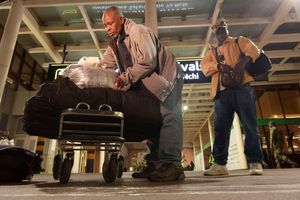
Anthony Waweru (left) and Nelly Onyango at JKIA after landing on July 2,2026. They are some of the Kenyans repatriated from South Africa following escalating anti-migrant protests.
Photo credit: Evans Habil | Nation Media Group
Mr Wambugu noted that in some countries, returnees from South Africa received handouts at the airports. “Their governments simply understood that these guys have come back and they don’t have anything,” noted Mr Wambugu, a Kiambu resident.
“People came from work and were told to head to the embassy because it wasn’t safe to go home. Many did not get salaries. People had loans that needed to be serviced. So, what do we do?”
Mr Ndung’u revisited a promise he heard. “When we were evacuated or repatriated, at the embassy in Pretoria, they told us that when we come back here, the government would help us with something to start up. But when we came here, we did not get anything,” he said.
“We managed to go to the Diaspora Affairs offices, but they did not give us much help. Even up to now, we haven’t got any help,” added Mr Ndung’u, who is also from Murang’a.
The returnees have been using a WhatsApp group, created by Mr Wambugu, to share their experiences. They have also sent a number of petitions to government officials, including one to President William Ruto.
“We have tried to reach all government offices. We’ve written to the Senate, we’ve written to the Diaspora Affairs department, we have written to the IOM (International Organisation for Migration), we have written to the National Government CDF. We have tried our best to push, but until now we have had no response. We’ve written to the office of the deputy president; we’ve written to the State House, to our well-abled President, but till now, we’ve got nothing we can say we’re holding on to. We’re still waiting,” said Mr Wambugu.
Anthony Waweru (left) and Nelly Onyango, two of the Kenyans repatriated from South Africa following escalating anti-migrant protests on arrival at JKIA on July 2, 2026.
Photo credit: Evans Habil | Nation Media Group
From the sentiment in the WhatsApp group, Mr Wambugu said, the returned Kenyans have a lot of readjusting to do.
“The biggest thing I know people have lost is connections; coming back to a country where maybe you only used to have maybe three calls a week and now you lost your connections,” said Mr Wambugu, who had volunteered at the registration desk in South Africa.
The returnees also opposed the anti-foreigner sentiment sparked by President William Ruto’s September 2 remarks.
“It all started the same way in South Africa,” said Mr Ndung’u. “There is a way to do it diplomatically, humanely. If people must leave, let them move in a humane way, not allowing people to go and fight them like we were being beaten in South Africa. It might give our country a bad name.”
“Everyone is looking for a livelihood,” he said. “Most of them have intermarried here. Some have families here. It is quite bad to separate a family the way they have done to me.”
Mr Wambugu reasoned that such anti-foreigner campaigns thrive by turning poverty against poverty, claiming that there were hidden forces sponsoring such movements in Africa.
“What they do is play with people’s minds. Once it becomes normal…everyone in Africa will be talking about, ‘You’re not from my country, you go to your country.’ It will now be something normal,” he argued.