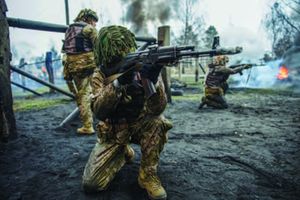
As Kenya prepares to head to Moscow for the Russia–Africa Summit on October 28–29, families of nationals recruited to fight in the Russia–Ukraine war are still waiting for answers about their sons who have died or vanished on the battlefield.
The third Russia–Africa Summit comes amid mounting questions over the scale of the recruitment crisis, with official figures indicating that dozens of Kenyans have been killed or remain missing in action.
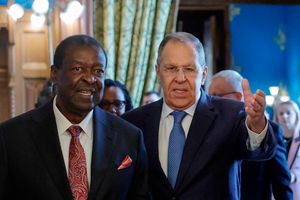
According to sources at the Ministry of Foreign and Diaspora Affairs, President William Ruto and Prime Cabinet Secretary Musalia Mudavadi are expected to attend the summit, where Kenya’s engagement with Russia comes amid growing concerns over the fate of nationals recruited to fight in the Russia–Ukraine war.
Mr Mudavadi told Parliament on October 8 that the government had recorded 354 Kenyans connected to the conflict, including 84 classified as killed or missing in action. A further 77 were on the front lines, 34 were hospitalised, five were prisoners of war in Ukraine and 62 had been repatriated.
In a statement issued ahead of the summit, the Kenya Embassy in Moscow said the government was continuing to engage Russian authorities over the recruitment of Kenyans into foreign armed formations, the loss of life and the welfare of affected families.
“The matter of Kenyans who were recruited outside formal legal structures into foreign armed formations remains a central and carefully managed concern of the Government. The welfare, safety and inherent dignity of Kenyans abroad constitute a paramount and non-negotiable priority,” the embassy said.
It said Kenya’s engagement with Moscow was aimed at securing accountability, support for affected citizens and protection for nationals whose circumstances had left them vulnerable to the conflict.
“Kenya continues to engage the Russian Federation through structured diplomatic channels, raising issues related to irregular recruitment, loss of life and the well-being of affected families with firmness, sensitivity and humanitarian vigilance,” the statement said.
“Our ongoing dialogue seeks to ensure accountability, appropriate support mechanisms and comprehensive protection for all Kenyan nationals involved, recognizing the complex vulnerabilities and pressures that may have shaped their circumstances.”
The summit presents another opportunity for Kenya to pursue its concerns through diplomatic engagement with Russia, although the embassy’s statement did not explicitly confirm whether the cases of Kenyans recruited to fight would feature on the formal agenda.
The embassy said the government was approaching the cases of affected nationals with an emphasis on their rights and welfare, regardless of how they entered the foreign armed formations.
“Kenyan nationals who have found themselves within foreign armed formations beyond the remit of Kenya’s legal and administrative architecture are regarded as having entered such circumstances without formal sanction from the Republic,” the embassy said.
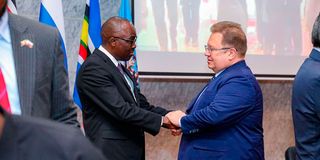
Russian Ambassador to Kenya Vsevolod Tkachenko.
Photo credit: Lucy Wanjiru | Nation Media Group
Last week, families disputed Prime Cabinet Secretary on the number of Kenyans who have fallen victim to Russia’s war during his appearance before a joint sitting of two Senate committees.
Amid the public outcry over Russia’s alleged deceptive recruitment of Kenyans, which the National Intelligence Service has put at 1,000 recruits.
Kenya and Russia are negotiating a bilateral labour agreement intended to establish safe, transparent and regulated employment pathways for Kenyan nationals.
The proposed agreement would strengthen labour protections and establish mechanisms for dispute resolution, oversight and repatriation.
However, the embassy said the arrangement would not retroactively legitimise previous irregular recruitment into foreign armed formations.
“The agreement would not retroactively legitimise any prior irregular recruitment. Those cases will continue to be handled individually through diplomatic engagement, consular follow-up and humanitarian review,” the statement said.
The embassy said the agreement was intended to prevent future irregularities and ensure Kenyans working abroad operated within lawful and secure frameworks.
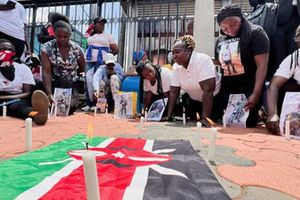
Peter Kamau (right), alongside other Kenyan families whose relatives were recruited to fight for Russia in the war against Ukraine and are now missing, prepares to address journalists outside Old Mutual Towers in Nairobi on 14 July 2026, following their meeting with Roseline Kathure Njogu, Principal Secretary of Diaspora Affairs.
Photo credit: Evans Habil | Nation Media Group
The negotiations raise questions about how the two countries intend to distinguish legitimate civilian employment from recruitment that exposes Kenyans to combat and other dangers.
Mr Mudavadi confirmed Kenya’s participation in the summit on October 13 after hosting Russian Ambassador to Kenya Vsevolod Tkachenko at the Ministry of Foreign and Diaspora Affairs headquarters in Nairobi.
He said Kenya would use the meeting to strengthen strategic partnerships and pursue opportunities in trade, investment, economic development, diplomatic training and cultural cooperation.
“For Kenyans, this means pursuing new markets for businesses, stronger economic partnerships and opportunities for young innovators. Kenya’s place on the global stage must translate into real opportunities for our people,” Mudavadi said.
He added that his discussions with the Russian ambassador had also focused on energy, food security and emerging technologies, including artificial intelligence.
The Prime Cabinet Secretary said Kenya’s mission was to turn diplomacy into opportunities, investment and tangible benefits for citizens.
The accompanying Russia–Africa Economic and Humanitarian Forum will provide an additional platform for engagement between governments, businesses and other stakeholders.
The embassy said discussions held during Mudavadi’s official visit to Russia in March remained active on the bilateral agenda and were expected to feature in follow-up engagements at the summit.
They include increasing scholarships for Kenyan students to 70 annually, exploring professional opportunities for Kenyan youth, advancing a Bilateral Air Service Agreement to facilitate direct air connectivity and expanding Kenyan exports to the Russian market.