Mr Charisma, together with Brian Muthengi Kimanzi, a social media influencer, argues that if the policy is implemented, it may affect the livelihoods of Kenyans working in the creative and digital economy sector.
"If the policy is implemented in its current form, its effect will be to immediately criminalise or prohibit all digital marketing and influencer activities relating to alcohol. It will cause substantial financial loss to the petitioners and thousands of similarly situated creatives and marketing professionals," they claim.
Through lawyer Joseph Mokua Manyara, they want the court to stop the intended enforcement of the policy by the State.
It is their case that the implementation may occasion irreparable harm and financial ruin to them and other persons who earn their living through digital content creation.
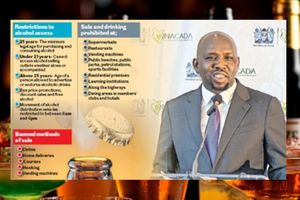
The policy was announced last week by the National Authority for the Campaign Against Alcohol and Drug Abuse (Nacada) as part of measures to combat alcohol, drug, and substance abuse in the country.
Nacada report shows that one in every 20 persons aged between 15 and 65 years are addicts.
Photo credit: Pool
According to Nacada, prohibiting public figures, including musicians, actors, athletes, social media influencers, and media personalities from endorsing or promote alcohol would help in cutting its excessive consumption and abuse.
However, Charisma and Mr Muthengi believe that implementation of the policy will affect job creation and businesses at a time the country is struggling with rising unemployment and reduced incomes.
"The petitioners are members of a class of law-abiding Kenyan creatives, digital marketers, and media practitioners who earn legitimate income through content creation, influencer work, and brand partnerships, including collaborations with entities in the alcohol sector duly licensed under Kenyan law," says their lawyer.
"The petitioners were not involved, engaged, or consulted during the formulation of the policy despite being directly affected stakeholders whose income streams, professional platforms, and freedom of expression are placed at risk by the provisions of the policy," the lawyer says.
Citing over six Constitution provisions, the lawyer states that the policy introduces an immediate and blanket ban on online advertising, influencer marketing, and brand endorsements, which threatens to unlawfully curtail the constitutional rights of his clients.
They have named the Cabinet Secretary for Interior, Nacada and the Attorney-General as respondents in the suit, while the Law Society of Kenya is listed as an interested party.
While the stated objective of the proposed measures is to protect children, youth, and the public from misleading or excessive inducement to alcohol use, lawyer Manyara says there already exists a robust statutory framework under the Alcoholic Drinks Control Act, which regulates that.
"The legal provisions offer adequate safeguards and have, over time, proven effective in balancing public health objectives with constitutional freedoms and economic rights," says Mr Manyara.
While asking the court to intervene and stop the implementation, he argues that prior to its public release, the contested policy was formally approved by the Cabinet on June 25, 2025, as announced in a Cabinet Communiqué.
President William Ruto chairs a Cabinet meeting at State House, Nairobi, on April 29, 2025.
Photo credit: PCS
"The effect of this approval is to give the Policy political and executive legitimacy, strongly suggesting that it is intended to be implemented in its current form, absent any further legislative or participatory process," he says.
The petitioners want the court to quash and declare the policy as unconstitutional over alleged failure to comply with the mandatory requirements of public participation under the Constitution.
They also want the court to declare that the blanket prohibition on online advertising, influencer content, and alcohol brand endorsements was disproportionate and unreasonable, and amounts to an unlawful infringement on constitutionally protected rights.
The respondents and the interested party are expected to file their respective responses before August 29, 2025.
The case is scheduled for mention on October 6, 2025, to confirm compliance and to take further directions on the expedited hearing and determination of the case.