A third of learners transiting from junior school to senior school lack essential foundational literacy and numeracy skills, according to a new report that raises concern about the organisation of junior schools to prepare learners for senior school pathways.
The report launched yesterday by Usawa Agenda, a non-profit organisation that researches on basic education, further shows that learners in rural public schools are the most affected. It exposes major gaps in junior school in five key dimensions: participation and attendance, school readiness and affordability, school leadership and staffing, foundational learning outcomes and equity.
“The evidence shows that the government policies have succeeded in bringing learners into classrooms but have not yet succeeded in ensuring that they learn or that the schools they enter are equally equipped to teach them,” reads part of the report titled, 2026 Status of Junior School Education Report.
It shows that infrastructure and resource gaps are substantial, with only 27.5 percent of junior schools having a functional science laboratory and only 27 percent have a library. Further, private and urban schools were found to better equipped than public and rural schools.
“A substantial share of learners have progressed through junior school without mastering the foundational literacy and numeracy competencies that the curriculum assumes they have already acquired,” notes the report.
Junior school is a critical stage in Kenya’s basic education system under the competency-based education (CBE). It covers Grades 7, 8 and 9, providing a bridge between primary education and senior school. It is at this stage that learners are expected to deepen the foundational competencies acquired in the early grades. According to the Basic Education Curriculum Framework, junior school learners are expected to engage with a broader range of learning areas, and begin exploring their interests, talents, and future educational pathways in senior school.
The survey was conducted in all the 47 counties and covered 41,156 households, 1,527 schools and assessed 49,835 learners. It also targeted the Dadaab, Kakuma, and Kalobeyei refugee communities.
According to the report, 29 per cent of Grade 9 learners lack both foundational literacy and numeracy competencies and that one in five Grade 9 learners cannot read a Grade 3 English story.
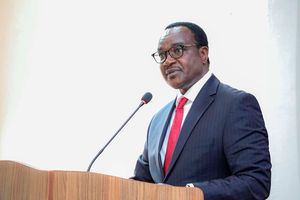
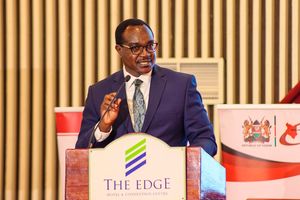
Usawa Agenda Executive Director Dr Emmanuel Manyasa make his remarks during the launch of the 2026 Junior and Senior School survey reports at Kenya Institute of Curriculum Development (KICD), Nairobi, on August 19, 2026.
Photo credit: Lucy Wanjiru | Nation
The report further shows that one in five Grade 9 learners cannot read a Grade 3 English story, while three in 10 Grade 7 learners face the same difficulty.
“When a child has good foundational skills, they manage to read and solve a few problems. When there is poor foundational skills [acquisition], starting from the ECD or early learning level, it becomes an issue. Those children grow up, and it becomes difficult. As partners, as a ministry, we need to put our heads together and see how this can happen under our watch,” said Hellen Avisa, the Director at the Directorate of Junior School at the Ministry of Education. She represented the Principal Secretary John Olooltua at the launch.
“The findings presented today provide more than a snapshot of our education system. They provide an opportunity for reflection and action. When we have evidence, what next? We need to act, so evidence must inform action. The findings should help us identify the areas requiring attention at national, county, and school level. Where the evidence points to gaps, we must ask, what practical interventions are necessary, and who should take responsibility,” she said.
The report further shows that the learning gaps begin much earlier, with 41 per cent of Grade 7 learners lacking both foundational (literacy and numeracy) competencies. Although the proportion falls as learners progress through junior school, nearly three in 10 are still unable to demonstrate the combined competencies by Grade 9.
The report further shows that learners in public junior schools perform below their counterparts in private schools in both literacy and numeracy across the grades.
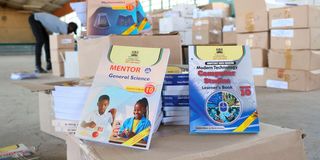
The report shows that only 27.5 per cent of junior schools nationally have functional science laboratories, while an almost equal percentage (27 per cent) have libraries. Only 34.3 per cent have adequate learning materials and 46.3 per cent have computers for learners.
The situation varies sharply by region. Nairobi City County has functional science laboratories in 98.7 per cent of its junior schools, compared with 15.4 per cent in North Eastern and 13.8 per cent in Western.
The report further shows that teacher deployment is uneven. Teachers specialised to teach social sciences account for 58.5 per cent of teachers nationally, compared with 33.1 per cent in STEM and only 8.4 per cent in arts and sports.
Funding was also highlighted as a key factor in the learning outcomes and that only 52.3 per cent of junior schools receive financial disbursements on time. The cost of joining junior school also varies significantly, depending on where a learner attends school.
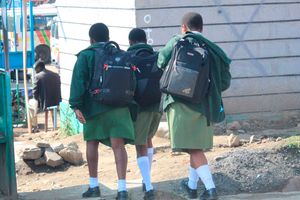
Estimated entry costs stand at Sh8,186 for rural public schools and Sh11,362 for urban public schools, compared with Sh22,223 for rural private schools and Sh21,954 for urban private schools. The report says fees constitute the largest component of the cost.
“I think there are challenges keeping learners in school, managing them and handling their learning. The challenge is that schools themselves are facing challenges in preparing learners for senior school,” said Usawa Agenda, Executive Director, Emmanuel Manyasa.
The report further shows that access is broadly balanced between boys and girls, with national Junior School enrolment comprising 49.3 per cent girls and 50.7 per cent boys. However, refugee community schools record significantly higher absenteeism at 13.4 per cent, compared with 5.3 per cent in public schools and 3.3 per cent in private schools.
It identifies children with disabilities, learners in rural and public schools, those in ASAL counties and refugee communities, as groups facing overlapping disadvantages. It also notes that boys often lag in literacy and numeracy outcomes. The learning outcomes are also linked to factors beyond the classroom.
From left: Usawa Agenda Executive Director Dr Emmanuel Manyasa, Ministry of Education Directorate of Quality Assurance Director Lydia Njoki, State Department for Basic Education Director of Education Hellen Avisa, Teachers Service Commission (TSC) Staffing Directorate Charles Tasma and Kenya National Union of Teachers (KNUT) Deputy Secretary-General Hesbon Otieno Agola during the launch of the 2026 Junior and Senior School survey reports at Kenya Institute of Curriculum Development (KICD), Nairobi on August 19, 2026.
Photo credit: Lucy Wanjiru | Nation
The report further shows that learning is influenced by experiences before school, conditions within school and circumstances at home. Pre-primary education provides an early learning advantage, while mothers’ education, homework support and household wealth are associated with higher chances of foundational competence.
It says learners who are older than expected for their grade, come from larger households or mainly use a non-English language at home have lower odds of demonstrating competence. Regression analysis found that each additional year of age above the expected grade was associated with six per cent lower odds, while each additional household member was associated with 13 per cent lower odds. Mainly using a mother tongue at home was associated with 30 to 35 per cent lower odds.
The report recommends structured literacy and numeracy remediation in Grades 7 to 9, alongside greater investment in laboratories, libraries, learning materials and predictable financing.
It also calls for better teacher deployment, targeted interventions for children with disabilities, ASAL counties and refugee communities, and stronger links between pre-primary education and parental support.