Education stakeholders have called for significant changes to the proposed Basic Education Bill, 2026, including restructuring the basic education system, strengthening parent representation, reviewing the management of learning materials and removing provisions that could allow schools to charge parents.
The Basic Education Bill, 2026 seeks to replace the existing legal framework governing basic education, covering school governance, financing, learner welfare, teacher management, quality assurance and education data.
In submissions to Parliament on the Basic Education Bill, 2026, and the Tertiary Education, Placement and Funding Bill, 2026, stakeholders are seeking stronger legal powers for parents, reforms to the agency responsible for learning materials, entrenchment of the 2-6-3-3 education structure and a requirement for the government to fully finance basic education.
Members of the National Assembly follow proceedings during a past session.
Photo credit: File | Nation Media Group
The Elimu Bora Working Group has questioned the decision to legislate before a new national education policy is approved, while also calling for the 2-6-3-3 education structure to be entrenched in law, clearer senior-school pathway placement criteria and stronger government obligations to finance basic education.
It argues that legislation should translate an approved policy into legal provisions and warns that passing the Bills before the policy is settled could lock in institutions, structures and funding models that may later have to be changed.
“As a matter of urgency, the Executive should bring the new Education Policy (draft sessional paper) to Parliament for consideration, so that discussion of the Bill is properly aligned to an approved national policy,” EBWG says.
The group has also called for the 2-6-3-3 structure (two years of pre-primary, six years of primary, three years of junior school and three years of senior school) to be expressly written into law.
It says leaving the structure to regulations could allow a future administration to change the schooling system without an Act of Parliament.
EBWG is also seeking clear, legally binding criteria for placing learners into senior-school pathways, including performance, interest, aptitude and affirmative-action considerations.
“Parliament has commenced discussion of these education Bills without the expected new national education policy (sessional paper) having first been tabled and approved,” the group says in its memorandum.
The group has raised concerns over the financing of basic education, arguing that the law should place an unambiguous obligation on the government to finance essential components of education, including infrastructure, learning materials, meals, sanitation and support for learners with disabilities. It wants provisions allowing additional charges to parents removed.
“Any loophole allowing ‘additional charges’ can be exploited to reintroduce fees by another name, defeating the constitutional guarantee of free basic education in practice,” the group says.
The National Parents Association (NPA), meanwhile, is seeking stronger statutory recognition under the proposed law. The association wants the Bill to give it full corporate status, allowing it to have perpetual succession and a common seal, sue and be sued in its corporate name, own and dispose off property, enter contracts, operate accounts and employ staff.
The NPA says the proposed status would strengthen parents’ participation in education while maintaining government oversight and compliance with national education policy.
It also wants its existing structures retained from the school level through sub-county and county to the national level.
The association is further asking Parliament to replace the term Parents Teachers Association (PTA) with Parents Associations (PA), arguing that parents should have a distinct representation structure from teachers.
It has also called for the retention and recognition of the Centre for Mathematics, Science and Technology Education in Africa (CEMASTEA) in the new law, citing its role in strengthening teacher capacity and supporting STEM subjects under curriculum reforms.
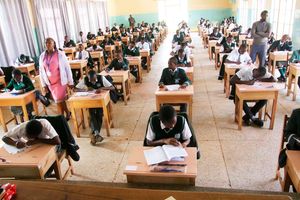
Pupils of Kapedo Girls Primary School in Turkana County.
Photo credit: File | Nation Media Group
Meanwhile, Trinity Education Technologies Solutions Africa (TETA) has asked Parliament to change the proposed legal position of the School Equipment Production Unit (SEPU).
TETA wants SEPU to be transformed into the proposed School Learning and Instruction Materials Centre (SLIMC) and established under the Basic Education Act as a semi-autonomous government agency within the State Department responsible for Basic Education.
The organisation argues that SEPU’s primary role is to support the education system rather than operate principally as a commercial government enterprise.
“SEPU belongs principally to the second category. However, SEPU's public-service function is not incidental to its mandate. It is the reason for its existence. Its principal customers and beneficiaries are the Kenyan education system, schools, teachers and learners. This distinction should guide Parliament's decision,” TETA says.
TETA wants the proposed institution to handle learning and instructional materials, laboratory and STEM equipment, school furniture, special-needs resources, digital learning materials and education technology infrastructure.
It proposes that National Treasury retain financial oversight while the Ministry of Education remains responsible for the institution’s education mandate.
“The optimal model is therefore joint governance with clear role separation, not relocation of SEPU’s education mandate to the Treasury,” TETA says.
The Education Stakeholders Association of Kenya (ESAK) has meanwhile challenged the proposed composition of County Education Boards.
ESAK says the Bill leaves out several education organisations and wants the federation to be allowed to nominate one representative to each of the 47 County Education Boards.
“The bill proposes the inclusion of various stakeholders in the composition of the County Education Board. ESAK notes with concern that the composition is not exhaustive since there so many stakeholder’s organizations and associations who have been left out and whose input is very crucial in the management of basic education,” the organisation says.
ESAK argues that its representation would provide a channel for other education organisations to participate in the boards.
It is also seeking representation for the Kenya Women Teachers Association and the Kenya Teachers in Hardship and Arid Areas Welfare Association on the National Council for Education in Marginalized Communities.
EBWG wants the Tertiary Education, Placement and Funding Bill, 2026, to provide for universal access and full Government funding for students and trainees.
It wants “full funding” defined to cover tuition, accommodation, subsistence, learning materials, transport, health, practical training, research and other essential costs.
The group also wants the proposed funding system to clearly distinguish between loans, grants, scholarships and bursaries and provide for continued funding until students complete their programmes.
It has proposed a predictable source of funding for the central tertiary education fund and clear deadlines for disbursement of student funding.