For 34-year-old Archade Nshimirimana, September 8 began with uncertainty.
Sitting quietly on a bench outside his beauty parlour in Kitengela, the Burundian national stared into the distance, unsure what the latest government directive meant for the life he had spent 11 years building in Kenya.
Nshimirimana arrived in Kenya as a refugee at the age of 26, fleeing his hometown on the outskirts of Bujumbura at the height of civil wars exacerbated by the 2015 election. He travelled by road, registered as a refugee with the UN refugee agency, UNHCR, and was hosted by a kinsman.
“I came into Kenya with a few clothes and a burning ambition,” he said. “I have never gone back to my motherland or met my parents physically. I usually video-call them.”
He started as a barber before enrolling for an eight-month beauty course that enabled him to work at a spa in Nairobi’s central business district, serving middle-class women, both local and foreign.
Archade Nshimirimana, 34, a beauty parlour owner in Kitengela town, on September 8, 2026.
Photo credit: Stanley Ngotho | Nation
“My business has been doing well and has been able to transform my life and that of my parents back at home. I have always looked forward to expanding to other major towns in the future,” he said.
In the 11 years he has lived in Kenya, Nshimirimana has also found love. He is the Burundian community welfare representative and married a Kenyan woman two years ago.
But President William Ruto’s September 2 directive targeting foreigners operating small-scale businesses abruptly cast his future into doubt.
The directive followed complaints from Kenyan traders over the participation of foreign nationals in small-scale businesses and informal trade. Foreigners were ordered to regularise their status, with the initial September 7 deadline causing anxiety among Congolese, Burundian, Ugandan and Rwandan nationals.
In Kitengela, a rapidly growing cosmopolitan town south of Nairobi, many businesses run by non-Kenyans had been shuttered. The town hosts foreigners involved in groceries, barbershops, beauty parlours, tailoring and boda bodas.
According to church records, Congolese are the dominant non-Kenyan community in the township, followed by Burundians, Rwandans and Ugandans.
Kitengela has over the years become a strategic destination for refugees because of its proximity to Nairobi and availability of menial jobs.
Nshimirimana said the sudden policy shift had affected him mentally and economically and was against the Treaty Establishing the East African Community (EAC), which provides for the right of citizens of partner states to live, work, trade and establish businesses under the Common Market Protocol and Kenyan immigration laws.
“President Ruto made a mistake. We have foreigners, like myself, registered under UNHCR and then those who are here illegally,” Nshimirimana said. “The last seven days have been full of uncertainty and mental torture.”
However, the government subsequently opened a 90-day window for foreign nationals to regularise their immigration status, work permits, business registration and licensing.
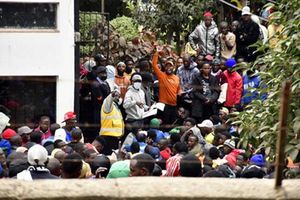
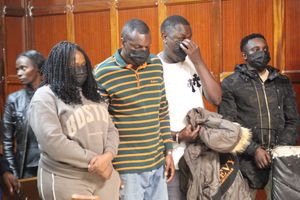
Burundian nationals wait outside the Burundi Embassy in Nairobi on September 11, 2026, as they await processing of their papers and clearance to return home following a government directive requiring foreign nationals to regularise their travel documents.
Photo credit: Bonface Bogita | Nation Media Group
“I am not willing to go back to Burundi, I’m ready to comply with the Kenyan government directives. Hostility in an EAC member state is counterproductive,” he said.
For 21-year-old Iradukunda Samson, hawking crisps in Nakuru town and other parts of the county has been his main source of income for the past three years.
The Burundian national moved to Kenya in 2024 with the help of a Burundian friend who had already established a small business. Rather than selling coffee and mandazi, Iradukunda chose the crisps business, which had fewer hawkers.
He initially struggled with the language but gradually learnt Kiswahili and established a small source of income. He buys crisps from a Kenyan supplier and sells them on the streets.
His three elder brothers later joined him in Nakuru, where they live together after renting three houses at between Sh6, 500 and Sh9,000 a month.
On a good day, Iradukunda makes about Sh600, which goes towards rent, food and other basic needs while also helping support his parents and siblings back home.
“My friend told me to travel here instead of joining a bad company and start stealing from people since I was fresh from school. He was living with other Burundians, they accommodated me till I established myself and I started contributing to rent, food and other needs. I have employed myself, but the crisps I buy from a Kenyan. Wherever we get arrested we just call him and he would help us,” he said.
Iradukunda had recently visited his parents in Burundi before returning to Kenya, only to find himself caught up in the new directive two months later.
He said he does not have enough money to return home, estimating that he would need more than Sh20,000 for transport, food and accommodation along the way.
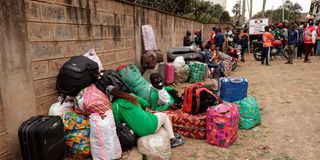
Burundian nationals outside the Burundi Embassy with their luggage on September 9, 2026.
Photo credit: Francis Nderitu | Nation
“We have been given 90 days to get travel documents but we still fear going to work. One of us was attacked, luckily, he was not badly injured. Many have opted to move back to Burundi. I am still here since I am ready to get the correct travel document and work permit needed,” he said.
Iradukunda said it was disheartening to see fellow Burundians attacked or harassed as they tried to earn a living.
“We were just working; there is no day we have borrowed money from anyone or sought help. I am not a Kenyan, I don’t have a Kenyan Identity card, I have a passport and whenever I go home it normally gets stamped at the border. They know that we come here to work. You must have a passport to come here,” he said.
In Bondeni slums in Nakuru East, Uragiwenimama Jeondodieu, popularly known as John, runs a small kiosk with his Kenyan wife.
Jeondodieu moved to Kenya in 2015 and initially sold mandazi in Nairobi. After learning Kiswahili and finding competition among hawkers in Nairobi high, he moved around the country in search of opportunities, working in Mombasa and Embu, where he sold chicken, before moving to Kisumu and Eldoret.
He returned to Burundi in 2016 to renew his passport and came back to Kenya the following year. He resumed work in Nairobi before moving to Narok, where he ventured into potato farming.
Burundians queue at Nairobi Embassy to register following Ruto order on foreigners
In 2019, he settled in Bondeni Estate, where he started selling coffee and mandazi after noticing other Rwandans making a living from hawking.
“This is where I met my wife, we have been together. I had to open another business to supplement our earnings, sometimes the coffee business had challenges. I visited her family and her parents know me. We are planning to formalise our union,” he said.
He said he had never encountered a case in Bondeni where a foreigner committed a crime against the local community. He is ready to obtain a work permit and required travel documents, arguing that foreign workers should be allowed to regularise their stay and contribute to the economy through taxes.
“The community in Bondeni accepted us, they treated us as brothers and sisters. We are in chamas which are run by Kenyans. After the lapse of 90 days, I do not know what will happen. I just plead with lobby groups to step in and help us. Even if we leave, I have never seen any Kenyans hawking in the streets selling whatever we are selling,” he said.
For Joshua Ntivuruzwa, 21, who arrived in Kenya in 2022, hawking coffee and mandazi has been his main source of income.
He earns more than Sh300 a day and shares a single room with two other Rwandan nationals, paying a combined monthly rent of Sh1, 500.
Ntivuruzwa said they were initially terrified when they were given three days to return to their country, before the period was extended to 90 days.
“Business has been down. Some of us have resumed while others are still at home in fear. We are all ready to get the required documents. I came here when I was only 18 years and this is the business I have known,” he said.
Burundian hawker Joyce Marrie, 23, has sold boiled eggs and coffee in the town for three years. Born in Kenya, at Kasarani, to refugee parents, she moved to Kitengela after completing secondary education in 2022.
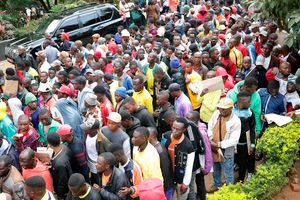
Burundians queue at the Embassy of Burundi Chancery in Nairobi on September 7, 2026 to regularise their documents.
Photo credit: Evans Habil | Nation Media Group
“I earn Ksh100 after a long day. But I have been saving to accumulate enough capital to start buying eggs and make coffee of my own. But I am waiting to see what will happen before resuming work,” she said.
“Most of us are not registered under the UNHCR (United Nations High Commissioner for Refugees) programme. We fear we would be a soft target in a government purge, prompting the kind of panic witnessed on Monday,” one told Nation.
Congolese national Jane Kibasumba, 26, and her sister, who hawk food in the streets of Kitengela, said they fear for their safety.
“We fear being attacked, our cousin was attacked at Kasarani and he is nursing serious injuries,” Ms Kibasumba said.
The government of Burundi has condemned the actions taken against its nationals in Kenya and demanded that they be protected by the state.
In a post, Foreign Minister Edouard Bizimana said: “Kenyans live peacefully in Burundi. But if this hate speech against Burundi continues, things will certainly escalate. The Kenyan government is responsible for the lives of Burundians living in Kenya. Allowing Kenyan civilians to act as police gives the impression of a failed state, as it allows violence, looting and xenophobia to flourish."
Kenyan authorities, meanwhile, have sought to reassure foreign nationals. Foreigners without papers have been given 90 days to regularise their stay.
Burundians guard their personal effecta outside the Embassy of Burundi Chancery in Nairobi on September 7, 2026 where they flocked to regularise their documents.
Photo credit: Evans Habil | Nation Media Group
“We have assured all immigrants in Kitengela that we have beefed up security so they should continue their work as usual. No one will attack them. Let them seize the 90-day window to register,” Mr Yator said.
“We urge Kenyans to co-exist peacefully with them (foreigners)… Any aggression towards them will be tackled as a criminal offence,” Mr Lokitari said.
In Bondeni, Nyumba Kumi elder Maalim Sharif said foreign nationals had coexisted peacefully with the local community, renting houses, running businesses and intermarrying with Kenyans.
“They are our brothers and sisters; we should live peacefully as Africans. I have never handled a single case of a foreigner in Bondeni, they are very respectful and peaceful. They should get required documents issued by the government,” he said.
As anxiety grew, Nakuru artist Evans Otieno drew a mural titled “Say No to Xenophobia” on the wall of Afraha Stadium, saying he wanted to promote peace and discourage hostility towards foreigners.
“I wanted to use art to send a strong message that we are all human beings and we should live together in harmony. The mural is a call for peace, love and respect for one another,” he said.
The government has since clarified that the 90-day window is intended to allow foreign nationals to comply with existing laws rather than amount to a blanket ban.
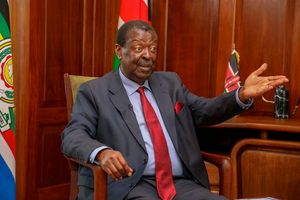
In a statement dated September 9, Prime Cabinet Secretary Musalia Mudavadi said foreigners who wish to lawfully reside, work, trade, invest or conduct other permitted activities in Kenya can apply for a Class R Permit through the Government's Foreign Nationals Service (eFNS) portal.
He said citizens from Tanzania, Uganda, Rwanda, Burundi, South Sudan, the Democratic Republic of Congo and Somalia can get the permit to engage in employment, business, trade, professional activities or other lawful activities whose presence is of benefit to Kenya.
Applicants require a valid passport and prescribed supporting documentation, including a cover letter explaining their activities. Depending on the nature of their activities, additional documentation may be required.
"The Official Directorate of Immigration Services confirms that both the processing fee and issuance fee for the Class R Permit are Sh0 - the permit is gratis. The Government has further cautioned EAC nationals against individuals or agents demanding money for the Class R Permit. The Government has made the permit free. Applicants should use the official eFNS and eCitizen platforms and deal directly with the Directorate of Immigration Services.” Dr Mudavadi said.
The government has also maintained that the proposed changes to the Local Content Bill will provide a framework for determining which categories of small-scale economic activity may be reserved for Kenyan citizens, while protecting foreign nationals who are legally entitled to work, invest or conduct business in the country.