A parliamentary committee has revealed how Kenyans living in Egypt face significant challenges, including “widespread discrimination”, highlighting the need for more structured bilateral interventions and implementation of labour agreements.
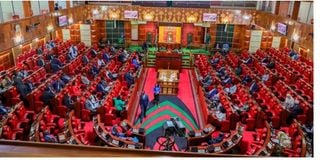
The National Assembly Committee on Defence, Intelligence and Foreign Relations, in a report to the House, laid bare limited access to formal and legal employment, vulnerability to sexual and gender-based violence and inadequate legal protection, placing a heavy burden on the Kenyan mission in Egypt, which is poorly funded.
Healthcare financing gaps, including the absence of affordable healthcare for the diaspora community and the lack of food and medical care for detainees held in the host country’s custody, including those at Al-Kanater Prison, also “remain a major concern”.
The committee chaired by Belgut MP Nelson Koech made the findings following an inspection visit to the Kenyan Embassy in Cairo from March 26 to 30, 2026.
National Assembly Departmental Committee on Defence, Intelligence and Foreign Relations Chairperson Nelson Koech at a past event.
Photo credit: Dennis Onsongo | Nation Media Group
The findings, which incorporated feedback from the diaspora community, challenged the Ministry of Foreign and Diaspora Affairs headed by Cabinet Secretary Musalia Mudavadi to improve service delivery.
“The Ministry of Foreign and Diaspora Affairs should, within six months of the adoption of this report by the House, establish a dedicated consular emergency fund to support Kenyans in distress abroad, including through the provision of legal aid, medical assistance and repatriation services,” the committee said.
The committee noted that detainees often lack necessities such as food and medical care, forcing fellow Kenyans and well-wishers to intervene.
To address the concerns, the committee wants the ministry to establish safe houses or temporary shelters for Kenyans facing abuse, exploitation or displacement, “with particular emphasis on protecting migrant domestic workers”.
It also recommends the development of a comprehensive diaspora protection policy to address “systemic challenges affecting Kenyans abroad”, including legal support, welfare services and mechanisms for reporting abuse and exploitation.
The committee further challenged the ministry to fast-track the finalisation and implementation of a bilateral labour agreement with Egypt “to safeguard the rights, welfare and working conditions of Kenyan migrant workers”.
The Kenyan diaspora in Egypt is a well-organised community of about 650 registered members, with the committee establishing that about 550 actively participate in community initiatives and support programmes.
Many members of the diaspora lack insurance coverage and are forced to rely on out-of-pocket payments or community fundraising during medical emergencies. This exposes individuals and families to financial strain and, in some cases, delays access to critical care.
“Access to healthcare remains a major challenge for the Kenyan diaspora in Egypt because emergency medical funding at the embassy level is limited,” the committee said.
In urgent cases, community members often raise funds to pay hospital deposits and medical bills averaging $800 before external support can be secured, placing a heavy financial burden on individuals and diaspora leaders.
“Timely treatment often depends on rapid diaspora intervention, sometimes followed by embassy support,” the committee observed.
The MPs want enhanced budgetary allocation to the embassy to strengthen consular services, including healthcare assistance, legal aid, emergency response and protection for Kenyans in distress, particularly migrant workers.
They also recommended that the Kenya Mission in Cairo be designated as a registration centre for national identification documents and passports to facilitate access to essential government services and legal documentation for Kenyans living in Egypt and the wider region.
The lack of support from the Kenyan mission has prompted the diaspora community to establish a robust informal support system that acts as a first line of response during crises.
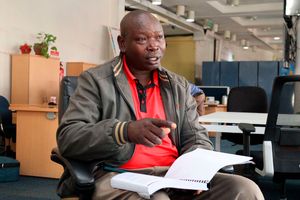
Prime Cabinet Secretary and CS for Foreign and Diaspora Affairs, Musalia Mudavadi during an interview in his office in Nairobi on May 22, 2025.
Photo credit: Dennis Onsongo | Nation Media Group
The community provides emergency medical assistance, legal support in cases involving law enforcement and help with repatriation, including facilitating the return of deceased members’ remains to Kenya.
“The absence of a dedicated consular emergency fund, legal representation mechanisms and safe accommodation facilities has resulted in reliance on diaspora contributions to support affected individuals,” the committee said.
The MPs noted that limited financial resources and growing demand continue to constrain the embassy’s ability to address medical emergencies, legal challenges and broader welfare needs.
The diaspora community also provides financial and social support to orphans and vulnerable people within its network.
The committee described the arrangement as reflecting “a strong culture of solidarity and mutual aid”, with members collectively mobilising resources to address urgent needs.
“In many instances, diaspora members intervene immediately in crises, bridging gaps before formal assistance from the embassy is mobilised. While effective, this model places considerable financial and emotional strain on community leaders and active members who often bear the burden of coordinating and funding such interventions,” the committee said.
The committee further observed that the increasing number of Kenyans in distress, “particularly those lacking proper documentation”, has placed a heavy burden on the mission.
Kenyan nationals, particularly domestic workers and students, face significant vulnerabilities, including exploitation, discrimination and gender-based violence. These challenges are compounded by limited legal protection and “fear of reporting abuses due to possible reprisals”.
Undocumented Kenyans face even greater risks because a lack of proper documentation limits access to healthcare and exposes them to detention or deportation.
Legal and documentation challenges remain a major vulnerability for the diaspora. Many Kenyans lack valid residence permits or essential documents such as birth certificates and legal identification, exposing them to arrest, deportation, exploitation and restricted access to employment, healthcare and legal protection.
Deportation cases are reported every month, underscoring the urgency of the problem.
Although the embassy and diaspora leadership have provided legal assistance and engaged local authorities, limited resources and systemic barriers persist, requiring stronger legal support and bilateral action to streamline documentation and reduce arrests and deportations.