Funds allocated per learner under the Free Day Secondary Education (FDSE) programme this year have dropped to Sh15,614, below the expected Sh22,244, an analysis of disbursements shows.
With schools set to close next month, this marks the lowest allocation since 2018, when the Uhuru Kenyatta administration raised the capitation.
The Ministry of Education has delayed Third Term payments as it audits enrolment data flagged by the Auditor-General for possible inflation.
Only schools whose records have been verified have received funds, but no circular has confirmed the actual amount or guidelines for its use.
Normally, funds are released in three tranches at a 50:30:20 ratio. Principals told Nation the current allocation falls short of the Sh4,448 they expected this term, leaving schools in debt and straining teaching and learning.
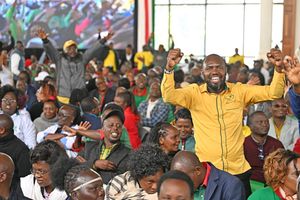
President William Ruto, speaking at State House Nairobi, while hosting 10,000 teachers on Saturday, admitted delays stem from a mismatch between the financial year (July–June) and the academic calendar (January–December).
He directed the Cabinet Secretaries for Education and National Treasury to propose a permanent solution by December.
“There is a problem in the capitation release. Most of the time, there are delays, largely due to the mismatch between Kenya’s financial year and the academic calendar,” said President Ruto.
“That disconnect must be fixed,” he added.
President William Ruto addresses a group of over 10,000 teachers at State House, Nairobi on September 9, 2025.
Photo credit: PCS
Disparities in allocations have also emerged. A principal in Northern Kenya said his school received Sh3,324 per learner this term, a shortfall of Sh1,165, warning that the gap risks paralysing learning.
Another in Samburu reported the same figure, leaving a deficit of Sh6,629 per learner against the annual allocation.
Circulars show schools have received Sh15,614 per learner so far this year: Sh4,409 on February 13, another Sh4,409 on March 20, and Sh3,471 on May 28.
“If the data we submitted is wrong, why can’t the Ministry simply ask us to rectify it? We are running without power, and children cannot attend school as they should,” another head teacher said.
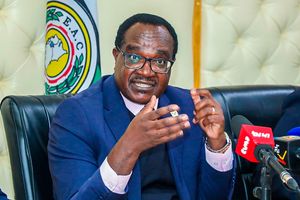
Basic Education Principal Secretary Julius Bitok addresses participants during the launch of the Educational Assessment Resource Centre at New Mitihani House, Nairobi on July 4, 2025.
Photo credit: Bonface Bogita | Nation Media Group
The principal secretary for Basic Education, Prof Julius Bitok said some schools submitted false or duplicate enrolment data, complicating verification.
“Out of 32,000 schools, by last week 15,000 had been cleared, and today we expect 20,000. So far, we have disbursed over 60 per cent of the Sh23 billion allocation, and the process is ongoing,” Prof Bitok said.
He added that internet disruptions slowed the audit over the weekend, but verification has resumed.
Cases of duplicate learner codes and suspiciously low enrolment numbers had delayed payments, he said, but the exercise is necessary to clean up ministry data.
“We are working very hard to ensure every school receives their money. We hope that by the end of this week, all verified schools will have their capitation,” he said.
The shortfall has raised concerns among principals, who warn the FDSE programme is losing credibility. Many schools face mounting debts as national exams approach, leaving learners exposed to the consequences of chronic underfunding.