As schools reopen on Monday, principals across the country say they are trapped in a cycle of debts that threaten to derail the shortest but most high-stakes term of the academic year.
The Kenya Secondary Schools Heads Association (Kessha) has said the schools are owed up to Sh5,506 per learner in capitation shortfalls.
In Term Two, Kessha said, schools were supposed to receive 30 per cent of the annual allocation, translating to Sh6,673 per student. However, only Sh3,471 was released, creating a shortfall of Sh3,202 per learner.
For Term One, the expected allocation was Sh11,122, but they received only Sh8,818, leaving a balance of Sh2,304.
“Combined, the government owes us about Sh18 billion for first and second term. In Third Term, we are supposed to receive 20 per cent of the Sh22,000 capitations.
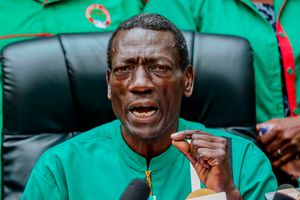
"We hope the capitation will be wired to accounts when schools reopen on Monday,” Kessha national chairman Willy Kuria told the Nation in an interview.
The Third Term is the shortest in the school calendar, just nine weeks, with the Kenya Primary School Education Assessment (KPSEA) set for October 24–29 and the Kenya Certificate of Secondary Education exams running from November 3–21.
Mr Kuria, who is also the Chief Principal of Murang'a High School, has warned that schools will not run smoothly unless the government releases billions in delayed capitation funds by Monday as they reopen.
Most public schools, he said, closed early, during second term, because they were completely bankrupt.
“Many schools could not sustain operations without the funds. We had to send learners home weeks before the schedule because we could not feed them or pay suppliers.
"Day schools rely entirely on capitation and are the hardest hit. With no boarding fees to cushion them, many are gasping for survival,” Mr Kuria said.
A principal of a school in Nairobi, speaking anonymously, questioned how schools are expected to operate without cash.
“Why must we always complain before funds are released? My school had to close early because we could not run operations. We are expected to manage schools, feed learners, pay bills, and prepare candidates for exams without a single shilling from the government.
"This is not just unfair—it is impossible. We still owe suppliers. How are we expected to reopen schools with no money?” the school head said.
Another principal in Nakuru said the delays badly hurt them as another in Bungoma revealed that the Ministry of Education recently directed schools to deduct Sh1,500 per student from the already meagre funds for infrastructure development.
“This is money meant to run the school, to buy chalk, pay utility bills, and feed students. Now they want us to build from it? I have 1,500 students. That’s Sh2.25 million deducted from an already insufficient budget. It’s torture,” he said.
Education Cabinet Secretary Julius Ogamba admitted that the capitation funds have not been released, but said the ministry was fast-tracking the process.
Education Cabinet Secretary Julius Ogamba before the National Assembly Committee on Implementation at Bunge Tower, Nairobi, on August 19, 2025.
Photo credit: Dennis Onsongo | Nation Media Group
“Capitation (funds for Term Three have) not yet released. We are working on it,” Mr Ogamba said.
Mr Ogamba had, in June, told Parliament that public primary and secondary schools are choking in debt, with the Ministry of Education admitting that schools could be grappling with debts of up to Sh64 billion accumulated over the years.
"It is not something I can say I will sort out immediately. My main challenge is to ensure we receive funds in full so we can deal with the Sh64 billion in pending bills.
"Schools are still not receiving what is due to them. Only 50 per cent of the allocated funds have been disbursed this financial year," he said.
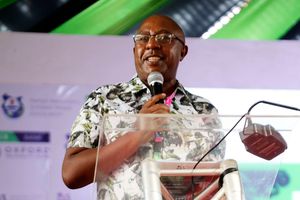
Kenya Union of Post-Primary Education Teachers (Kuppet) Deputy Secretary General Moses Nthurima raised the alarm over a looming crisis in schools, citing delays by the government in releasing capitation funds.
“This is going to be terrible for schools, especially considering this is the shortest term. When schools close early, it is always because of deficits, and now with exams coming up, a lot of logistics will be required. Schools will end up suffering,” Mr Nthurima said.
Kenya Union of Post Primary Education Teachers Deputy Secretary-General Moses Nthurima addressing journalists at their headquarters in Nairobi on June 12, 2024.
Photo credit: Lucy Wanjiru | Nation Media Group
He warned that many schools may be forced to close earlier than scheduled, a move that would undermine the academic calendar and disrupt learners’ preparation for national exams.
Mr Nthurima expressed concern that the government has yet to address outstanding financial challenges dating back to the first and second terms.
“The ministry of Education might ask schools to close early, pretending to be protecting candidates. But in the process, the curriculum will really suffer.
"Pending balances from first and second term have not been addressed. The government has only been sprinkling some money here and there,” Mr Nthurima said.
“The government seems unable to fund schools fully. The Ministry of Finance has already pronounced itself on this. Parents may have to start paying more fees if their children are to access quality education.”
Mr Nthurima said while Kuppet does not encourage parents to bear additional financial responsibilities,the reality is slowly pushing schools in that direction.
“It is very unfortunate. We have not asked parents to pay extra fees, but the circumstances are forcing it. Without timely government intervention, schools cannot meet even the most basic needs,” he said.
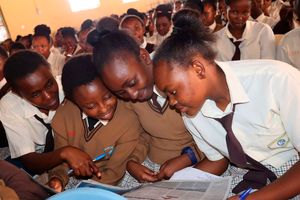
Students in class in this picture taken on August 28, 2024.
Photo credit: File | Nation Media Group
Education Stakeholders Association of Kenya National Secretary and CEO Ndung’u Wangenye noted that candidates preparing for three national examinations may be affected by delays in the release of capitation funds.
“We do not want to wait until schools reopen for the government to release money. They should release part of the arrears now so principals and head teachers can adequately prepare for the administration and marking of exams,” he said.
He cautioned that withholding funds would directly interfere with exam logistics, adding that the results from these tests would be critical for placement.
Mr Wangenye, urged the government and the Kenya National Examinations Council (Knec) not to victimise candidates due to unpaid examination fees.
He also warned that delays were dampening the morale of teachers and interfering with the quality of exam preparation, especially after schools were forced to close early last term due to lack of funds.
Education Stakeholders Association of Kenya National Secretary and CEO Ndung’u Wangenye.
“No pupil, Grade 9 or Form 4 candidate should be locked out of exams simply because their parent or the government delayed payment. Exams must proceed as scheduled. This affects learners, teachers, and the credibility of the education system. The government must ensure timely disbursement so that candidates are not disadvantaged,” Mr Wangenye added.
At the same time, Elimu Bora Working Group has raised alarm over what it describes as the ‘systematic collapse’ of the education sector citing illegal levies, corruption and chronic underfunding as schools reopen for third term.
The group’s Policy and Strategy Advisor Boaz Waruku said accused the government of deliberately starving schools of resources. Since 2003, it said, primary schools have received only Sh1, 420 per pupil annually and junior secondary Sh15, 042, far below actual requirement.
“This deliberate defunding forces schools into the impossible position of either failing to operate or exploiting parents through illegal fees. This represents incompetence and a calculated policy to privatise public education through systematic defunding and forced parent contributions,” Mr Waruku said.
“This calculated policy forces schools into the impossible choice of closing or exploiting parents through illegal fees,” the group said, warning that reforms such as the transition from 8-4-4 to CBC and now CBE had been poorly planned and underfunded, creating overcrowding and confusion.