With just three months remaining before the first cohort of the competency-based education (CBE) learners transits to senior school in January next year, the government has admitted some learning areas do not have enough teachers.
The subjects with teacher shortages include pre-technical studies and various vocational and science, technology, engineering and mathematics (STEM) fields, home science, art and craft, music and social studies.
Education Cabinet Secretary Julius Ogamba has put the shortage of teachers in basic education institutions at 137, 500. This is despite the massive recruitment the government has carried out in the last three years.
"The shortage is acute in specialised subjects such as social studies, integrated science, pre-technical studies and various vocational and STEM fields. This underscores the urgent need for expanded and targeted teacher training programmes especially at the diploma and degree levels to address these gaps and support Kenya's curriculum reforms," said the CS.
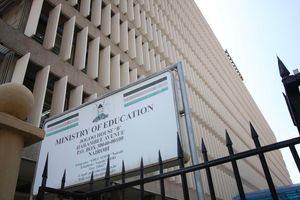
Teachers Service Commission (TSC) headquarters in Upper Hill, Nairobi.
Photo credit: File | Nation Media Group
According to a report from the Teachers Service Commission (TSC), junior school faces a staffing deficit of 72,422 teachers, while senior school is short of 65,070 teachers. The commission manages a workforce of 431,831 teachers but there are 369,430 others who are registered but not under its payroll.
Data from the Ministry of Education shows increasing enrolment in teacher training institutions, but a mismatch between supply and demand persists. Public diploma teacher training colleges have a combined capacity of approximately 49,000 for primary and secondary teacher training.
Universities have also expanded their education programmes, with more than 183,000 students enrolled in bachelor's degree programmes, predominantly in arts at 57.1 percent and science at 29.3 percent. However, postgraduate enrolment remains low, highlighting the need to enhance pathways for advanced training and specialisations.
In senior school under CBE, learners will be placed in three pathways: social sciences, arts and sports, and STEM. Each pathway will offer a unique set of subjects and learning experiences aligned with specific career paths.
"We have identified several gaps in some areas. We have realised that there are some areas where we need to sit down and craft a strategy to ensure we have proper training and employment of teachers in these specific areas," said Professor Julius Bitok, the Principal Secretary for Basic Education.
He cited a critical lack of indigenous language teachers, a subject emphasised in the curriculum.
"There is no teacher in this country who can teach an indigenous language. They have not gone through any training. No university or college trains for an indigenous language," the PS added.
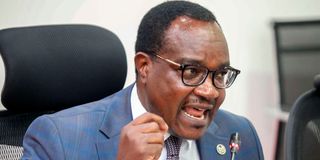
Basic Education Principal Secretary Julius Bitok.
Photo credit: File| Nation Media Group
The Ministry is currently working to determine the specific numbers of teachers and teacher educators required for the new pathways and subject specialisations, aiming to project the total need over the next five years. The PS urged education stakeholders to align training and employment of teachers.
"Our view is, by 2027 God willing every teacher who is trained should be able to get their letter after graduation. That is where we are going as a country. We just do not want to produce people for the sake, without planning. That is why this conversation is very important," he said.
According to the Kenya Universities and Colleges Central Placement Service (KUCCPS), 68,972 students were placed in education-related degree programmes in the 2025/26 cycle, representing 40 percent of total degree placements.
Mr Ogamba said that the Presidential Working Party on Education Reforms highlighted a critical need for teacher training to align with the country's curriculum reforms and for systemic coordination between training institutions and employment agencies.
The report calls for structured internships, mentorship programs, and mandatory retooling to ensure all teachers are competent in the Competency-Based Teacher Education (CBTE) framework.
The CS said this reflects a significant mismatch between teacher supply and employment opportunities.
He stressed the crucial role of institutions such as the TSC, TVET, private schools, and county governments in teacher absorption and deployment to ensure equitable access to quality education nationwide.
Mr Ogamba stated that the Ministry has prioritised upgrading entry requirements for pre-service teacher education programs to ensure better preparedness.
For instance, teachers holding P1 and Early Childhood Development and Education (ECDE) certificates will be required to upgrade to diploma level.
Entry grades for diploma programmes have also been standardised to a minimum of C (Plain) in the Kenya Certificate of Secondary Education examinations, with specific subject requirements, particularly in STEM areas.
Moreover, the report recommends the establishment of the Kenya Teacher Training College and the Kenya School of Teacher and Education Management to coordinate training programs and implement mandatory one-year retooling for teachers who graduated before 2023.