Public schools are racing against time to prepare candidates for national examinations amid inadequate government funding and student unrest that has affected a number of schools throughout the country.
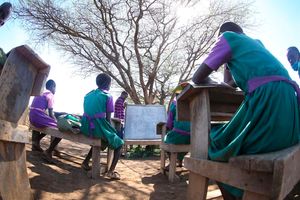
Principals who spoke to Daily Nation warned that many schools are struggling to complete the syllabus and prepare candidates due to limited resources.
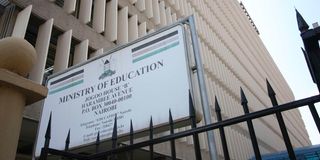
They accused the Ministry of Education of failing to provide adequate funding to purchase essential materials, particularly for science practicals, and said that some schools have not yet received funding for the third term because the Ministry has not yet finished verifying their enrolment data in an ongoing nationwide audit.
The inaugural Kenya Junior Secondary Education Assessment (KJSEA), which will be taken by Grade 9 learners, will begin on October 27.
This will run alongside the Kenya Primary School Education Assessment (KPSEA) and the Kenya Primary Learning Evaluation Assessment (KPLEA) for pupils in Grade 6.
A centre manager collects KCSE examination papers.
Photo credit: File | Nation Media Group
The Kenya Certificate of Secondary Education (KCSE) is scheduled to begin on October 21 2025, with rehearsals set for October 17.
Some principals say the syllabus coverage is one of their biggest challenges. Further, they noted that they are straining to purchase essential learning equipment under the current allocations.
“We are waiting to see how suppliers will act, and if they refuse, students may have to share equipment, sometimes two or three per item. This is not only unfair to the learners but also opens the door to examination malpractices. How can we maintain integrity when the resources are simply not there?” a school principal from Nairobi County said.
The Ministry of Education disbursement for third term per learner in secondary school is Sh3,044, with stakeholders arguing that the funds are insufficient to support schools during such a critical period.
The funds are broken down across various vote heads, including Sh828.80 for teaching and learning materials, sh40 for SMASSE tuition, Sh 600 for maintenance and improvement, Sh1,099.43 for personnel emoluments and administrative operations, Sh210 for co-curricular activities, Sh230 for medical and insurance, and Sh86.69 for Kenya Education Management Institute.
“Initially, at a time like this, we would have been given the full amount for the examinations. Right now, they are only giving us Sh300 per child to buy equipment. How are we supposed to survive like that?” he added.
“We are still struggling to complete the syllabus. With limited resources, ongoing fee defaults, and unpaid staff, covering the curriculum on time is a huge challenge. We are racing against the clock, but it feels like we are not ready for the exams,” another principal said.
“We have not paid workers since June. Parents are not paying. And what the government is doing is just PR, telling us, ‘we are ready,’ but we are not ready,” the principal added.
Some principals also link the unrest in some schools to learners’ reaction to lack of resources due to the inadequate government funding.
“Why do you think there is unrest in schools, because there is no food. We even cut down on simple things like bread to feed the students because there is no money. But students do not understand,” he added.
With rehearsals scheduled for October 17 and 18, principals say they are operating under immense strain, relying on credit from suppliers to secure food items like maize, beans, rice, and sugar.
“We are struggling and right now we are rushing to cover the syllabus this week because remember in second term we closed early. Parents expect results. We are trying to be ready, we have to be ready because parents want results but they don’t know the challenges schools are facing, currently my school has a debt of Sh32million,” said a principal in Bomet county.
“The little money we received barely dented the debts. It feels like a cycle we can’t escape — as soon as we clear one bill, another piles up. We are now pleading with suppliers and even talking to banks to extend us credit just to keep the school running. Meanwhile, we must keep teaching and finish the syllabus. The pressure is unbearable,” he said.
Principal Secretary Education, Prof Julius Bitok, before the National Assembly Education Committee on May 13, 2025.
Photo credit: File | Nation
On the schools audit, Education PS Julius Bitok noted that more than 25,800 out of the 32,000 institutions across the country have already been verified.
He said the majority of them are secondary institutions, which urgently need funds. To date, more than Sh16 billion out of the Sh23 billion released by the Treasury has already been disbursed.
Meanwhile, the crackdown on inflated enrolment numbers has paralysed operations in more than 6,200 schools, which are yet to receive funds as the Ministry withholds disbursements pending verification.
However, data from the audit shows that 3,485 primary schools missed government capitation funds after submitting wrong data, while about 1,949 secondary schools risk losing out for the same reason.
Of these, 719 secondary schools submitted wrong account details, while others gave incomplete data or empty templates.
"I am really worried. Exams are here, but we haven’t received any capitation yet. We are really lost, my school hasa big population, we have not bought any materials, so this will be last minute things. We are struggling with debts to suppliers, and with so many students, it’s becoming almost impossible to manage. It’s frustrating to be caught in this situation just when we need resources the most," said the principal of a comprehensive school in Bungoma.