A growing number of bright students across the country are unable to join universities and colleges despite qualifying, as financial hardship continues to derail their academic ambitions.
From a lack of funds for fees to administrative hurdles, these young Kenyans find their dreams put on hold, often forcing them into menial jobs or vocational training despite earning top grades.
For 18-year-old Beatrice Nazi, a student from Mombasa County who attained a C+ grade in the 2024 Kenya Certificate of Secondary Education and was to join Tom Mboya University before seeking a transfer to Pwani University, her dream of studying biochemistry is slipping away.
Beatrice Nazi Mwambila.
Photo credit: Kevin Odit | Nation Media Group
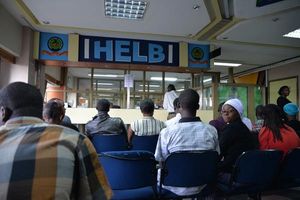
She has been unable to complete her Higher Education Loans Board (Helb) application because she lacks the legal documents to prove she was raised by her grandmother.
“I don’t know who my father is. I was brought up by my grandmother,” she said, revealing that a lawyer asked for Sh2,000 to rubber-stamp a document.
With her peers already in class, Beatrice is now seeking employment as a house help to save for her education.
Similarly, Winfred Wanza Makau, 21, from Murang’a County, has been forced to abandon an offer to study Analytical Chemistry at Murang’a University of Technology.
Her parents, a peasant farmer and a boda boda rider, told her they could not afford the top-up fees required for university, forcing her to enrol in a polytechnic for a hairdressing course.
“Poverty is the worst thing that can happen to a student,” she said, adding that she has not given up on her dream.
In Homa Bay, fisherman Bobby Okoth Odoyo is distraught after his daughter, Faith Florence Okoth, 19, was unable to join Kisii University.
Faith, who completed her secondary examinations last year, cannot get her high school result slip due to a Sh41,100 fee arrears.
“I have invested a lot in my children’s education. But I am being hampered due to poverty,” Mr Odoyo said. He fears his daughter may give up on her dreams and choose a different, more dangerous path.
Faith Ndume who was supposed to join Karatina University to pursue Bachelor of Arts in Political Science and Public Adminstration Course.
Photo credit: Kevin Odit | Nation Media Geroup
The financial struggles are compounded by administrative challenges. Faith Ndume, 18, from Kilifi, who scored a B- and was to join Karatina University for Human Resource Management, did not even apply for a Helb loan because her family could not afford the required top-up fee.
“I am jobless, and we are very poor,” she said, adding that she is now considering a diploma in nursing at the Kenya Medical Training College (KMTC).
For some, the journey is marked by tragedy. Ananiah Changawa, a student from Kibarani slums in Mombasa, lost his mother in a road accident in Salama last year on their way to Kenyatta University for his admission.
He survived the crash but was hospitalised for almost a month. After deferring his studies, he is now unable to join because he lacks a guarantor for a Helb loan.
“I got a B- from Dr Aggrey High School in 2023. I was supposed to join Kenyatta University last week to undertake a Bachelor of Science in Hospitality and Tourism Management. I am the firstborn in a family of eight children,” said Ananiah.
After the burial, he deferred his studies to this year. He applied for Helb but could not proceed because he lacked a guarantor.
Ananiah came to the Nation office in Mombasa in 2020 alongside his mother seeking sponsorship to take him to secondary school. When Nation highlighted his plight, he received numerous sponsorships.
“The sponsor took me up to Form Four at Dr Aggrey High School. I am now stuck at home due to lack of a sponsor. My mother died while taking me to university. I feel like giving up,” he added.
Ananiah, a son of a cobbler, returned to the Nation office again last week to explain his circumstances and why he is yet to go to university.
Levy Onyango, a B plain student from Maranda High School in the 2024 KCSE, faces a similar struggle.
Having lost his father to cancer during the Covid-19 pandemic, he is now a partial orphan with a jobless mother.
He was called to join Alupe University to study Physical Therapy, but could not afford the fees, despite being a government-placed student.
“I am supposed to pay Sh13,089 per semester, but I have no one to take me through university,” he said.
These stories paint a grim picture of a society where financial barriers continue to be a major obstacle to education, leaving many promising students stuck at home with their dreams on hold.
In Moyale, Habiba Salad Waqo is unable to report to Meru Teachers Training College (TTC) to pursue a Diploma in Teacher Education. Habiba, who scored a C plain in her Kenya Certificate of Secondary Education (KCSE), lost her parents in a tragic 2008 accident.
Habiba Salad Waqo.
Photo credit: Kevin Odit | Nation Media Group
She requires Sh100,026 for her fees and other essentials. Her brother, Ali Waqo, noted that since the Higher Education Loans Board (HELB) does not fund TTC students, the family is trying to raise money through a community fundraiser (harambee) and has so far collected Sh20,000.
In Narok, 29-year-old Brian Saitoti is an orphan whose hopes of becoming a doctor have been shattered by poverty.
A bright student who scored an A- at Starehe Boys’ Centre on a scholarship, he was selected to study a self-sponsored Bachelor of Medicine and Bachelor of Surgery at the University of Nairobi.
This came after he was forced to drop out of Masinde Muliro University in 2015 due to financial challenges.
His guardian, Salome Ngige, revealed that he needs about Sh4 million for the six-year course.
Brian is a victim of circumstance, having previously joined the matatu industry after falling into depression following the death of his grandmother, who was his financial support. His guardian wishes he could find a sponsor to help him complete his degree.
Paul Lukwaro who is unable to join Thogoto Teachers' Training College
Photo credit: Kevin Odit | Nation Media Group
In Taita Taveta, Paul Lukwaro, 21, has turned to cotton farming in a bid to raise fees for Thogoto TTC after being forced to defer last year owing to lack of finances.
Paul, who is supposed to join the college on September 16, 2025, to begin his three-year Diploma in Teacher Education (Pre-Primary and Primary), started farming after completing his Form Four in 2023 to raise funds for higher education.
“I harvested 200kg of cotton from my family’s two-acre farm and managed to save Sh25,000. But this is still not enough. Sadly, Teachers Training Colleges are not eligible for HELB funding,” he said. His total fees for terms 1, 2 and 3 amount to Sh71,076, including an assessment and final practicum fees of Sh17,000.
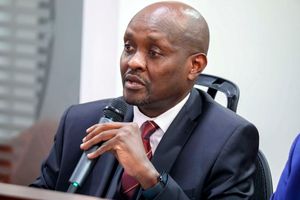
During an interview with KTN last week, Principal Secretary, State Department for Higher Education, Dr Beatrice Inyangala, said the government has placed 183,000 students in universities.
By September 5, 2025, some 138,000 had reported.
“We still have another two weeks of universities opening progressively, and we are seeing very good results. The students are paying the fees, which means the intervention by the government is working very well,” said Dr Inyangala.
On his part, Education Cabinet Secretary Julius Ogamba said the government managed to reduce the cost of university programmes by 15 to 40 per cent to ease the financial burden on households under the revised funding framework.
“Because of the reduction of fees and ensuring we deal with individual students’ actual need and capacity to pay, the lowest payment level in our 39 universities is 85 per cent. Because of the rationalisation, now more students are able to pay fees,” said the CS.
He cited Chuka University, where, out of 6,800 students who reported, only one parent has been unable to pay the fees.
“The reason is that they have another student at university. So they have paid for one student and requested more time to pay for the other. Fees have been reduced to between Sh5,800 and Sh75,000,” said the CS.
Mr Ogamba said the Kenya Kwanza government has addressed the question of the affordability of university education and the sustainability of public institutions of higher learning.
“Because now we have many students paying fees. Initially, we had high university fees but low payment levels and more dropouts. So now we are going to have most students, more sustainability and more retention,” he added.
In 2022, President William Ruto established the Presidential Working Party on Education Reforms (PWPER), chaired by Professor Raphael Munavu. The group was tasked with addressing the deep-rooted challenges in Kenya’s education sector.
The 42-member task force spent weeks travelling across the country, gathering input from the public, education stakeholders, religious leaders, and private sector players. Their goal was to examine the problems facing the sector and propose solutions.
After six months, the team presented its recommendations to the President. This led to significant reforms, including the launch of a new funding model for higher education.
President Ruto has defended the new student-centred university funding model, stating it is designed to ensure fairness and equity for all students.
The Head of State noted the dire financial state of public universities under the old system, citing that 23 institutions were technically bankrupt, and many, including Egerton University, were unable to pay full salaries to their lecturers.
The new model, implemented in September of last year but challenged in court, shifts the focus from government-run institutions to individual students. The goal, according to President Ruto, is to ensure that students from poor backgrounds receive up to 90 per cent in government scholarships.“We have to live within our means because we couldn’t afford to pay for every child in university, so we had to reorganise the model,” he said recently.
A criticism of the Means Testing Instrument (MTI), which places students into different funding categories, is that it sometimes misclassifies students.
The new model classifies students into five bands based on their families’ financial needs. They receive a combination of scholarships from the Universities Fund (UF) and loans from Helb.
“More data has been collected to ensure students are placed correctly in the bands to ensure none is disadvantaged,” he assured.