Treasury CS John Mbadi has said that private universities are choking under a Sh40 billion debt incurred during President Uhuru Kenyatta’s tenure.
Appearing before the Senate Committee on Labour and Social Welfare, Mr Mbadi revealed his office is struggling to pay debts incurred by the government to private universities between the 2016 and 2021 financial years.
Cabinet Secretary for the National Treasury and Economic Planning John Mbadi.
Photo credit: File | Nation Media Group
“I have huge files on my desk from private universities demanding payment for services provided between 2016 and 2021. It’s a substantial outstanding bill, as one university alone is owed Sh3 billion,” he said.
“We have been living a lie, especially towards our private universities, because we promised to pay, but did not,” he told the committee.
He made the remarks when appearing before the committee regarding pension arrears owed to current and former Technical University of Kenya (TUK) staff, warning that many retirees had waited too long for justice.
The CS said this problem is not unique to TUK, but is a crisis affecting many universities, both public and private.
“The issue of debt in our universities is a problem for the government, and we must now sober up as a country and have a conversation about how we can fund our universities,” he said.
“Many of our children in universities come from poor backgrounds. We need to address this by having a conversation, both as a political class and as an executive, about how to fund our universities, because the truth is that we have been living a lie all these years.”
However, while Mr Mbadi put the figure at Sh40 billion as of 2021, the debt had reached Sh58 billion by last year.
In November last year, the Kenya Association of Private Universities, represented by chairperson Mbugua Ngari, told MPs that the government owed them Ah58.8 billion in tuition fees.
Kenya Association of Private Universities chairperson Mbugua Ngari.
Photo credit: File | Nation Media Group
The universities complained to the lawmakers that these huge debts had affected them, particularly in terms of research and innovation.
According to the private universities, the delayed payment of the Sh58 billion covers the 2016/17 to 2023/24 academic years and has impacted their operations. “The delayed disbursement of funds has forced private universities to dip into their reserves to finance the education of students placed with them by the government. This has financially crippled our institutions,” Mr Ngari told the education committee.
Documents provided by the association indicated that Mt Kenya University was owed the largest amount, at Sh12.9 billion, followed by the Catholic University of East Africa (Sh4.3 billion), KCA University (Sh6.67 billion), and Kabarak University (Sh6.8 billion).
The entrance to the Mt Kenya University main campus in Thika.
This announcement showed how the Kenya Kwanza administration has been experimenting with the university funding model.
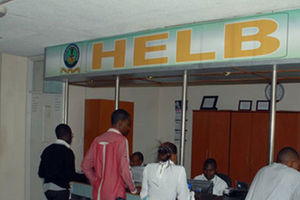
Last month, the Higher Education Loans Board (HELB) informed MPs that thousands of students preparing to enrol at various universities next month risk missing out on financial support due to financial constraints.
Documents submitted by the board indicate that, in the new financial year, 1,199,423 students require support, but the board only has Sh56.71 billion, despite needing Sh 114.36 billion.
For the last four financial years, the Board has informed the committee that it has been operating with a budget deficit, despite a sharp increase in the number of students requiring financial assistance. The Board informed MPs that it requires urgent financial assistance from the Treasury to support the growing number of students each year.
From the 2023/24 financial year onwards, the board has struggled to provide the necessary assistance to students in need. Between the 2023/24 and 2025/26 financial years, the board had a financial shortfall of Sh19.27 billion due to persistent budgetary deficits.
For instance, in the 2024/25 financial year, the board had a funding gap of Sh10.694 billion, while in the 2025/26 financial year, this figure was Sh18.58 billion, Mr Ngari told the MPs.
In the current financial year, the board informed the committee that it already has a funding gap of Sh57.654 billion.
The board said the introduction of the student-centred funding model in 2023/24 had significantly increased access to government student financing, leading to a rise in the number of students supported, which jumped from 576,338 to 823,691 in the 2025/26 financial year.
Due to the increase in the number of students being supported, the board pointed out that tuition loans continued to be remitted directly to institutions and upkeep loans were disbursed to eligible students within the available resources.
However, part of the assessed financing requirement of Sh29.27 billion remained outstanding, pending the availability of additional budgetary resources.