With less than a month before rollout of the universal funding model for university students announced by President William Ruto's recently, uncertainty hangs over how the government will transition from the current scholarship and loan system as thousands of first-year students prepare to report to campuses later this month.
Universities have already announced reporting dates for the 2026/2027 academic year, leaving little time for Parliament to approve, and the government to operationalise, the new funding framework that President Ruto says will take effect in September.
President William Ruto recently announced that the "final version" of the higher education funding proposal was already before Parliament and urged lawmakers to fast track its approval ahead of the September university intake.
"Now we have in Parliament the final version of how we are going to make higher education universal. It will not matter the background of any child in Kenya, it will matter how good they are. Going into the future, we've been trying to grapple with how do we fund our higher education," Dr Ruto said at State House.
The proposed reforms are contained in the Tertiary Education Placement and Funding Bill, 2026, which seeks to overhaul Kenya's higher education financing system by replacing the Higher Education Loans Board (HELB), the Universities Fund and the TVET Funding Board with a single Tertiary Education Funding Authority.
he proposed authority will administer government scholarships and student loans under one institution while creating a unified funding framework for universities, colleges and TVET institutions.
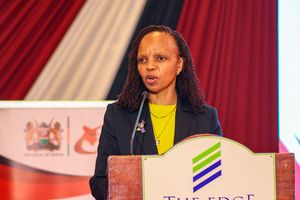
Higher Education Principal Secretary Beatrice Inyangala and Higher Education Loans Board CEO Geoffrey Monari before the Senate Education Committee on March 20, 2025.
Photo credit: Dennis Onsongo | Nation Media Group
The University of Nairobi will admit its first-year students from August 24 2026, while Masinde Muliro University of Science and Technology has scheduled reporting for August 20. Kenyatta University expects freshers on August 26, while Jomo Kenyatta University of Agriculture and Technology will receive its first-year students from September 1.
The reporting dates mean thousands of students will be joining universities before, or at the same time, the new funding model is expected to take effect, raising questions about the nature of financing framework that will be applied.
HELB Chief Executive Geoffrey Monari said the Higher Education Loans Board will continue processing student loan applications under the current legal framework until Parliament approves the proposed changes.
He said applications for student loans remain open and have not been suspended pending Parliament's decision.
"Applications are ongoing. You can't wait. We just follow the law of the day. The President's request was that Parliament approves the changes, so the only thing we can do is wait," he said.
"Once the new law is approved, we shall change accordingly. If Parliament passes it, then we will implement it. For now, we are operating under the current law,”he told Daily Nation .
The proposals, presented by Higher Education Loans Board (HELB) Chief Executive Officer Geoffrey Monari before the National Assembly Education Committee on Wednesday,seek to transform HELB into a development bank backed by the government to finance universities and colleges across the country.
Under the Bill, the Higher Education Loans Board (HELB), the Universities Fund (UF), and the Technical and Vocational Education and Training Funding Board (TVETFB) would be dissolved and replaced by a single institution known as the Tertiary Education Funding Authority (TEFA).
The proposed funding model aims to raise Sh100 billion annually from the government, investors, parents, graduates, and development partners. The funds would be used to issue education bonds backed by a ring-fenced annual allocation of Sh100 billion, alongside a sinking fund to service interest payments and repay the principal.
President William Ruto at State House, Nairobi on June 23, 2026. He has said that a "final version" of a new funding model proposal was before Parliament and urged MPs to fast-track its approval.
Photo credit: File | Nation Media Group
Universities Fund Chief Executive Dr Edwin Wanyonyi also said scholarship applications for first-year students will continue to be processed under the existing legal framework until Parliament passes the proposed legislation.
"There is no vacuum. The law that is currently in place is what we are implementing, and we will continue to operate under that framework until Parliament passes a new law. Once the Bill completes the parliamentary process and is assented to, we will make the necessary adjustments as required. The process also allows stakeholders and members of the public to give their views before a final decision is made, so for now we are proceeding with the current system," he said.
Dr Wanyonyi said applications were progressing well, with about 70 per cent of continuing students having already reapplied for funding.
"Applications are ongoing and we have received a very good response. We are at about 70 per cent for continuing students. They are required to reapply every year because funding follows the student, so each learner has to confirm that they are still in university before funds are released. Universities are opening from the middle of August into early September, so we will continue processing applications under the existing framework until there is any change in the law," he said.
The programme will be managed through investment banking and treasury functions, under the supervision of a governing board and regulation by the Capital Markets Authority. Parents would also be allowed to save for education through an investment-based education scheme listed on the Nairobi Securities Exchange (NSE), enabling them to earn interest on their savings.
Other proposed sources of funding include strengthened HELB loan recoveries, income-contingent graduate loan repayments, and access to low-interest, long-term concessional financing from development partners.
Under the proposed Bill, every Kenyan admitted to a recognised public or private university, college or TVET institution will be eligible to apply for a government education loan, subject to meeting the requirements set out in the law.
The new authority would also administer scholarships and establish a Tertiary Education Fund financed through parliamentary allocations, loan repayments, investments, grants and donations. It would also have powers to mobilise additional resources through Treasury bills, bonds, pension funds, commercial partnerships and other financing mechanisms in an effort to reduce dependence on the Exchequer.
According to documents presented before Parliament, HELB faces a funding deficit of more than Sh57 billion, with total funding requirements standing at about Sh114 billion against an allocation of Sh56.7 billion. The shortfall threatens financial support for hundreds of thousands of university and TVET students.
"We are still looking for money to bridge the funding gap. We have presented our budget proposals to Parliament, but as things stand, we are still facing a funding shortfall of Sh57 billion," Mr Monari said.