After the release of the Kenya Junior School Education Assessment results on Thursday, focus has now shifted to learners’ placement into senior schools.
By Saturday next week, the learners will know the schools they have been placed in and the career pathway, in preparation for reporting on January 12, 2026.
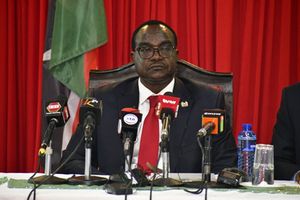
However, questions linger about the readiness of the institutions to adequately cater for the incoming learners. Education Cabinet Secretary Julius Ogamba sought to allay the fears, saying that schools have excess capacity and that the ministry anticipates a 100 percent transition of the 1.13 million candidates.
Kenya releases first-ever KJSEA results, ushering in new grading model
“We are transitioning 1.13 million learners to senior school against a capacity of 2.2 million, so we are good and are expecting 100 percent transition of all the students whose results have released,” Basic Education Principal Secretary Julius Bitok said on Thursday.
Mr Ogamba explained that the total capacity of the 9,540 senior schools is set to expand as 929,262 learners exited secondary school after sitting the Kenya Certificate of Secondary Examination this year.
CS Ogamba: 929,262 learners will be exiting secondary schools after 2025 KCSE
“Senior schools will have extra classrooms left since we will only have three classes at this level, enabling us to avoid overcrowding,” he said.
But a section of school principals feel ill-prepared. Those who spoke to the Nation highlighted concerns around the science, technology, engineering and mathematics (Stem) pathway given inadequate ICT infrastructure, and equipment for home science, including sewing machines and ovens.
Further, with just one month left before the reporting date, only English textbooks have been delivered to schools. The delay has been caused by non-payment of a Sh10 billion debt owed to publishers.
Additionally, some institutions lack functional computer labs and are struggling under debts from unsettled bills carried over from previous terms.
Bravin Kololi (70), Jeremy Njagi (69), Anita Wairimu (70) and Rosemary Wakanyi (68) of Roots Academy in Nakuru celebrate with teachers at the institution on December 11, 2025 after the release of the Kenya Junior School Education Assessment results.
Photo credit: Boniface Mwangi | Nation Media Group
“Aside from not having computers, we have been struggling with pending bills for lab equipment, including chemicals, test tubes, Bunsen burners, slides and microscopes,” said a school principal that did not wish to be named.
Another school principal estimated that converting a single classroom into a computer lab will cost roughly Sh700,000, which is unavailable. This amount would cover camera installations, desktop computers, reinforced windows and doors, roof adjustments, electrical sockets, a projector, a whiteboard, and a laptop for the teacher.
“Sports requires fields, yet here we are limited by space and I foresee a challenge in delivering the Arts and Sports Science pathway,” said yet another.
The Kenya Kwanza administration has been struggling to release the full capitation per learner, blaming it on constrained fiscal space. The delayed disbursements have resulted in a build-up of debt that has pushed schools to the brink of collapse.
On Thursday, Mr Ogamba reiterated that capitation to senior school remains at the rate of Sh22,244 per learner, dispelling concerns that parents will pay more school fees for their children. Last month, the ministry released a document which seemed to suggest a fees hike.
“At the same time, we wish to emphasise, for the avoidance of doubt, that there has been no revision of boarding fees, or any other fees, payable for learners in senior school,” he said.