A school suspension letter can now become a court case. So can a missing mark, withheld certificates, a levy, a decision not to include a student on a graduation list or questions over PhD credentials.
Parents and students are increasingly taking such disputes beyond the headteacher’s office or university senate and into court.
Courts are being approached to determine how far academic institutions can go in disciplining learners, enforcing rules or even withholding results.
The disputes range from suspensions and expulsions to religious practices, dreadlocks, punishment and academic results.
Just how far can an educational institution go when exercising power over a learner, and what happens when that authority collides with the student’s rights?
The disputes involving State House Girls, Ambira Boys, Makini School, Kenyatta University, Technical University of Kenya and Usiu-Africa show education decisions can easily end up in courtrooms.
At Makini, two children were removed from their classrooms on July 7, 2023, after the school ended its contractual relationship with their father.
The High Court found that the school was entitled to end its contract with the parent but not to treat the children as it did. In February 2025, Justice Lawrence Mugambi awarded the pupils Sh600,000, declaring that the treatment violated their dignity. The school indicated it would challenge the judgment.
Justice Nabil Orina quashed the suspension on finding that the material before him did not connect the learners to the alleged arson plan.
“Being at the dispensary when the discussion happened, without more, does not establish any basis for suspending the applicants,” he said, describing the action as collective punishment.
Ambira Boys School parents went to court after 1,515 learners were ordered to pay Sh33,000 each for damage linked to unrest.
Students leave Ambira High School in Siaya County after the institution was closed following fire that razed one of their dormitories.
The parents said even learners who had not taken part in the destruction of property were being punished.
The court ruled in the parents’ favour, saying public schools cannot impose blanket penalties on students or make payment a condition for readmission after unrest.
“If the respondents were unable to identify the culpable students, they cannot impose a punishment on all students,” Justice David Kemei said.
Moi High School-Kabarak in Nakuru County.
Photo credit: File | Suleiman Mbatiah | Nation Media Group
The school challenged the decision, saying the dispute should first go through the Education Appeals Tribunal under the Basic Education Act.
In other instances, courts have been asked to resolve conflicts between institutions and learners’ rights to religious belief, cultural identity and personal expression.
In the October 2014 judgment, the High Court upheld the school’s grooming rule. Justice Mumbi Ngugi, now a Court of Appeal judge, said schools have a right to set rules, adding that courts should intervene only in exceptional circumstances where rules or their enforcement violate rights or the Constitution.
“The school is entitled to insist upon observance of the grooming rule with respect to hair,” the court held.
The parent had said that the rule violated the child’s rights to equality, education and culture under Articles 27, 43 and 44 of the Constitution. She said the dreadlocks reflected the child’s heritage.
Five years later, another High Court case reached a different result. A 15-year-old Rastafarian girl was sent home from a public secondary school because she refused to shave her dreadlocks.
“The respondents’ decision to exclude the child from school for keeping dreadlocks ... and the attempt to force her to act contrary to her religious beliefs, is a violation of her constitutional rights to religion and education guaranteed by the Constitution and is, therefore, null and void,” Justice Enock Chacha Mwita said.
The religious-rights dispute had a precedent. In 1993, seven Muslim students at Consolata Girls Secondary School, Meru, went to court over Ramadhan fasting and prayers.
The school said the girls breached rules and denied that fasting was the reason for their suspension.
Another line of cases concerns withheld academic documents and examination problems. At Mahanaim International School, the High Court ordered the release of a student’s Cambridge examination results, result slip, transcripts and certificate after they had been withheld for more than a year.
Justice James Makau declared the failure a violation of constitutional rights and awarded the student Sh300,000 in general damages.
In the November 2021 judgment, the court held that the action violated the learner’s right to education and fair administrative action.
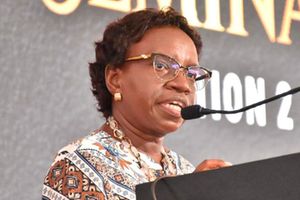
Ms Nyambura Kimani (inset), who won a landmark ruling against Kenyatta University over missing marks.
Photo credit: Courtesy
Justice Mugambi awarded the student Sh1.4 million after finding that KU’s failure to act expeditiously violated fair administrative action and delayed the student’s academic goals.
The Court of Appeal said the university was not responsible for the disappearance of the scripts, but faulted it for failing to respond with urgency. The judges reduced the award for every student from Sh148,764 to Sh50,000.
“We have no doubt that the university did not act with the urgency that the matter at hand bespoke, leading to students graduating a year later,” the judges said.
The University of Nairobi faced court action after it seized the degree certificate of a graduate who had already been conferred an LLB.
The university said it had received an anonymous claim that he had forged transcripts and argued that its Senate had powers to determine who qualified for an award.
In July 2023, the Court of Appeal upheld the finding that the university violated the student’s right to fair administrative action by arbitrarily confiscating the certificate and withholding transcripts. He had not been informed of the allegations or given a chance to respond.
The High Court had awarded Sh500,000 in general damages plus Sh50,000 costs.
The disputes became even more consequential when they concern PhD awards, with courts being asked to examine the processes leading to doctoral graduation and conferment.
Mr Masengeli said he had completed coursework, examinations and dissertation stages of his PhD and wanted the university to release his results and facilitate the next stage.
Usiu-A opposed Mr Masengeli’s application, saying he had not completed the mandatory requirements for a doctorate degree and still needed to defend his dissertation before an examination panel.
The High Court rejected Mr Masengeli’s request to stop the graduation ceremony or order his inclusion on the list.
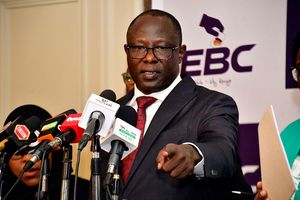
Gilbert Masengeli, Deputy Inspector-General of Police
Photo credit: File | Nation
Justice Patricia Nyaundi said the evidence did not establish a specific pledge that the police chief would graduate with that cohort.
“I do not consider that it is in the public interest to suspend the graduation as has been sought by the applicant,” the judge said.