More freshers, less money: Why parents face higher varsity costs amid Sh74bn funding gap
Parents of students joining public universities are set to dig deeper into their pockets as shrinking government scholarship funding collides with a sharp rise in the number of students seeking financial support.
First-year university students have started reporting to campuses for the 2026/2027 academic year amid a delay by the government in disbursing financial support.
The situation is compounded by uncertainty over a promised universal funding model whose fate is still on the floor of the National Assembly. The students applied for funding using the current model, but their applications have not been processed.
The two funding agencies, Higher Education Loans Board (HELB) and Universities Fund (UF), face funding deficits of Sh57 billion and Sh17 billion, respectively, totaling Sh74 billion, implying students will receive less than adequate funding.
Under the Student-Centred Funding Model introduced in May 2023, UF administers government scholarships while the HELB awards student loans for both tuition and upkeep.
Among the universities that have started admitting first-year students include Moi University, which scheduled its students to report from August 20 and 21, 2026. Masinde Muliro University of Science and Technology students started reporting on August 20 2026.
Those placed to join the University of Nairobi will report to campus from Monday next week (August 24 2024), Kenyatta University expects its freshmen on August 26, while Jomo Kenyatta University of Agriculture and Technology will receive its first-year students from September 1 2026.
According to data released yesterday by the UF, the number of students benefiting from government scholarships will rise by 49 per cent to 608,879 in the 2026/2027 financial year, even as the fund grapples with a Sh17 billion funding shortfall.
UF had requested Sh47 billion for the current financial year but was only allocated Sh30.1 billion, leaving a gap that will force it to spread the available resources across more beneficiaries.
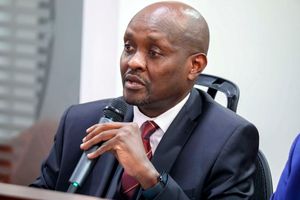
Higher Education Loans Board CEO Geoffrey Monari when he appeared before the National Assembly Committee on Education at Bunge Tower in Nairobi on May 14, 2025.
Photo credit: Dennis Onsongo | Nation Media Group
The CEO of the HELB, Geoffrey Monari, told Nation on Friday that the board will continue processing student loan applications under the current legal framework until Parliament approves the proposed changes.
He said applications for student loans remain open and have not been suspended pending Parliament's decision.
“Applications are ongoing for both first-year and continuing students, and the portal will remain open until August 31, 2026. For now, we are simply following the law as it stands. The President asked Parliament to approve the proposed changes, so all we can do is wait. Once the new law is passed, we will make the necessary changes and implement it. For now, we are operating under the current law,” he told the Nation on August 21, 2026.
On Wednesday, Mr Monari presented proposals to the National Assembly Education Committee. They seek to transform HELB into a development bank backed by the government to finance universities and colleges across the country.
The proposed funding model aims to raise Sh100 billion annually from the government, investors, parents, graduates, and development partners. The funds will be used to issue education bonds backed by a ring-fenced annual allocation of Sh100 billion, alongside a sinking fund to service interest payments and repay the principal.
The proposed reforms are contained in the Tertiary Education Placement and Funding Bill, 2026.
The uncertainty has left some parents seeking clarity on what the changes will mean for their children as they report to university.
“Parents need to know what will happen before our children report to campus. We have heard the President’s promise that first-year students will be fully funded, but we don’t know how that will be implemented or when the new system will take effect,” said Maina Mwangi, a parent of a first-year student.
Another parent said the timing of the proposed changes had created anxiety among families preparing for the new academic year.
“Universities are already asking students to report, yet Parliament is still considering the changes. We need certainty so that families can plan,” the parent said.
The chief executive of the UF, Dr Edwin Wanyonyi, said scholarship applications for first-year students will continue to be processed under the existing legal framework.
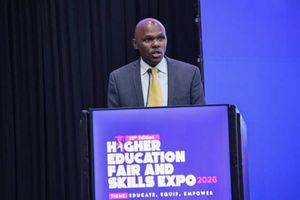
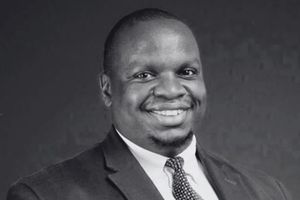
Universities Fund acting Chief Executive Officer Dr Edwin Wanyonyi during a past event.
Photo credit: Wilfred Nyangaresi | Nation Media Group
"There is no vacuum. The law that is currently in place is what we are implementing, and we will continue to operate under that framework until Parliament passes a new law. Once the Bill completes the parliamentary process and is assented to, we will make the necessary adjustments as required. The process also allows stakeholders and members of the public to give their views before a final decision is made, so for now we are proceeding with the current system," he said.
"Applications are ongoing, and we have received a very good response. We are at about 70 per cent for continuing students. They are required to reapply every year because funding follows the student, so each learner has to confirm that they are still in university before funds are released. Universities are opening from the middle of August into early September, so we will continue processing applications under the existing framework until there is any change in the law," he said.
According to documents presented before Parliament, HELB faces a funding deficit of more than Sh57 billion, with total funding requirements standing at about Sh114 billion against an allocation of Sh56.7 billion.
"We are still looking for money to bridge the funding gap. We have presented our budget proposals to Parliament, but as things stand, we are still facing a funding shortfall of Sh57 billion," Mr Monari said.
“In this current financial year, we are projecting disbursement at the level of 65 per cent of the requirement,” said Dr Wanyonyi.
But as university enrolment expands, scholarship funding is failing to keep pace, with UF data showing mounting pressure on the programme over the past three financial years.
In 2023/2024, the government provided the full Sh12.4 billion required for scholarships. In 2024/2025, it allocated Sh16 billion, leaving a Sh9.6 billion deficit, while in 2025/2026, Sh18.9 billion was provided against a requirement that was Sh12 billion higher.
The funding gap has now widened to Sh17 billion in the current financial year, even as the number of students requiring scholarships is projected to increase from 408,879 last year to about 608,879.
Over the three financial years from 2023/2024 to 2025/2026, the Fund reached 408,879 public university students through scholarships. The number rose from 118,153 in the year ending June 2024 to 253,042 in the following year, rising further to 408,879 in the year ending June 2026.
The projected 608,879 beneficiaries this financial year would represent a dramatic expansion in demand for scholarship support.
This means that more young Kenyans are qualifying for and entering university than the State can currently afford to fully support.
For private universities, the Fund has disbursed approximately Sh19.96 billion under the Differentiated Unit Cost framework from the financial year 2016/2017 to the financial year 2025/2026.
“In the current financial year, a total of Sh974 million has already been disbursed,” Dr Wanyonyi said.
For the 2026/2027 academic year, 202,133 students were placed in public universities by the Kenya Universities and Colleges Central Placement Service (KUCCPS) and invited to apply for government scholarships through the Higher Education Financing Portal (HEF).
As of August 20, 2026, some 159,551 applications had been completed by the 2025 cohort. Of these, 149,761 were scholarship-and-loan combination applications, 642 were scholarship-only applications, and 9,148 were loan-only applications.
A further 5,732 applications were ongoing or incomplete.
In 2017, only 62,581 students were eligible to join university, with the number more than quadrupling in the 2025 KCSE examination cycle to 270,715. This was a rise from the 246,391 candidates in 2024 attaining the minimum university entry grade of C+ and above.