Talks are ongoing between the Ministry of Education and the National Treasury regarding a new formula for the disbursement of funds for public schools (capitation). Officials hope that a new formula will prevent disruption of learning in the future.
Julius Ogamba, the Education Cabinet Secretary, told MPs that a technical team comprising members from the National Treasury and the Ministry of Education is currently working on a new schedule to ensure that schools receive funding in time.
“We are aligning the education calendar with the financial year of the national government so that we receive funds when the government has no pressure to pay debts,” he said.
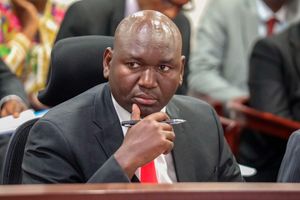
Education Cabinet Secretary Julius Ogamba before a National Assembly committee.
Photo credit: File | Nation Media Group
CS Ogamba made these comments at a time when most schools had decided to close early due to a lack of funds.
Appearing before the plenary to answer questions from lawmakers, particularly regarding the delay in releasing funds to schools, the CS said the new changes could take effect as early as next year.
Currently, schools receive their capitation funding at a ratio of 50:30:20, with the first instalment of 50 percent being released in the first term, a second instalment of 30 percent in the second term, and the final instalment of 20 percent in the third term.
“This may change after discussion, which will be completed by the end of this term,” the CS told the House.
In a new development, Mr Ogamba informed MPs on Thursday that the plan is for the National Treasury to release additional funds to schools when the national government is under less pressure to repay loans and debts, the majority of which normally mature in January, when schools also reopen.
He explained that, while the school calendar runs from January to December, the government financial year runs from June to July. This sometimes means that the government faces difficulties in releasing funds to schools at the right time.
The Cabinet Secretary informed the lawmakers that the new formula would greatly benefit schools, as the money would be ring-fenced once allocated in the budget.
However, Mr Ogamba faced tough questions from lawmakers, who expressed concern that, with only two weeks until the end of the third term, most schools had not yet received their funding, which was affecting the normal operation of the schools.
They pointed out that most schools are due to close on October 21, just 10 days away, but have not yet received funds from the government.
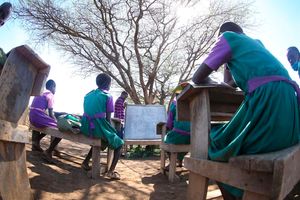
“Many schools are suffering. In my constituency, schools are struggling to even buy chalks,” said Gilgil MP Martha Wangari.
The CS however attributed the delay in disbursement to the ongoing verification of schools that is scheduled to be completed on Wednesday.
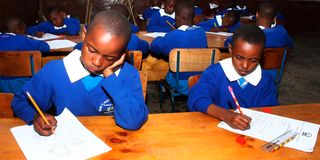
Most schools are due to close on October 21, just a few days away, but have not yet received capitation from the government.
Photo credit: File | Nation Media Group
According to Mr Ogamba, 39,000 schools have already been audited and funds released with the remaining ones set to get their share next week after completion of the verification process.
“We are doing well so far, we have released funds to 84 percent of primary schools and 97 percent of secondary schools. We just want to release money to the right existing schools and the exact number of students,” he said.
“It is better to delay a bit in order to get the right number and students in order to release the correct capitation.”
Mr Ogamba assured the lawmakers that once they have the correct data upon verification of the learners’ details, then the government will be in a position to fund learners in secondary schools at Sh22,244 per learner as per the policy.
“The number of institutions and learners is tied to capitation. When we don’t have the correct number, then it becomes a budgeting issue,” Mr Ogamba told MPs.
“We have been budgeting for Sh22,000 per learner but it is slashed because the number of students have never been verified. But with the correct number, it will not be possible to slash the amount because it will be against the policy.”
While appearing before the committee of Education in July this year, Treasury Cabinet Secretary John Mbadi told lawmakers it has been not possible to release the amount of Sh22,000 annually for junior school and secondary school students.
Mr Mbadi explained to the committee that while the government policy stipulates that each student in a day secondary school should be allocated Sh22,000 annually, junior secondary school students Sh15,000, and those in primary schools Sh1,400, Treasury has never been able to meet the target of Sh22,000 per learner in full.
“If you divide the current budget by the number of students in secondary schools, you will only get about Sh17,000 per student. That has been the reality even during President Uhuru Kenyatta’s tenure,” Mr Mbadi said.
“Since the introduction of free day secondary school, the government has not been able to give or allocate every student Sh22, 000. The government has always been having debts for schools. That is why you hear principals saying they have not received full capitation.”
More than Sh16 billion out of the Sh23 billion released by the National Treasury has already been disbursed to schools.
A report by the Auditor-General tabled in Parliament indicates that the government has overfunded schools by Sh3.7 billion between 2020 and 2024 through fictitious institutions and inflated enrolment numbers.