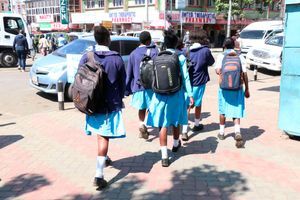
Thousands of learners in primary schools across the country risk being left out of crucial government support after 3,485 institutions were flagged for submitting faulty data.
According to the audit report seen by Sunday Nation in all 47 counties, the affected schools submitted records in the wrong format, left mandatory fields blank, duplicated entries, or failed to attach supporting documents.
The nationwide audit of data submissions from primary schools has revealed widespread compliance challenges. A total of 2,652 schools submitted their records in the wrong format, making this the largest category of errors flagged. These schools were instructed to resubmit their information using the official templates to ensure uniformity and accuracy in reporting.
Another 735 schools were identified as having provided incomplete data. In many cases, critical details such as enrolment numbers, school codes, or key attachments were missing.
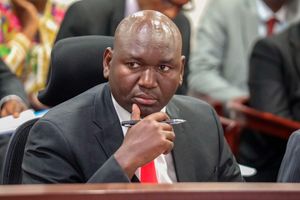
Immigration Principal Secretary Julius Bitok.
Photo credit: Jared Nyataya| Nation
The audit also flagged 75 schools for duplicate entries, likely from institutions submitting records multiple times under slightly varied names or administrative units. Ninety-seven schools were listed as “No Attachment” or “Data Not Captured,” meaning their submissions were either entirely absent or lacked documents for verification.
Baringo, Bomet, Bungoma, Busia, Homa Bay, and Kakamega emerged with the largest clusters of flagged schools, accounting for hundreds of cases across categories. These counties dominate the national list, with almost every sub-county represented, pointing to systemic challenges in adhering to data guidelines.
The release of funds to schools for this term has been tied to verification of school profiles, management records, enrolment numbers and bank details, an exercise ongoing since the term began. Ndung’u Wangenye, National Secretary of the Kenya Teachers Health and Welfare Association, said schools in ASAL areas should be allowed to submit data manually, citing poor connectivity and limited technology as barriers.
Basic Education Principal Secretary Julius Bitok told MPs that more than 60 per cent of the 32,000 schools nationwide had been cleared, with Sh13 billion already disbursed out of the Sh23 billion allocation.
“Out of 32,000 schools nationwide, today we expect that 20,000 will have been cleared. By last week, 15,000 schools had been cleared. So far, we have disbursed more than 60 per cent of the Sh23 billion allocation over Sh13 billion, and the process is ongoing” said Prof Bitok.
Drain billions of shillings
He added that internet outages, including a fibre cut last weekend, had delayed verification. Education Committee Chair Julius Melly urged firm action against ghost schools, warning that fake learners drain billions of shillings meant for genuine pupils.
Chairperson of the National Assembly Committee on Education Julius Kibiwot Melly.
Photo credit: Dennis Onsongo | Nation Media Group
President William Ruto, speaking separately while meeting teachers at State House, admitted that delays in the 50-30-20 capitation model stem from a mismatch between Kenya’s financial year (July–June) and the education calendar (January–December).
He directed the Education and Treasury ministries to resolve the disconnect, warning that learners should not continue bearing the brunt of poor budget alignment.