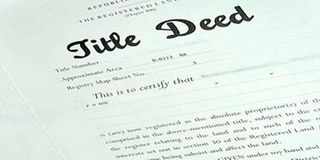
Thousands of public schools across Kenya remain vulnerable to land grabs due to lack of title deeds, despite a decade of government interventions.
The crisis persists even as the Ministry of Education conducts nationwide audits to secure school lands, with court records revealing fraudulent transfers and forged documents as common tactics used by grabbers.
Despite repeated government interventions since 2015, fraudulent transfers and forged titles continue to strip public educational institutions of their land, jeopardizing the future of millions of students.
In the past 10 years, key Initiatives rolled by government to address the encroachment include the Presidential directive on issuance of titles (2015), National Working Group on Titling of Public Schools (established in 2017) and Rapid School Titling Data Collection (2018).
The latest are directives from Education Cabinet Secretary Julius Ogamba in 2024 and 2025 requiring all regional and county education officers to ensure schools under their jurisdiction acquire title deeds.
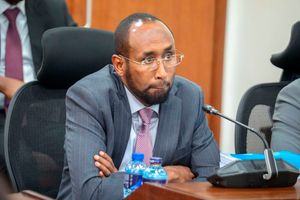
Education Cabinet Secretary Julius Ogamba responds to queries raised by the Members of the Senate Standing Committee on Education at the Sarova Whitesands Beach Resort in Mombasa on September 26, 2025.
Photo credit: Kevin Odit | Nation
A review of the several court cases we came across to point to a widespread lack of title deeds for school land as the primary driver of these legal conflicts pitting the institutions against the private developers.
The crisis is so deep that from the 31,000 public schools in the country, only slightly 5,000 have title deeds leaving over 26,000 public schools vulnerable to grabbers.
However, in response to the crisis, the Ministry of Education and that of Lands are carrying out an exercise to ensure all educational institutions are protected from the predatory land grabs.
Most recently, Education CS Ogamba in May 2025 mandated education officials to ensure all public schools acquire title deeds within a year to secure their land and prevent grabbing.
"We have asked our directors in the ministry to audit all schools to map those without title deeds so that we can facilitate the documents for them in collaboration with the Ministry of Lands," said Mr Ogamba.
A 2023 report by Transparency International's Shule Yangu Campaign Alliance revealed that only 30 per cent of public schools were safe from land grabbers.
A perusal of the court disputes show that fraudulent transfers and forgery of ownership documents are the common tactics used to illegally acquire school land.
For example, recently two men were arraigned at a Nairobi magistrate court over allegations of forging documents to defraud Starehe School Boys Centre of its land located in Westland, Nairobi, valued at Sh5 billion.
They faced various counts of obtaining registration by false pretences, forgery of certificate of title and presenting fake documents touching on the school's piece of land registered as parcel LR.No 1870/III/553/IR No 94224 measuring 2.156 hectares.
Still in Nairobi, Lavington Primary School was involved in a 15-year battle with a private company over a disputed parcel of land measuring 13 acres. In June 2025, the Cabinet Secretary for Lands Alice Wahome handed over a title deed to the school, with the government vowing to reclaim other illegally allocated public schools land.
"As a government, we are determined to reverse illegal allocations and ensure that schools across the country are protected from land grabbing,” said CS Wahome during the title's handover ceremony at the school grounds.
She encouraged other schools that have similar problems relating to land ownership to reach out to the Lands Ministry for assistance in recovery.
The parcel of land had been lost to a privately owned company. The dispute existed despite a 2017 decision of the National Lands Commission through a gazette notice to revoke the title deed issued to the private company.
In another fresh case, last week the Board of Management of North Highridge Primary School in Parklands Nairobi went to court to reclaim a portion of its land that was allegedly hived off and sold to a private developer, Mandera governor Mohammed Adan Khalif.
They explained that they sought court's intervention because their desire to obtain the title deed has remained a pipe dream for over two decades.
Their multiple letters to the government, including the Ministry of Lands, seeking assistance since 2004 are yet to bear fruits.
Ardhi House in Nairobi where the Ministry of Lands offices are located.
Photo credit: File | Nation Media Group
The school wants the Environment and Lands court to examine the validity of the title deed held by Mr Khalif and order its revocation and his eviction from the land.
The court papers show that in March 2025 Mr Khalif together with an entity called Asili Hills Apartments started construction of 160 residential housing units in a ten-storey building on the contested land.
Key details of the dispute are that the land originally measured 2.219 hectares. The school claims that part of the land was illegally excised leaving it current holding 1.06 hectares (2.6 acres).
Court documents reveal Mr Khalif purchased the property in February 2021 from Richard Maoka Maore for Sh140 million.
"The land excision violated all legal and administrative procedures," says the school advocate in court papers. "The developer entered the property without the school's knowledge or consent, amounting to trespass," they add.
In July 2025 the Board of Management, Ngara Girls High School secured an order requiring Erdemann Property Limited to pay it Sh13 million for damaging the school’s learning environment and illegally occupying its land during the construction of River Estate high-rise apartments.
The court ordered the developer to pay the school Sh3 million in form of general damages for trespass and violation of the school’s land possessionary rights and Sh10 million, being the compensation for violation of the rights to a clean healthy and sustainable environment.
In Kiambu County, Umoja Primary School Thika town was court battle with a private individual over a double allocation of a parcel of land measuring 0.1056 hectare.
The dispute culminated in a court-ordered negotiations following a judgment delivered in March 2025 declaring the civilian as the legitimate and absolute owner of the plot. The owner was also awarded Sh300,000 general damages for trespass.
Considering the ramifications of the findings, Justice Jane Onyango granted the parties a period of one year to engage in negotiations in good faith on how the suit school could lawfully acquire the suit property upon just compensation to the owner.
"An eviction order will only issue if no agreement is reached," she said.
In Kitale, the Environment and Lands court saved Marura Primary School from losing a land parcel measuring 2.3 hectares to a civilian. The court declared that the civilian's title was fraudulently and unlawfully acquired and is invalid from inception as it originated from a public utility.
Justice Fred Nyagaka in the January 2025 judgement found that the land was a public utility as per the Scheme Accountability List for Sitatunga Scheme.
The civilian, who was claiming ownership, had in 1994 used the land's title to secure a bank loan and repaid the loan and deliberately failed to discharge the same. The court ordered for cancellation of the title and registration of the land under the Principal Secretary, Ministry of National Treasury (reserved for Marura Primary School).
Section 26 of the Land Registration Act gives reasons why a title has to be cancelled even when it appears, on the face of the registration, to be valid. They include fraud or misrepresentation, acquisition of the title illegally, unprocedurally or through a corrupt scheme.
"Even though the plaintiff obtained title after a long-drawn out or short process that may have followed all the steps subsequent to the allocation, that amounted to naught because the root of the title was itself questionable and untenable. However good and pure it may look, its origin was illegal and must remain so hence it is a candidate for cancellation," said Justice Nyagaka.
In Kakamega county, last September Lugari Township Primary School parents, teachers, and pupils protested against a developer who encroached on a three-acre parcel of the school's land and built a residential property.
Other interventions have been coming from the Ethics and Anti-Corruption Commission (EACC) through recovery proceedings.
In July 2025, EACC secured orders to preserve a Sh50 million public school land located in Kitale town due to contested ownership.
According to EACC, the land, measuring approximately four hectares, was originally designated for use by Kitale School but was, however, fraudulently allocated for private commercial use.
These cases highlight a need for expedited processes from the Ministry of Lands and National Land Commission to secure their title deeds.
The crisis surrounding lack of titles for lands owned by public schools has been existing for many years.
Following a 2015 incident at Lang'ata Road Primary School Nairobi, the government accelerated efforts to issue title deeds for all public schools, with the goal of securing land for educational institutions.
With thousands of schools still at risk, stakeholders urge faster titling processes and stricter enforcement against fraudulent land deals to safeguard education spaces.
Experts warn that without urgent titling and anti-fraud enforcement, Kenya’s education infrastructure remains at risk.
As CS Wahome noted during the Lavington handover, "Protecting school land is protecting our children's future - there can be no compromise.