Planned legislative changes to anchor comprehensive schools in law have reopened a sharp debate over the management of Early Childhood Development Education (ECDE), raising fresh questions about how county-run pre-primary centres will fit into the national government’s restructuring.
Last week, during the opening of the Kenya Comprehensive School Heads Association (KECSHA) Annual General Meeting and Conference in Mombasa, President William Ruto issued a 90-day directive to the Ministry of Education to work with head teachers to submit proposals amending the Basic Education Act.
The changes seek to establish a legal foundation governing the administration, staffing, and financing of comprehensive schools.
“I have heard your request that the comprehensive school be clearly anchored in law. I agree and consequently direct the Ministry of Education to work with the Kenya Comprehensive Schools Heads Association and to present, within 90 days, proposals to amend the Basic Education Act,” said the Head of State.
Under the comprehensive school model, institutions run from Pre-Primary One (PP1) through Grade Nine under one head teacher, overriding previous calls by Junior School administrators for autonomy.
The State is also merging primary and junior school capitation into a unified funding stream, with Dr Ruto announcing that over Sh86 billion was disbursed ahead of school openings this year Sh44.2 billion in January, Sh23.4 billion in April, and Sh18.5 billion in August, a schedule he declared will become permanent from 2027 onwards.
“I want every head teacher in this hall to plan with confidence. This year, we changed how schools are funded. From 2027 onwards, capitation funds will be released before schools reopen,” Dr Ruto said, urging administrators to protect Grades One to Three by deploying their strongest teachers to ensure every child can read, write, and count by 2030.
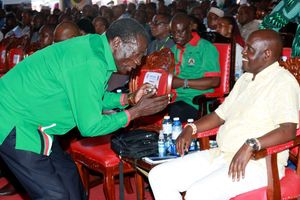
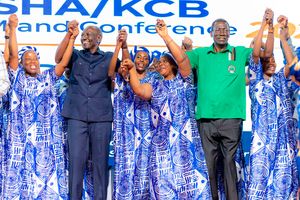
President William Ruto with the National Chairman, Kenya Comprehensive School Heads Association (KECSHA), Fuad Ali (centre) and Education Cabinet Secretary Julius Ogamba (second right) during the closing ceremony for the 2026 KECSHA Annual Conference in Mombasa on November 12, 2026.
Photo credit: Kevin Odit | Nation Media Group
KECSHA delegates backed the President’s directive, adopting resolutions urging the Ministry to fast-track legislative clarity and calling on the Teachers Service Commission (TSC) to harmonise career progression structures to reflect their expanded administrative mandates.
“Through your (Dr Ruto’s) efforts, you started the Presidential Working Party on Education Reform, and you have made comprehensive schools the system of the day. In comprehensive schools, you have allowed the institution to be under one principal,” said KECSHA National Chairman Fuad Ali.
Mr Ali said the Comprehensive School of the future must go beyond access to education to deliver meaningful learning, develop competencies and positive values, promote inclusion and learner wellbeing, and prepare every learner for the opportunities and demands of a changing world.
While the President stated that the proposed legal changes will address governance, staffing, and financing, he did not spell out how county-run pre-primary institutions would be accommodated within the unified framework.
Under devolution, county governments manage, staff, and finance pre-primary education, while the national government oversees primary and secondary tiers.
The National Parents Association and the Kenya National Union of Teachers (Knut) welcomed the President’s move, noting that integrating the system would help enforce free and compulsory ECDE.
Knut Secretary-General Collins Oyuu.
Photo credit: File | Nation Media Group
Knut Secretary-General Collins Oyuu observed that bringing PP1 through Grade Nine into a cohesive structure offers major resource-sharing advantages, provided institutional boundaries are carefully designed.
“The idea of sharing infrastructure and institutional resources across different learning levels is commendable, particularly in a country where resource allocation remains a major consideration in the provision of equitable education,” said Mr Oyuu, adding that the model's success hinges on clear management structures, adequate financing, and seamless coordination among different cadres of teachers.
The proposed restructuring unfolds against a backdrop of long-standing opposition from the Council of Governors (CoG), which has consistently rejected the comprehensive school model.
Governors have maintained that placing pre-primary under comprehensive school violates the constitutional separation of powers under devolution, insisting that ECDE centres must remain clearly demarcated within primary school compounds.
The institutional standoff is compounded by severe financial strain at the county level. According to CoG figures, counties employ more than 50,000 ECDE teachers serving over one million learners, though many remain on contracts alongside roughly 5,000 caregivers paid by school boards or parents' associations.
Teachers Service Commission (TSC) headquarters in Upper Hill, Nairobi.
Photo credit: File | Nation Media Group
Implementing the scheme of service developed by the TSC and the Salaries and Remuneration Commission (SRC) so far rolled out by over 20 counties requires Sh12 billion annually.
Yet county education budgets, often combined with youth, gender, ICT, and social services, stand at roughly Sh10 billion, leaving a Sh2 billion annual shortfall.
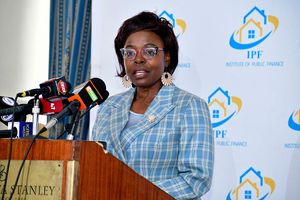
In March this year, CoG Education Committee Chairman and Kericho Governor Erick Mutai revealed that governors had petitioned the President for a ring-fenced Sh5 billion conditional grant to sustain ECDE teacher onboarding and training.
“When devolution started, the ECDE programme was not costed. We have had very good discussions with President Ruto and other actors on the need to ring-fence a specialised Sh5 billion to meet the cost of training and onboarding teachers. Counties have very small budgets, and if they are asked to fully implement the scheme of service, they will collapse financially. That is why we need a conditional grant specifically for ECDEs,” Dr Mutai said recently.
Similar systemic gaps have drawn scrutiny from the Senate Education Committee, which has flagged the lack of a clear capitation framework, inadequate infrastructure, and non-standardised human resource policies.
During a July 2026 engagement with Taita Taveta Governor Andrew Mwadime, whose county operates 678 ECDE centres with 326 teachers, senators questioned reports that some Board of Management teachers earned between Sh5,000 and Sh10,000 monthly, and criticised parental levies for meals despite national policies mandating free early childhood education.
As Kenya prepares to mark 14 years of devolved governments in August 2027, the upcoming amendments to the Basic Education Act will be closely watched for how they clarify shared infrastructure, administrative authority, and funding responsibilities between the national and county governments.