The State Department for Basic Education faces a Sh111.07 billion funding shortfall in the 2026/27 financial year, raising concerns over the sustainability of free and compulsory basic education programmes.
The underfunding might also affect the quality of education offered in public institutions of learning and possibly force parents to dig deeper into their pockets in order to fund the education of their children.
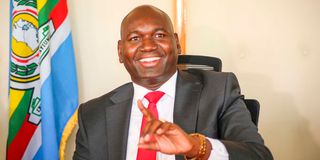
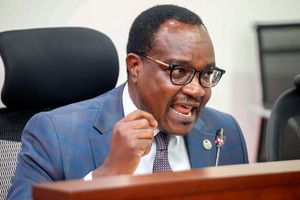
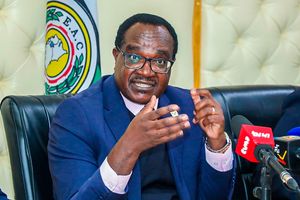
Appearing before the National Assembly of Kenya’s Departmental Committee on Education to present proposals for consideration in the 2026 Budget Policy Statement, Basic Education Principal Secretary Prof Julius Bitok noted that the department requires Sh245.85 billion to fully implement its programmes across primary, junior and secondary schools, as wells as teachers training colleges.
“Under the recurrent budget, the department has a proposed allocation of Sh118.7 billion against a requirement of Sh216. 5 billion. Similarly, under development, the proposed allocation for the 2026/27 Financial Year is Sh16 billion against a requirement of Sh29.4 billion. This represents an underfunding of 45 percent for both recurrent and development budgets,” Prof Bitok told the committee.
Budget estimates show that several flagship initiatives, including Free Primary Education (FPE), Free Day Secondary Education (FDSE), and Junior School capitation, have received allocations far below their requirements, leaving a combined deficit running into tens of billions of shillings.
PS Bitok, education officials appear before Parliamentary Committee over school capitation saga
Under the Free Primary Education (FPE) programme, the government requires Sh15.7 billion to cater for capitation and Special Needs Education (SNE) top-ups for 6.39 million learners. However, only Sh7.01 billion has been proposed, leaving a deficit of Sh8.67 billion. As a result, about 3.7 million learners are underfunded.
“The budget targets capitation for 6,390,414 primary school learners at Sh2,330 per learner, including a top-up capitation for 108,372 learners in special needs education (SNE) at Sh2,300 per learner, and boarding fees for 45,896 SNE learners at Sh11,650 per learner. However, this leaves 3,718,948 learners without full capitation, meaning either they will not receive funding or all learners will be financed at a reduced rate of Sh1,096.71 each,” said Prof Bitok.
The Free Day Secondary Education (FDSE) programme faces a huge shortfall despite school principals complaining that the funds disbursed to schools are inadequate. Against a requirement of Sh78.41 billion, only Sh54.9 billion has been allocated, creating a funding gap of Sh23.52 billion. The deficit will affect 1,057,158 learners, including 20,166 learners with special needs who require additional support.
Allocation for junior school funding has also been significantly reduced. Of the required Sh54.69 billion, only Sh30.92 billion has been proposed, leaving a Sh23.77 billion deficit that will impact 1,580,152 learners.
The budget targets capitation funds for 3,621,798 secondary school students at Sh15,042 per learner, including 4,100 learners in special needs education (SNE) at Sh50,772 each. However, this leaves 1,580,152 learners without full capitation, meaning either they will not receive funding or all learners will be funded at a reduced rate of Sh8,536.81 each,” said Pro Bitok.
According to the ministry, the school examination and invigilation function requires Sh14.7 billion for the 2026/27 financial year. However, only Sh9.9 billion has been proposed in the budget, leaving a shortfall of Sh4.82 billion.
“The target is to administer KJSEA assessment and other exams and assessments. The resource requirement for KJSEA is Sh3.9 billion and Sh10.8 billion for the administration of KCSE (Sh.9.5 billion), KPSEA (Sh1.2 billion), and Stage Based Assessments (Sh1.4 billion),’ said Prof Bitok.
Education CS Julius Ogamba, when he appeared before MPs during the 2026 Legislative Retreat for Members of the National Assembly, at Lake Naivasha Resort in Naivasha, Nakuru County, on January 28, 2026.
Photo credit: Boniface Mwangi | Nation Media Group
The School Feeding Programme, which is implemented through the National Council for Nomadic Education in Kenya (NACONEK) requires Sh3.85 billion but has been allocated Sh3 billion. The programme targets to provide hot meals to2.8 million learners in Arid and Semi-Arid Lands (ASAL) and urban informal settlements.
Similarly, the Low-Cost Boarding School Programme, which supports 158,286 learners in ASAL areas, has a Sh120.34 million deficit. While breakfast and dinner salaries are funded, lunch depends on the school feeding programme, which is already underfunded.
“The Integrated Mechanisms for Poverty Reduction and Sustainable Education under NACONEK also face a Sh468 million deficit, threatening support for out-of-school learners and youth empowerment initiatives,” said Prof Bitok.
The Principal Secretary for Basic Education has revealed that the State Department has cleared all pending bills as of January 31, 2026, but still faces Sh91 million in unpaid court awards. Of this, Sh16.5 million was provided in the 2025/26 budget, leaving a balance of Sh74.6 million pending release from the Exchequer.
“In the proposed 2026/27 budget, Sh16,492,981 has been allocated for the same. This will ultimately leave a balance of Sh58,058,970, which is not provided for in the 2026 Budget Policy Statement. We therefore seek the committee’s intervention for additional funding of Sh58 million to enable the full settlement of the court awards,” said the PS.