More than 400,000 continuing university students will benefit from a Sh4.2 billion scholarship disbursement released by the Universities Fund on Friday, but officials have warned that the country's higher education financing programme is facing a Sh11 billion funding shortfall that could force changes in how government scholarships are awarded.
The latest release brings the total scholarship allocation for the 2025/26 financial year to Sh18.4 billion, covering tuition for students admitted to public universities in 2023, 2024 and 2025 under the Student-Centred Funding Model.
However, the funds will not be shared equally among beneficiaries.
Instead, scholarships are awarded according to a student's financial need and the cost of their programme, with government support ranging from 10 per cent to 55 per cent of tuition fees, depending on the student's funding band.
As a result, two students enrolled in the same course may receive different scholarship amounts.
Universities Fund Acting Chief Executive Officer Dr Edwin Wanyonyi said although the government had fulfilled its budgetary commitment for the current financial year, the allocation still falls short of the actual amount required to adequately finance all eligible students.
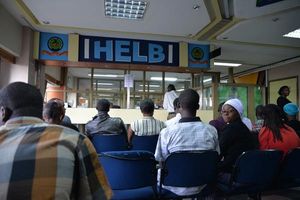
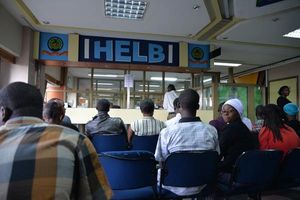
Students apply for Helb loans in Nairobi.
Photo credit: File | Nation Media Group
“Based on what was promised by the government in terms of budget allocation, we have received 100 per cent. However, when you look at the actual resources required to fully fund all eligible students under the Student-Centred Funding Model, we are still facing a gap of about Sh11 billion,” said Dr Wanyonyi.
He said the gap reflects the difference between the amount allocated by the Treasury and the actual cost of supporting students under the Student-Centred Funding Model.
The funding gap comes as the number of students qualifying for direct university admission continues to rise, piling pressure on the government's higher education financing programme.
Government data shows student numbers have increased from about 70,000 in 2017 to approximately 258,000 in 2025, representing a rise of more than 300 per cent in less than a decade and significantly increasing demand for government support.
Currently, 437,648 students are funded under the student-centred funding model, drawn from three cohorts: 122,634 admitted in 2023, 134,889 in 2024 and 180,125 in 2025.
He said the Universities Fund is already holding discussions with partners expected to inject additional resources to help bridge the deficit.
“The funding model itself is good. The challenge we are now having is the financing of the model," he said.
Dr Wanyonyi warned that if student enrolment continues to grow faster than available funding, the Fund will tighten its means-testing system so that students from families able to contribute more towards university education receive lower government scholarships, while vulnerable learners continue receiving the highest level of support.
“We will continue to tighten the means-testing instrument. Those who are able to pay should pay more, while those who are vulnerable should receive the maximum support so that no deserving student is left behind," he said.
University of Nairobi students protest at Anniversary Towers in Nairobi which houses the Higher Education Loans Board on February 3, 2025 over delayed disbursement of funds.
Photo credit: Evans Habil | Nation Media Group
However, the latest disbursement comes even as fresh budget estimates paint a worrying picture for next year's university funding programme. According to the 2026/27 Budget Estimates, the Universities Fund has been allocated Sh31.1 billion against a requirement of Sh47.36 billion needed to finance scholarships under the student-centred funding model, leaving a funding deficit of Sh16.26 billion.
The shortfall means that nearly 689,000 students out of a projected 1.38 million beneficiaries across higher education institutions could miss out on full government funding next year, underscoring the growing strain on Kenya's higher education financing programme as enrolment continues to rise.
The funding gap translates to an average deficit of approximately Sh74, 245 for each of the projected 219,279 university scholarship beneficiaries. While the Universities Fund estimates that each student requires an average of Sh216, 072 in support, the proposed government allocation would provide only about Sh141, 827 per beneficiary, leaving a substantial financing gap that students and universities may have to bridge.