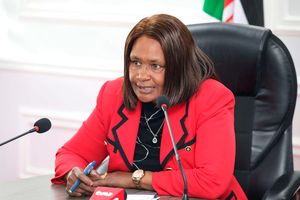
The Teachers Service Commission (TSC) has expanded the role of secondary school principals, placing them at the centre of implementing the Competency-Based Education (CBE) framework as instructional leaders, change managers and drivers of collaboration in schools.
Speaking during the Kenya Secondary Schools Heads Association (KESSHA) Murang’a County annual conference in Mombasa, Acting TSC CEO Eveleen Mitei said school heads will play a critical role in ensuring the success of the new education system.
Ms Mitei said the shift to CBE marks a major transition from content-based learning to a model that emphasises skills, competencies and values requiring a new leadership approach at the institutional level.
“The success of CBE in our schools will largely depend on how well you inspire and support your teachers to embrace this paradigm shift,” she said.
Under the new approach, principals will no longer serve only as administrators but as chief curriculum implementers responsible for guiding teaching and learning in their institutions.
Ms Mitei said principals are expected to take a more active role in supervising curriculum delivery, supporting teachers, and ensuring effective implementation of the new system.
The Teachers Service Commission Acting CEO Eveleen Mitei.
Photo credit: Dennis Onsongo | Nation Media Groip
“You are, first and foremost, instructional leaders. Your responsibility is to provide direction in teaching and learning,” she said in a speech read by the TSC Director of Staffing Antonina Lentoijoni.
The TSC boss outlined key responsibilities that principals must now undertake including guiding teachers in interpreting the curriculum, strengthening lesson supervision and promoting continuous assessment.
Under the 8-4-4 system, which is being phased out, deputy principals were largely responsible for guiding teachers while principals focused on administrative duties. However, under CBE, principals are now the key drivers.
The Commission further said that principals in more than 9,000 secondary schools across the country are expected to champion differentiated instruction to cater for learners with diverse abilities and establish mentorship and coaching programmes to continuously build teachers’ capacity.
TSC also wants school heads to create conducive learning environments that support both teachers and students.
“A safe, inclusive, and well-managed school environment enhances learner engagement, supports teacher effectiveness, and ultimately improves competency acquisition,” Ms Mitei said.
Beyond classroom supervision, principals have also been tasked with promoting collaborative leadership within schools.
Ms Mitei said the success of CBE depends on teamwork and shared responsibility among teachers, learners, and other stakeholders.
“As Heads of Institutions, you must deliberately foster collaboration within your schools by encouraging professional learning communities and peer support among teachers,” she said.
She added that principals should strengthen engagement with parents, Boards of Management, and other stakeholders to build strong support systems for learning.
The expanded role also places school heads at the forefront of managing change and resources in their institutions.
Ms Mitei said principals must ensure prudent use of resources, optimise staffingand embrace the use of technology to improve teaching and administration.
Teachers Service Commission (TSC) headquarters in Upper Hill, Nairobi.
Photo credit: File | Nation Media Group
“The transition to Competency-Based Education requires prudent utilisation of resources, strategic staffing, and the integration of technology,” she said.
She said that leadership in managing change will be key to the success of the reforms adding “your ability to lead through change will determine how effectively your institutions adapt and thrive,” she told the principals.
In addition, the TSC is now requiring school heads to prioritise the well-being of teachers, noting that increased demands in the education sector have placed pressure on staff.
Principals have been aslked to create supportive environments that address stress and promote staff welfare.
They wre also commended for their continued dedication, noting that they remain at the frontline of education service delivery despite operating under challenging conditions.
“You have consistently ensured stability in our institutions, upheld discipline, improved learning outcomes, and steered the implementation of education reforms,” she said.
Ms Mitei reiterated the Commission’s commitment to supporting school leaders as they take on the expanded responsibilities.
“The Commission will continue to walk this journey with you, providing the necessary support to ensure the successful implementation of CBE,” she said.
The conference, which brought together principals from Murang’a County, focused on the theme of collaborative leadership and its role in promoting the successful rollout of CBE in secondary schools.
With the expanded mandate, principals led by their KESSHA chairpersonWillie Kuria welcomed the move saying administrators are now expected to play a more strategic and hands-on role in shaping the future of education in Kenya as the country continues transitioning to CBE.
“We welcome the roles and we are up to the task,” said Mr Kuria.
However, Kenya Union of Post-Primary Education Teachers (KUPPET) Secretary-General Akelo Misori accused TSC of failing in its role of ensuring that teachers entering the service are properly inducted into the new curriculum.
“Principals alone cannot shoulder the responsibility of steering the implementation of CBE,” he said, adding that both new and existing teachers must undergo in-service training to be inducted into the new pathways and learning areas.