Former Rift Valley regional commander Tom Odero has been appointed to head the newly created Nairobi Metropolitan Police that will be unveiled on May 1.
Odero will be the pioneer head of the new police unit that will now be responsible for among other things dealing with the security in the capital city.
Interior Cabinet Secretary Kipchumba Murkomen said that the Nairobi Metropolitan Police Unit would be operational from May 1.
The technical team formed to oversee the birth of the new police unit at the same time briefed the CS on the proposed structure, command and responsibilities of the new formation.
The creation of the Metropolitan police is the latest in a series of measures being implemented by the government to ensure security in the city.
This comes as newly appointed Nairobi police boss Issah Mahamud made changes in the way the police have been operating in the city.
Mahamud, who took over last month from George Sedah , who was moved to Western Region has directed that all undercover police officers in Nairobi be withdrawn and replaced with uniformed police officers.
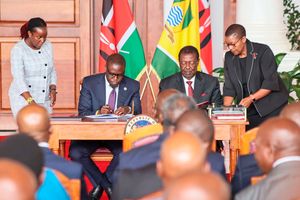
Interior Cabinet Secretary Kipchumba Murkomen addresses the media at the National Police College Embakasi, Nairobi on January 29, 2026.
The undercover cops, popularly known, as ‘Spiv’ will now be required to wear their uniforms while on police patrols in their areas of operations.
Last Friday, Mahamud met Divisional police commanders (OCPD) and Police station commanders at his offices at the Nairobi area Police headquarters.
Although no official reason was issued for the new directive, sources familiar with the matter told the Nation that Mahamud took the decision following complaints from the public on the conduct of the undercover cops.
A divisional Police boss who intends to conduct a special police operation is however at liberty to constitute a team of undercover officers who will conduct the operation after which return into their duties dressed in full police uniform.
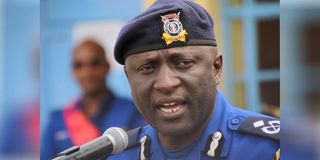
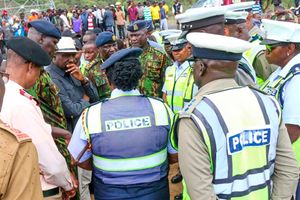
Tom Odero, then Meru police boss, addresses residents of Meru Town during one of the demonstrations against insecurity.
Photo credit: File
While a section of the station commanders who attended the meeting praised the new move, another group of station commanders thinks that by removing undercover police from the streets will lead to an upsurge of crime.
Those opposed to this directive think that by removing the undercover officers is likely to lead to an upsurge of crime in the city.
The police chiefs who support this directive are of the opinion that station commanders should be allowed to vet officers to join under cover teams before deployment.
However, DCI officers, who perform undercover operations and patrols, have been exempted from this rule.
In 2021, then Nairobi Police chief Agustine Nthumbi issued a similar a directive .At the time , Nthumbi said the plan was to stop harassment of members of the public by the police.
Nthumbi directed that police officers were not allowed to use private vehicles and unmarked vehicles.
Nthumbi at the same time put to an end arbitrary arrests and raids on bars unless police are dressed in Persian blue uniforms and under the command of an Inspector of Police.
“Stern departmental action will be taken against any person contravening this directive," Nthumbi said in a memo issued then.
At the time, insiders in the police said that the new policy direction was aimed at containing cases of rampant extortion, brutality, theft and even extrajudicial killings.
“The use of such [unmarked, private] vehicles by officers in civilian attire has now been prohibited and as such will be deemed as illegal operations and extortion, which are criminal," the police boss said.
In April 2025, the High court issued an order prohibiting undercover police officers from participating in police operations such as dealing with riots.
The court directed that it was illegal for police officers undertaking such operations to also use balaclavas and hoods to conceal their identity.
Justice Bahati Mwamuye during a court proceeding at Milimani Law Court on December 18, 2024.
Photo credit: Wilfred Nyangaresi | Nation Media Group
Justice Bahati Mwamuye ordered the Inspector General of Police to ensure that plainclothes officers do not cover their faces while arresting, restraining or dealing in any way with the protesters.
The court ordered that the police service should ensure that all uniformed officers of the National Police Service (NPS) or those working under NPS have a nametag and affix their service numbers in a clearly visible part of their uniform during any operations.
The Law Society of Kenya on July 31, 2024, petitioned the high court to issue the orders to stop police excesses including abductions of individuals suspected to be organising the youth-led protests across the country.
Mwamuye said that police should ensure that they don't remove or obscure such identifying details at any time in any way while engaging with, providing security for or in any way dealing with any people assembling, planning or picketing.
"A conservatory order is hereby issued requiring the (IG) to ensure that where plain clothes or non-uniformed police officers are deployed or utilised in any manner in regards to persons planning on assembling demonstrating, picketing or petitioning and they shall not remove or obscure the same," the order by judge Mwamuye said.